Citizen Portal

House Financial Services committee advances three bills to ease rules for venture and private funds

5448239 · July 22, 2025

Get AI-powered insights, summaries, and transcripts

Subscribe
AI-Generated Content: All content on this page was generated by AI to highlight key points from the meeting. For complete details and context, we recommend watching the full video. so we can fix them.

Summary

The committee marked up three bipartisan measures aimed at loosening qualification rules or inflation indexing for venture capital and small private fund exemptions, sponsors said the changes will expand capital to startups and regional funds while keeping investor protections in place.

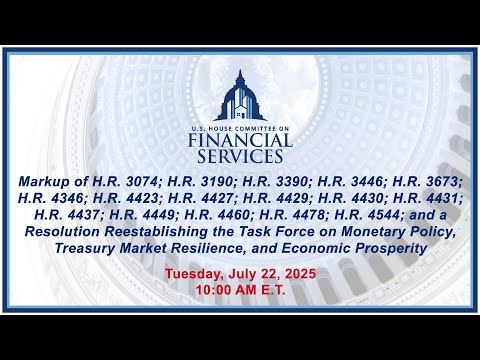
The House Financial Services Committee on the markup advanced three related bills designed to update how venture capital and small private funds qualify for regulatory exemptions and to adjust registration thresholds for advisers.

Committee leaders and sponsors framed the package as bipartisan, modest technical reforms that would direct more capital to startups outside traditional finance hubs and reduce compliance burdens on smaller fund advisers. Chair Hill, Rep. Wagner, Rep. Timmons and Rep. Barr each described different bills that aim to modernize requirements in the Investment Company Act and Investment Advisers Act of 1940 and to index the SEC’s registration thresholds for inflation.

Supporters said the Developing and Empowering Aspiring Leaders Act (DEAL, H.R. 44 29) would classify certain secondary purchases and investments in other venture funds as qualifying investments, while requiring a majority of a fund’s investments remain direct equity stakes in operating companies. Rep. Wagner said the bill would help funds invest in overlooked regions by allowing larger funds to invest in smaller regional funds and secondary transactions while retaining investor thresholds and most protections.

The Improving Capital Allocation for Newcomers Act (ICAN, H.R. 44 31) would raise the dollar cap for qualifying venture capital funds (from $12 million in the existing text cited during debate) to $50 million and increase the allowable investor count (from 250 to 500). Rep. Timmons and other sponsors said the change would let emerging regional funds scale, reduce risk exposure per investor, and require an SEC assessment five years after enactment.

The Small Business Investor Capital Access Act (H.R. 36 73) would index the $150 million exemption for private fund adviser registration to inflation every five years. Sponsor Rep. Barr, joined by Rep. Velasquez as a cosponsor of an amendment raising the immediate threshold to $175 million, said indexing would avoid small advisers being pulled into a heavy SEC registration regime solely because of economic drift.

Lawmakers repeatedly emphasized limits in each bill: sponsors and cosponsors said the reforms preserve investor protections, maintain accredited investor thresholds, and retain regulators’ authority to act when firms show problems. Several members asked for and won recorded votes on the measures.

The committee adopted the amendments in the nature of a substitute for these measures and ordered the bills favorably reported to the House by recorded vote later in the session.

The package drew bipartisan praise for targeting barriers that limit capital flow to entrepreneurs outside coastal venture hubs, while some speakers urged continued monitoring of real-world effects and enforcement to ensure entrepreneurs remain served.

The committee will transmit the bills to the House floor following clerical and reporting steps.

Ending: Sponsors said they expect the measures to move quickly in committee and stressed that the bills do not reduce basic investor protections, but rather modernize technical rules to expand capital formation throughout the country.