
Board postpones Arlington Downs multifamily revisions at 3547 Oswald for 30 days amid street‑fronting and pedestrian‑connection concerns
Get AI-powered insights, summaries, and transcripts
Subscribe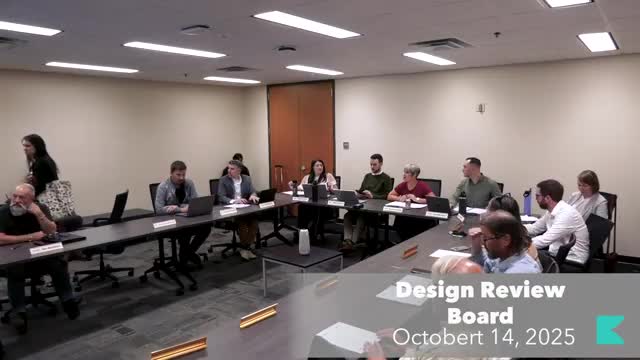
Summary
The Design Review Board postponed action for 30 days on revisions to the Arlington Downs multifamily phase at 3547 Oswald (case 9F25IH), directing the applicant to return with options to strengthen the project’s Oswald Street frontage and pedestrian connections.
The Design Review Board on Sept. 14 postponed review for 30 days of revised plans for a multifamily/townhouse phase of the Arlington Downs development at 3547 Oswald (case 9F25IH), citing concerns about the project’s interaction with the Oswald Street streetscape and the loss of front stoops that provide pedestrian activation.
Staff presented revisions to plans previously approved in February 2024. Key changes included removal of a third‑story massing in the south section; conversion of some front porches on the Oswald Street elevation to private patios; a new pattern for the central massing; relocation or clarification of proposed intermediate gravel drives and two vehicle entrances to allow construction access and temporary parking; and an updated landscape concept. Staff recommended approval subject to conditions including engineering approval of drive and parking access, increasing front setbacks to reintroduce stairways and porches with walkways to Oswald Street, adding required landscaping (shade trees along Oswald), retaining brick detailing on parapets and foundations, and submitting final materials specifications.
Applicant Logan Higgins described site constraints—topography, utility and stormwater easements, and evolving ownership—and explained the temporary/intermediate gravel parking is intended to support construction while allowing future reconfiguration. Higgins said the team is open to exploring stoop alignment and walkways but noted easements and topography complicate moving building footprints and driveway access.
Board members and neighborhood speakers debated the project at length. Several board members emphasized that the project currently turns its back on Oswald Street: front patios and missing stoops reduce pedestrian activation and create an inward‑facing development. Multiple board members urged options that would reintroduce front stoops or reconfigure porches (including insetting stair landings into porches, shifting porch positions slightly, or providing parallel stairs) so stoops read as front entries and connect to future sidewalks. Members also urged the applicant to provide options rather than a single design, asked for clarification on sidewalk phasing and curb/road adjustments, and recommended that the applicant return with refined solutions that reconcile easements, topography, and massing.
After extended discussion the board moved to postpone the application for 30 days so the applicant could return with revisions addressing street frontage, stoop/porch reintegration, and a clearer approach to sidewalks and parking phasing. The motion to postpone carried on a voice vote.