Get Full Government Meeting Transcripts, Videos, & Alerts Forever!
Get email alerts on the Road Construction topic
No spam. Unsubscribe anytime.
Council approves Ashworth Road construction access plan despite residents’ safety and access concerns
Summary
West Des Moines City Council voted 4-1 Tuesday to proceed with the city’s current construction-access design for the Ashworth Road reconstruction between Nineteenth Street and 203rd Street after residents told the council the plan would leave some households without direct driveway access for an extended period.
West Des Moines City Council voted 4-1 Tuesday to proceed with the city’s current construction-access design for the Ashworth Road reconstruction between Nineteenth Street and 203rd Street after residents urged a different approach to preserve driveway access and safety.
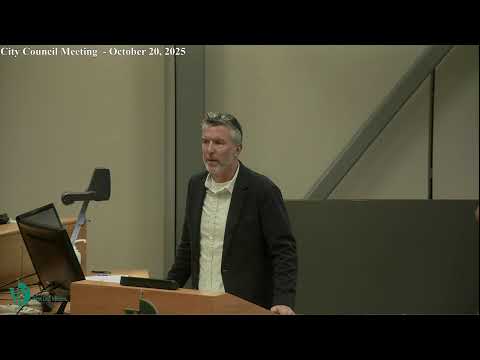
The issue centered on a city staging plan that labels some properties as having “zero” driveway access for the length of a construction stage. Resident Shane McClintock, 1910 Ashworth Road, told the council the plan would leave his household — and several neighbors — without direct driveway access for an extended period and said that posed safety and caregiving risks. “Two to four months is excessive, is prolonged, and it just it just doesn't seem right to put those risks onto us,” McClintock said.
McClintock and other speakers asked the city to install temporary gravel drive lanes or otherwise provide short-term vehicular access for every affected residence rather than the current plan, which the city says concentrates temporary access in reserved stalls and pedestrian routes.
Why it matters: The Ashworth reconstruction is a major neighborhood project affecting multiple households. Residents raised concerns about safe transfers of elderly family members, transporting infants and sensitive work equipment, and the disproportionate burden on properties the project map labels as having no driveway access during a stage.
City staff and legal counsel described the constraints and trade-offs. City Engineer Brian Hemeseth said the project is being done in stages and that the plan was intended to limit closures and complete each stage quickly. “Our plan is for any one of these stages not to be closed for two to four months, but six to eight weeks. That that is the plan,” Hemeseth said. He also explained that the right-of-way in front of some properties is narrow and contains deep storm sewer work, which limits where the city can safely place temporary vehicle lanes.
City legal counsel Jessica (city attorney) told the council that providing the kind of vehicular access residents requested is legally permitted but not required and carries liability and precedent concerns. “It is not legally required to provide the vehicular access that you're stating… therefore it would have to be voluntary on the part of the property owners,” she said, and added that if the city were to install and maintain temporary lanes it would likely seek hold-harmless agreements and insurance certificates to reduce liability.
Residents countered that similar temporary access arrangements have been done elsewhere and suggested voluntary letters of agreement and after-the-fact restoration by the city. Laurie Young, 2000 Ashworth Road (online), said the areas where temporary access would be placed are already in the contract for later restoration, and asked why temporary gravel could not be used and then removed and restored.
Council reaction and vote: Council members debated the equity and precedent of granting city-installed temporary vehicle access on private property. Several council members said they sympathized with residents but were concerned about liability and about setting a standard that would increase costs for future projects. Councilman Kevin Trevillian expressed support for neighbor cooperation; others said the city must be consistent across future projects.
The council approved the motion to proceed with the current construction-access plan as presented by engineering by a 4-1 vote.
What the vote does and doesn’t do: The motion directs staff to proceed with the current staging and access plan; it does not adopt a new policy guaranteeing city-installed temporary vehicular lanes across private property for this or future projects. Staff said they will continue to coordinate with residents about parking stalls and pedestrian accommodations during each stage and that the city may perform restoration work after construction.
Community context and next steps: Residents said they will continue to try to coordinate shared access among neighbors and urged the city to prioritize timely construction to minimize the length of each closure. Hemeseth said the city’s staging estimate is six to eight weeks per stage, but he acknowledged unexpected soil or weather conditions could extend that timeline.
Votes and immediate direction: Motion to proceed with the current construction access design for Ashworth Road — approved 4-1. Staff will implement the plan as presented and continue neighborhood coordination; legal advised that voluntary agreements with hold-harmless language would be required if the city were to install temporary vehicular access across private property.
Ending: Council members and staff said they would continue outreach to the affected residents and that final staging and parking details will be provided to homeowners before work begins on each phase.