Get Full Government Meeting Transcripts, Videos, & Alerts Forever!
Get email alerts on the Public Safety Traffic Control topic
No spam. Unsubscribe anytime.
Struthers committee to rewrite ordinance requiring police at roadwork, to give safety director discretion
Summary
City committee agreed to replace a proposed ‘mandatory’ requirement that a uniformed officer direct traffic during street work with a new ordinance that makes the safety service director the decision-maker on when officers or contractors are needed.
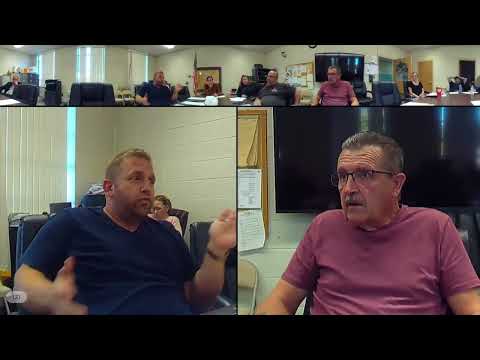
Struthers City Council’s Police and Fire Committee agreed to draft a revised ordinance that removes a blanket “mandatory” requirement for a uniformed police officer to direct traffic during construction and roadwork and instead routes those decisions to the city’s safety service director.
The committee said the change is intended to limit unnecessary costs for contractors and the city while preserving safety. “First of all, I don't like the word mandatory in there for everything,” a committee member said during the discussion.
Committee members said many work sites are case-specific: some cuts or short jobs can be managed with cones or a flagging crew, while others -- large patches, prolonged lane closures, work in intersections or projects that block the roadway -- may require a police officer or a full traffic-control zone provided by a contractor such as AWP. The committee repeatedly said the safety service director (referred to in the meeting as Anthony) is best positioned to assess each location and set requirements, including whether a police car or a contractor should be used.
Members proposed concrete triggers and parameters to guide the director’s decisions, including adding locations and intersections currently listed in the draft ordinance, requiring consultation for any work that obstructs the road right-of-way (including curb, sidewalk or devil strip), and a size threshold for cuts or patches. One committee member suggested a threshold of about 300 square feet of road opening as a level that should require consultation with the safety service director.
The committee also discussed cost implications and pay rules. Members noted negotiated rates and minimum-hours provisions in the officers’ union agreement (the Fraternal Order of Police) control billing for city officers; the committee cannot change those pay terms. They also said police staffing is often less expensive than a full AWP zone setup and that the city invoices companies for police vehicle use at a separate rate.
Next steps: committee members asked that a revised ordinance be drafted reflecting the change in responsibility to the safety service director, that staff refine the list of streets and parameters (square footage, intersections, right-of-way work), and that the draft be circulated to the mayor’s office, the safety service director, and the city law director (Tom) for review. The committee discussed moving the revised ordinance through caucus and potentially passing it under an emergency clause because members said ongoing construction creates an urgent safety need, but they did not vote on any ordinance at the meeting.
Committee members said staff will notify firms that work in the city of the adopted procedure once finalized so they understand when to contact the safety service director before starting work. The committee plans to bring a new draft back to caucus or committee soon for final action.