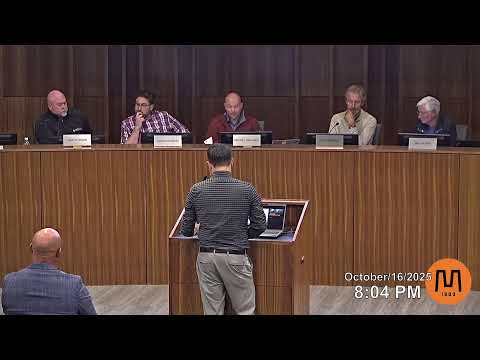
Planning Commission endorses new water-use and preservation element to meet state requirement
Loading...
Summary
The commission unanimously recommended that the City Council adopt a new Water Use and Preservation element of the general plan, aligning local goals with state law (SB110, 2022) and city conservation initiatives including AMI metering and turf-reduction targets.
The Murray City Planning Commission on Oct. 16 unanimously voted to forward a new Water Use and Preservation element of the city’s general plan to the City Council, fulfilling a state requirement and formalizing several water-supply, conservation and infrastructure strategies.
Zach Smallwood, planning staff, presented the proposed element and explained that state law (Senate Bill 110, 2022) requires most cities to include a water-use and preservation chapter in their general plans. Smallwood outlined the element’s overarching goal — to ensure policies, ordinances and capital funding strategies support supply, infrastructure and conservation — and five objectives with implementation strategies and deadlines. Key items include: installing advanced metering infrastructure (AMI) across the Murray system by Dec. 31, 2026; conducting a well-sustainability study by Dec. 31, 2028; amending landscaping standards to reduce turf in non-active areas (a change planning staff noted had already been adopted); and developing a green infrastructure plan by 2030.
Aaron Frisk, Water Superintendent, answered technical questions about rates, incentives and AMI deployment. Frisk said Murray’s water utility rates remain among the lowest in the Salt Lake Valley and that the city has mailed utility-bill inserts and posted rebate/incentive details on the city website. He said AMI installation is underway; the new meters will provide near–real-time usage data that can flag continuous high usage (possible leaks) and enable automated customer notifications.
Commissioners asked about likely conservation gains and the equity of water rates. Staff noted Murray has reduced gallons-per-capita-per-day in recent years and that about 60% of city water use is for irrigation; single-family accounts represent the largest share of usage. Staff also said the water fund regularly updates rates and impact fees to maintain financial sufficiency and that utilities transfer a modest amount to the general fund as part of the city’s budget practice.
A motion to recommend adoption of the Water Use and Preservation element as presented was moved and seconded; the commission voted unanimously to forward the element to City Council for action. Smallwood said the state requires adoption by the end of the calendar year; staff will present the adopted element to the state as required.
Votes at a glance: motion to recommend adoption of Water Use and Preservation element to City Council — RECOMMENDED (unanimous).