District finance director says new high school remains on time and on budget; five-year forecast improves after local income-tax increase
Loading...
Summary
District finance staff presented the monthly financial report and five-year forecast, reporting that the new high-school project remains on schedule and on budget and that the community pproval of a local income-tax supplement improved projected cash balances; the board approved the forecast.
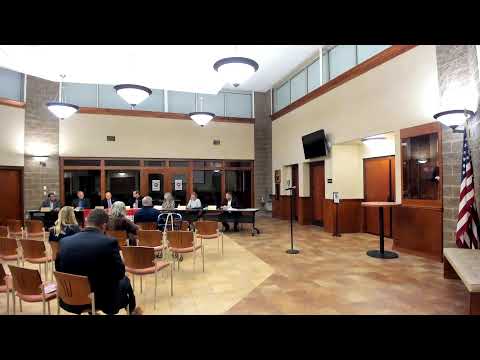
A district finance staff member identified as Matt presented the district's monthly financial report and five-year forecast at the board's Oct. 15 meeting, reporting that the new high school construction bid activity produced expected pricing and the project remained "on time and on budget." After the presentation, the board voted to approve the forecast.
What the presentation covered - Construction and schedule: Matt said contractor bids for the new high school attracted reputable firms and came in on par with expectations; building foundation work was scheduled to start within two weeks and steel erection would follow. He reported the new parking lot is installed and that crews would begin foundation and masonry work shortly. - Short-term finances and monthly results: for the month of September the district collected approximately 99% of projected monthly revenue and expenditures ran close to projections; investment returns referenced included StarOhio at about 4.4% and money-market yields around 4.5%. - Five-year forecast changes: Matt said the income-tax increase passed by the community improved the forecast cash balance compared with the May forecast. He built modest growth assumptions into revenues (the forecast applied an average growth figure and a modeled 7.26% average change when incorporating the local income-tax supplement) and kept expenditures largely aligned to May projections while adding conservative increases for health insurance (5%) and some purchase-of-service categories. - Pipeline/public-utility personal property and legal context: the presenter noted a pending Supreme Court ruling and related court/valuation outcomes that could increase public-utility personal-property valuations and create additional collections and back taxes; he also referenced new county budget-commission authority ("HB 309" was discussed) and how earlier filing deadlines for forecasts were driven by changes in oversight. - Budget composition and risk factors: salaries and benefits make up the majority of spending (Matt said roughly 78% of expenditures are salaries/fringes). He noted planned transfers of roughly $1.7 million into capital projects and severance funds (pipeline proceeds were being used to seed those funds). He warned that legislative proposals at the state level could affect levy calculations and long-term local revenue.
Direct quote - On the construction schedule and price environment Matt told the board, "I'm extremely happy to report that the bid cost submitted by the trustworthy companies were on par with what was expected and our overall project remains on budget." He later said plainly, "So on time and on budget."
Board action - The board voted to approve the financial report and five-year forecast that same evening. (Motion made and seconded; roll call returned a vote in favor.)
Why it matters: the forecast and the construction update together affect capital planning, transfer decisions to project and severance funds, and near-term operating flexibility. Matt emphasized that the forecast remains conservative because of uncertainty at the state level and potential legislative changes affecting local revenue calculations.
Follow-up and next steps Matt said the district will revisit the forecast in February and update figures if legislative or valuation changes occur. He also said the district will continue to monitor public-utility valuations and the implementation details of any new state-level rules that could alter levy calculations.