Bowling Green schools earn 4.5-star state report card; officials flag early-literacy, gifted identification as priorities
Loading...
Summary
Deputy director Rachel Hall walked the board through the district nd building-level results on the Ohio Department of Education'024 istrict report card, highlighting a 4.5-star overall rating, strong growth metrics and target areas including early literacy and gifted identification.
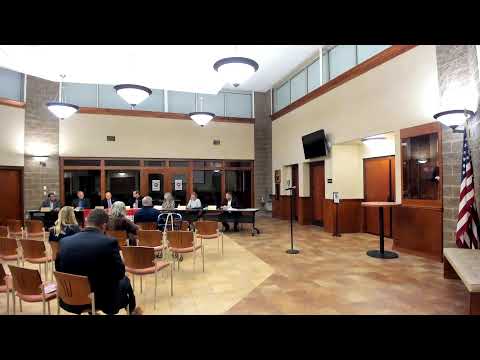
Rachel Hall, deputy director of teaching and learning for Bowling Green City Schools, presented the district nalysis of the Ohio Department of Education'024 report card Friday and described where the district outperformed state expectations and where it will focus next.
Hall said the district received a 4.5-star overall rating on the state report card. She described the two heaviest-weighted components chievement and progress s the district's primary strengths and walked the board through component-level data and the state—alculations that produce the performance-index percentage and star ratings. "This is how the weights are for each of the components in the walk through tonight," Hall said as she opened the presentation.
Why it matters: the state report card is the Ohio Department of Education ccountability snapshot most districts use to track academic performance, subgroup outcomes and readiness measures. Hall told the board that the district—ontinues to show improvement on the performance-index percentage while the state is simultaneously raising the bar.
Key results Hall presented - Overall: 4.5 stars districtwide (district meeting or exceeding state standards overall). - Achievement: 4 stars (scores come from state assessments across tested subjects). Hall gave a district performance-index numerator of 90.6 in her explanatory slide and showed historical upward movement in that percentage. - Progress: 5 stars (the growth metric uses three years of student growth, weighted heavier toward last year). - Gap closing: 4 stars (a composite that examines subgroup achievement and growth; Hall said gap-closing fell from 5 to 4 stars this year and identified subgroup shortfalls that will be tracked). - Early literacy: maintained 3 stars with a composite score of 70.8 on the combined measures (third-grade assessment proficiency, promotion to fourth grade and K' intervention/monitoring plans); Hall noted the third-grade cut score used by the state was raised to 700 last year. - Graduation: 4 out of 5 stars; Hall reported a four-year graduation rate of 95.3% (up from 94.9%) and a five-year rate that decreased slightly to 95.7%. - College, career, workforce and military readiness (CCWMR): 4 stars; Hall reported 77.8% of the four-year cohort met the state—CWMR criteria in the measures the state uses (AP/CCP, industry credentials, technical assessments, honors diplomas, enlistment, apprenticeships and others).
Subgroup and program details Hall emphasized - Gifted identification and services: the district identified and reported 66 of 125 eligible students (52.8%) as both identified and serviced for gifted programming; Hall said the state standard for full credit on that indicator is 80% and that the district fell short on that measure. - Chronic absenteeism: Hall reported the district missed the state target (16.4%) with a local rate around 17%, and she said principals and building teams are focusing on strategies to reduce absenteeism. - Assessment supports and curriculum: Hall described ongoing MTSS (multi-tiered systems of support) implementation, targeted vendor assessments (i-Ready and AIMSweb), the district's ELA curriculum rollout in K— and a newly formed district math committee to set math instruction priorities. - Supports planned or in progress: building-level data dives for administrators (an admin meeting was scheduled the week after the presentation), targeted professional development and a spring fidelity review with the Education Service Center of Lake Erie West to audit reading instruction materials and practices.
Quotations and context - "This is how the weights are for each of the components in the walk through tonight," Hall said as she opened the presentation and explained component weighting and how the performance-index percent is calculated. - Hall noted the rising state denominator: "every year the state's increasing that. Last year it was 109.26. This past grade card, they made it 109.8. So they are increasing that bar for us."
What the board discussed: board members praised the clarity of Hall—riefing and the district—fforts; no board action or vote followed the presentation. Hall and board members emphasized sustaining data-informed, incremental changes rather than wholesale short-term shifts in programs.
Next steps Hall cited: building-level data dives, continued MTSS and PBIS tier implementation (including new tier-3 PBIS supports this year), professional development tied to the district—LA adoption and a spring review with the ESC of Lake Erie West to check reading-fidelity instruments and adult implementation needs. She said some CCWMR submeasures need staff training to ensure the district captures and reports the evidence (for example, the documentation steps for military enlistment and apprenticeships).
No formal action was taken on the report card at the meeting; the presentation was received for information.