Get Full Government Meeting Transcripts, Videos, & Alerts Forever!
Get email alerts on the Cultural Repository Transition topic
No spam. Unsubscribe anytime.
University of Guam transfers Guam Cultural Repository operations to Department of Chamorro Affairs; staffing and JRM intake plans remain work in progress
Summary
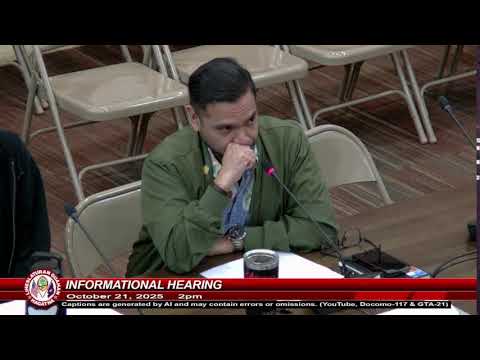
The Guam Cultural Repository (GCR) has moved from the University of Guam to the Department of Chamorro Affairs, agency and university witnesses told a legislative hearing Oct. 21, but officials said several operational and funding questions remain as the repository ramps up to receive large incoming collections.
The Guam Cultural Repository (GCR) has moved from the University of Guam to the Department of Chamorro Affairs, agency and university witnesses told a legislative hearing Oct. 21, but officials said several operational and funding questions remain as the repository ramps up to receive large incoming collections.
Monique Storey, representing the University of Guam, told the committee the original memorandum of understanding established UOGmanagement of the repository to stand up operations and staffing; that MOU expired Sept. 30 and repository employees were transferred to the Department of Chamorro Affairs under the Guam Museum division. "The intent was always for the repository to return to the Department of Chamorro Affairs under the purview of the Guam Museum," Storey said.
Key points: repository staffing, federal standards and incoming materials
- Staffing: witnesses said the repository is currently operating with a staffing pattern intentionally limited to stand up operations but acknowledged the core technical complement is not yet fully staffed. Testimony noted an initial staffing level that was roughly half of the estimated full capacity for archival and archaeological technician roles; UOG and DCA said recruitment and conversion from limited-term to classified positions is under way.
- Federal standards and operations: Dr. Kelly Marsh (curator at the Guam Cultural Repository) and other witnesses said repository systems and standard operating procedures have been developed to meet federal museum standards and federal grant requirements that accompanied repository construction. They said collection-management plans, emergency and security protocols have been reviewed and are largely complete; some final steps were delayed until integration into DCA operations.
- Incoming materials, Joint Region Marianas (JRM) and fee structure: committee members asked about intake from military-related holdings. Witnesses said the repository was built to accept archaeological collections generated by development and mitigation work around the island, and that studies estimated capacity for decades of collections. Officials reported ongoing negotiations with Joint Region Marianas (JRM) on an intergovernmental support agreement and a proposed implementation plan under which JRM would initially transfer roughly 120 boxes per year (about 10 boxes per month) as a practical intake rate while collections are prepared to meet repository intake standards. DCA staff said they have developed a fee schedule for short-term curation and long-term storage intended to recover specialized costs (archival materials, climate control, specialized equipment) though the military had not yet committed to a final fee arrangement.
Funding and sustainability: witnesses described the original construction as federally funded (grant for repository construction) with a 30-year operating expectation tied to that investment. They told senators that sustaining operations remains largely a local responsibility: appropriated funds and adopted fee schedules are intended to cover recurring costs, but committee members pressed for clarity on long-term funding, insurance and security costs that were higher under university administration.
Timeline and expectations: witnesses provided an operational estimate that, if JRM maintained the proposed 120-box-per-year pace, some backlog of older Navy-held collections could be transferred in approximately four years; they also said JRM and other contractors may condense collections during processing, which could reduce volume. Senators asked for copies of the draft intergovernmental support agreement and for clear milestones and cost estimates.
Why it matters: the repository is the islandand regionprimary facility for curating archaeological materials and ancestral cultural items; its functioning determines whether artifacts discovered during construction and development are preserved to museum and research standards and whether they can be made accessible for community use and scholarship.
Ending note: committee members praised collaboration between the university and DCA but asked administrators to provide the committee with draft intergovernmental agreements and clearer staffing and budget timelines. Witnesses said they would continue recruitment efforts, finalize classification of positions, and coordinate with DOA and OFB on insurance and ongoing contractual costs.