Get Full Government Meeting Transcripts, Videos, & Alerts Forever!
Get email alerts on the Budget And Accountability topic
No spam. Unsubscribe anytime.
MNPS board approved $6.5 million settlement last week; meeting features legal defense and widespread public criticism
Summary
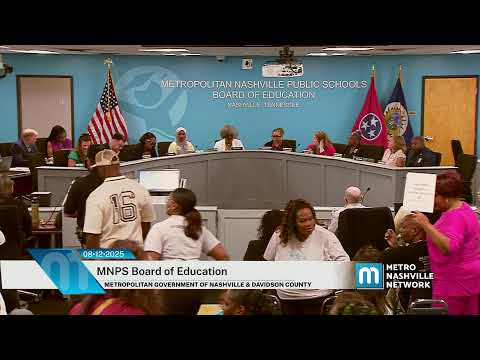
The Metro Nashville Public Schools board last week approved a mutual settlement of lawsuits totaling $6,500,000, a resolution the board chair described at Monday’s board meeting as intended to avoid prolonged litigation and operational disruption.
The Metro Nashville Public Schools board last week approved a mutual settlement of lawsuits totaling $6,500,000, a resolution the board chair described at Monday’s board meeting as intended to avoid prolonged litigation and operational disruption.
Board Chair Statement and Legal Explanation
At the start of the meeting the board chair recounted that the suits stemmed from personnel and operational decisions the board and district made five years ago during a period of leadership transition and the early pandemic. The chair said the settlement “does not suggest wrongdoing and will be funded from the reserves without impacting daily operations,” and reiterated the board’s support for Director of Schools Dr. Adrienne Battle.
Wally Dietz, director of law for the Metropolitan Government of Nashville and Davidson County, told the board that the city’s law department recommended settlement after extended litigation and mediation. Dietz said the department concluded the district and Dr. Battle did not act improperly but that settling was a prudent business decision to avoid the risk of larger awards and attorney fees and to allow district leadership to focus on opening schools. “We settled because it was a business decision,” Dietz said, adding that the law department “strongly supported the settlement.”
Public comment at the meeting was dominated by criticism of the settlement and calls for greater accountability and transparency. Multiple speakers said the payout should not come at the expense of classroom resources.
‘‘As a taxpayer, I am deeply concerned about the recent $6,500,000 settlement approved by this board,’’ said Kendall Moffin, who described herself as an exceptional education parent. ‘‘That money could have been spent on individualized supports and trained staff for our most vulnerable students.’’
Other public speakers echoed that theme. Kimberly Moore said the settlement funds “are coming out of the 2025 budget” and asked that the board prioritize reading supports and classroom resources. Carla McAllister called the settlement ‘‘a pattern of secrecy, poor judgment, and reactive leadership’’ and warned that the payout was reducing resources available now. Theodore (Ted) Wills quantified the tradeoff in staffing: ‘‘$6,500,000 is the equivalent of roughly 81 teaching positions that could have been funded for this school year,’’ he said.
Several speakers also called for independent investigation or more robust board oversight of the superintendent’s office and district processes. Elizabeth McCann urged the board to address alleged patterns of retaliation and to reinstate processes that encourage staff and parents to report concerns without fear.
Support for district leadership was offered by other public commenters. Christopher Garner, a community member, described district improvements under Dr. Battle’s five-year tenure and urged caution about disrupting progress. Multiple educators and parents attending the meeting offered testimony about expanded supports and outcomes under current leadership.
Board action and procedural votes
The meeting’s procedural votes recorded during the session included unanimous approval of the meeting agenda and of the consent agenda. Member Young made the motion to adopt the agenda; the chair announced the motion passed unanimously (9–0). Member Mayes moved the consent agenda and Member Fane seconded; the chair announced unanimous approval.
Why it matters
Board legal staff and the chair framed the settlement as a way to reduce risk and avoid protracted litigation costs and disruption, with the district’s general reserves identified as the funding source. For many parents and community members at the microphone, the settlement raised immediate questions about priorities and oversight because speakers said the funds could be used directly in classrooms and support services.
What the board said it would do next
At the meeting the chair and the law director characterized the settlement decision as final and defended it as fiscally prudent; the city law department noted the consolidated nature of multiple suits and the risk of higher attorney fees if the district proceeded to trial. Public speakers asked the board for concrete follow-up steps — including greater transparency about the settlement details, independent review of alleged personnel issues, and commitments to direct future resources to literacy and exceptional education supports — but no new board directive or additional independent review was recorded on the meeting agenda.
Ending
The settlement was already approved by the board prior to this session, and legal staff said the district will fund it from reserves. Public reaction at the meeting shows significant community concern about the payout and a demand for clearer public accountability and detail on how the district will protect classroom resources going forward.