Get Full Government Meeting Transcripts, Videos, & Alerts Forever!
Get email alerts on the Rezoning Housing topic
No spam. Unsubscribe anytime.
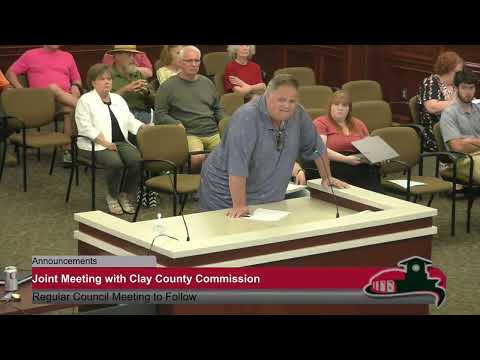
City council hears pleas from mobile‑home residents as owner seeks rezoning to R‑3; council debates delayed effective date
Summary
Property owner William Wood asked the council to rezone a Plum Vista trailer‑court parcel from R‑2/R‑4 to R‑3 to allow apartments; residents, citing fixed incomes and 30‑day leases, urged protection and clearer relocation assistance. Council discussed and ultimately debated delaying the ordinance’s effective date to June 1, 2026.
Vermillion city councilors held a public hearing and extensive discussion on a proposed rezoning of a parcel that includes part of Plum Vista Trailer Court, advancing the measure on first reading while the city and the property owner promised additional time and outreach for affected residents.
City staff described the request as an owner‑initiated rezoning of land split between R‑2 and R‑4 residential districts into R‑3 multi‑family residential. “Zoning this lot into the R‑3 District will allow…a higher density construction,” a staff presentation said. The item was presented as ordinance 15‑38 on first reading.
Six households living in the trailer court spoke or submitted written testimony opposing the rezoning. Julie Berry submitted a written statement that was read into the record asking the council to “vote no” and asking for clarity about relocation help, timelines, and whether permit activity would be shared with residents. She wrote that the park has been “my anchor” and warned that replacing the site with apartments “erases affordability.”
Other residents and commenters raised similar concerns about noise and access easements, the age and movability of trailers on site, and whether the owner would provide relocation assistance. “I’m most concerned about pneumatic wrenches…if that could be restricted within the 6 to 9 time frame,” resident Patrick Roach said when describing potential evening‑hour noise.
William Wood, who identified himself as the property owner, said he bought the parcel to improve it and that he did not plan immediate displacement of tenants. “I’m willing to…wait until June 1, 2026,” Wood told councilors and said his property manager has been communicating with current tenants. He also said he would help connect residents to spaces in nearby trailer courts and “do what we can” to ease transitions while acknowledging many homes may be old and unmovable.
Chamber of Commerce representative Jim Peterson told the council the project could bring 15–25 jobs and increased tax revenue and said the owner had discussed moving options with neighboring trailer‑court operators. City staff and the planning and zoning commission had reviewed the application and recommended advancing the rezoning. Staff noted many of the existing mobile‑home leases are on 30‑day terms and that delays in effective dates could give residents time to relocate and for the city to coordinate responses.
Council debate focused on balancing the property owner’s development rights and neighborhood stability. Several councilors urged setting a standard delay for rezonings that materially affect occupied housing; others said the owner’s pledge to delay development until mid‑2026 mitigated urgent harm. A motion to advance the ordinance to a second reading without committing to an effective date failed on a roll call (majority voted no). Councillors then moved to reconsider and set the ordinance’s enforcement/effective date at June 1, 2026; that motion passed on roll call.
Councilors and the owner repeatedly said they would continue communication. City staff advised that building permits for uses allowed under the new zoning could not be pulled until any effective date in an adopted ordinance, and that permits and permit extensions are public records. Staff also described prior experience with relocation grants for a previous park conversion and said such funding was administratively complex and sometimes limited in what it could cover.
The council’s action advanced the rezoning on first reading and separately recorded an agreement on an effective/enforcement date; councilors said they expect to revisit the ordinance at a second reading in mid‑September with staff to draft an effective‑date provision and monitor relocation assistance options.