Get Full Government Meeting Transcripts, Videos, & Alerts Forever!
Get email alerts on the School Finance topic
No spam. Unsubscribe anytime.
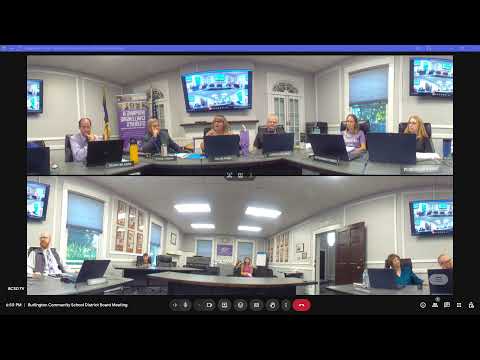
Burlington school board approves $7.1 million PPEL notes to protect levy amid possible state changes
Summary
The Burlington Community School District board voted to issue approximately $7.12 million in short-term notes backed by the district's $1.34 PPEL after hearing financing scenarios and risks tied to pending state property-tax proposals.
The Burlington Community School District board on Monday voted to issue about $7,115,000 in short-term PPEL notes, borrowing against the district's $1.34 physical-plant-and-equipment-levy (PPEL) to lock in revenue for a planned auditorium and middle-school project.
The motion, described by the district's financial advisers as a defensive strategy against potential state property-tax reforms, passed on a voice vote after an extended presentation and board discussion.
The advisers framed two financing options. Tim Oswald of Piper Jaffray told the board the district could borrow either an amount roughly tied to the 67-cent portion of the levy (about $3.5 million) or borrow against the full $1.34 levy (about $7.1 million). "If the goal is to play defense and lock up the tax ... it'll cost less than $30,000 to lock that in and play that defense," Oswald said, describing the roughly $25,000 difference between the two options over the debt period.
Why it matters: The board is preparing for possible state-level property-tax changes that were proposed during the last legislative session and could reduce the district's PPEL receipts. Borrowing now against the full $1.34 levy would create outstanding debt that may be grandfathered if the legislature reduces allowable levies later, district advisers said.
Details of the plan and debate
Oswald presented six financing goals and two main options. He said the district's current PPEL runs through 2030; the notes would be repaid over fiscal years 2026 through 2030. He described fixed upfront costs (legal, ratings, disclosure) and variable costs tied to the size of the borrowing, and recommended attempting to place the notes with banks first and pivoting to a public offering if bank terms proved unattractive.
Greg Reynolds, the district's administrator who introduced the presenters, joined Oswald during the discussion. The advisers emphasized the timeline: pursue bank proposals in the coming weeks, call a special meeting if attractive bank offers appear, and close the financing by December if a public offering is needed.
Board members asked about project timing, whether the financing would slow construction, and how the district would make up any shortfall if it borrowed only against the 67-cent portion. Oswald said construction timing would not be delayed and repeated that the choice was essentially a trade-off between a small incremental cost now (the $25,000 range over the debt life) and protecting revenue if state law changes.
Board action
A board member moved to choose the second option, borrowing against the full $1.34 PPEL and issuing approximately $7,115,000 of PPEL notes with repayment in fiscal years 2026''''''''''''''''''''''''''''''''''''''''''''''''''''''''''''''''''''''''''''''''''''''''''''''''''''''''''''''''''''''''''''''''''''''''''''''''
(All those in favor, "aye"; none opposed; motion passed.)
What the board directed next
The board instructed district staff and advisers to proceed with the plan to borrow against the $1.34 PPEL, pursue bank proposals first, and pivot to a public market offering if needed. The advisers said they would ask the board to hold a special meeting if a bank proposal required formal approval before the planned October closing.
Implementation notes and timeline
Oswald said bank placement would be pursued immediately, with closing in October if bank proposals were accepted; a public offering route would aim for a December close. The advisers noted the legal and administrative steps that affect cost and timing, including continuing disclosure obligations if a public market offering is used.
Speakers (quoted)
- Tim Oswald, financial adviser, Piper Jaffray - Greg Reynolds, district administrator (presenting/introducing advisers)
Ending
With the vote, the board moved to lock in financing that advisers said would preserve PPEL revenue for the next four years even if the state enacts levy limits. The board asked staff to return with bank proposals or, if needed, a public-offering plan for final approval.