Get Full Government Meeting Transcripts, Videos, & Alerts Forever!
Get email alerts on the Tax Policy topic
No spam. Unsubscribe anytime.
Senate passes bill to eliminate sales-tax vendor fee after heated debate; 18-17
Summary
The Colorado Senate approved House Bill 25 B 1005, eliminating the state'authorized vendor fee retailers collect for remitting sales tax. The measure passed 18-17 in a special session vote after lengthy floor debate over impacts on small businesses and state revenue.
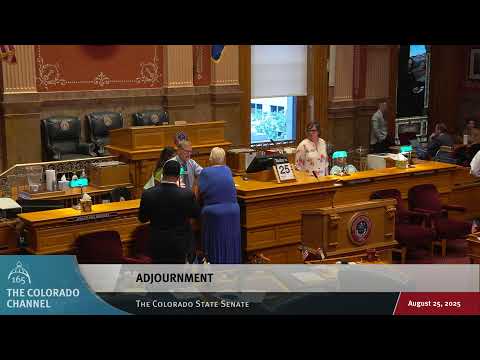
Senate lawmakers on Monday passed House Bill 25 B 1005, a measure to eliminate the so-called vendor fee that allows most Colorado retailers and restaurants to retain a portion of state sales tax they collect. The bill passed on final reading 18-17.
Senator Kipp, the bill''s sponsor, told colleagues the elimination was intended to help close a budget shortfall created after federal tax changes. "This bill will eliminate what we some people call the vendor fee," Senator Kipp said on the floor, adding, "we do not generally pay people to pay their taxes. We do not generally pay people to comply with the law." Kipp framed the change as a contribution to the state's immediate revenue needs and said the measure would simplify sales tax collection.
The bill drew sustained opposition from senators representing both urban and rural districts who warned it would further squeeze small businesses already facing tight margins. "Small businesses are the backbone of our economy," said Senator Carson. "This bill punishes small businesses... We should be incentivizing our small businesses, not punishing them." Senator Frizzell, the Senate minority leader, called the move "maddening" and pressed that the special session should focus on spending cuts rather than additional burdens on businesses.
Supporters stressed the fiscal context for the special session. Senator Kipp and other supporters said Colorado's budget was moved out of balance after the federal HR 1 tax changes and that state action was needed to avoid deeper cuts to services. Senator Winter, a co-sponsor, noted the measure's fiscal effect and argued it would free tens of millions for the Joint Budget Committee to allocate: "This is $56,000,000. That is over a thousand teacher salaries," Winter said, urging colleagues to approve the bill.
Opponents described the fee as a modest reimbursement to retailers for the cost of collecting state sales tax. Several senators cited examples and committee testimony showing the allowance currently compensates retailers for recurring monthly work and recordkeeping. "We are paying retailers and small business people to go collect our sales tax that we charge on people," Senator Kirkmeyer said, adding that the fee does not fully cover businesses' costs but is nonetheless important to margins.
Voting and next steps: The motion to pass House Bill 25 B 1005 on third reading and final passage was made by Senator Kipp. The Senate recorded 18 ayes and 17 noes; the motion carried and the bill passed. The Senate journal and committee proceedings record the motion and the roll-call sequence.
Why it matters: Lawmakers said the package of measures in the special session, including this bill, is aimed at addressing a revenue shortfall they attribute to federal tax changes. Supporters argue the bill will help preserve funding for core services; opponents say it shifts costs onto small businesses and risks economic fallout for local retailers.
The debate over the vendor fee was among the most extended on the special-session floor. Senators on both sides said they would continue discussions about additional relief and future policy options in the 2026 regular session.
Votes at a glance: The Senate passed House Bill 25 B 1005 (vendor-fee elimination) 18-17 on final passage.