Get Full Government Meeting Transcripts, Videos, & Alerts Forever!
Get email alerts on the Government Accountability topic
No spam. Unsubscribe anytime.
Pike County public commenter alleges improper signatures on grant documents; commissioners, solicitor say county followed process
Summary
During public comment, a county employee and resident raised concerns that documents tied to a large grant lacked the property owner's signature and could create taxpayer liability; commissioners and the county solicitor said the matter had been reviewed by auditors and state officials and that no malfeasance was found.
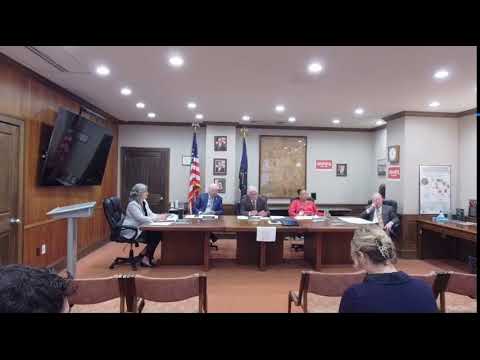
A member of the public and county employee raised repeated concerns at the Aug. 20 Pike County commissioners meeting about a previously awarded grant and whether the private property owner had signed documents that enabled county actions tied to a grant worth more than $125,000.
The commenter said she reviewed submitted documents and found none contained the property owner's signature and that a county employee had signed on the owner's behalf without a legal document authorizing that signature. She told the commissioners she had been advised by an attorney that the omission could create liability for taxpayers and said the Pennsylvania Housing Finance Agency (PHFA) had told her a deed restriction or lien for 10 years would be required to ensure units remain affordable.
Commissioners and the county solicitor responded that state officials had been consulted and that PHFA (referred to in the meeting as DHFA/PHFA in different exchanges) had said placing a deed restriction or lien was a local decision and was not required by PHFA for the grant at issue. The solicitor said county auditors and other agencies had reviewed the documents and found no findings of wrongdoing.
The exchange became contentious. One commissioner told the commenter she had raised the issue repeatedly over more than a year and that other auditors and officials had concluded her claims were incorrect; another commissioner urged restraint and said there was no evidence of theft or misappropriation and that policy mistakes, if they exist, could be corrected administratively.
During the discussion a commissioner noted the existing indenture on the property dated to the early 1990s (one speaker said 1991 and 1992, another said 1996) and said there was no indication the property owner would stop providing low-income housing. The commenter said the existing indenture appeared to expire the following year and warned taxpayers' investment might not be protected.
County officials encouraged the commenter to pursue state agencies and legal remedies if she remained concerned; the solicitor said the matter had been reviewed and the prior determinations stood. The board did not take any immediate formal action on the complaint during the meeting.
The remarks occurred during the meeting's public-comment period and included references to ongoing litigation and prior audits.
Speakers at the public-comment exchange included the commenter (identified in the transcript only as a county employee/resident raising the issue), County Solicitor (identified in the meeting as the county attorney), and several commissioners who debated whether further action was necessary.
No motions or votes related to this public comment were recorded on the meeting agenda.