Get Full Government Meeting Transcripts, Videos, & Alerts Forever!
Get email alerts on the Community Cultural Preservation topic
No spam. Unsubscribe anytime.
Residents ask Jonesboro for transparency after E. Boone Watson Center closed to public
Summary
Community members urged the city to preserve and restore access to the E. Boone Watson Center and its African American culture exhibits after the facility was closed to the public; speakers requested regular updates and an alternate site if closure is long-term.
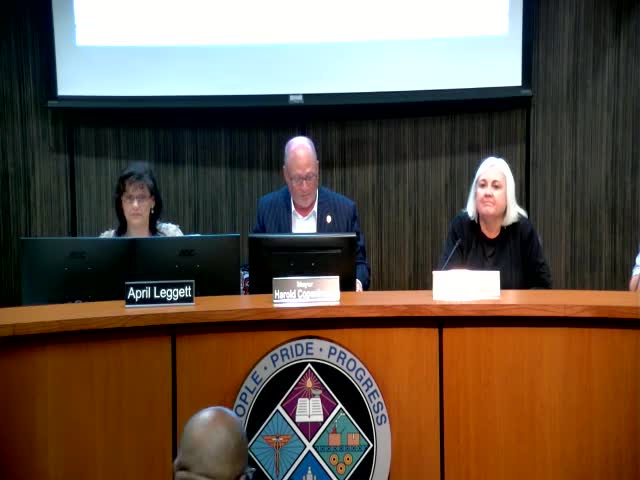
During the public-comment section of the Aug. 19 Jonesboro City Council meeting, resident Jamal Carter urged city leaders to provide transparency and a plan after the E. Boone Watson Center was closed to the public.
Carter said the center, which houses the Craighead County Jonesboro African American Culture Center and preserves local Black history, is “more than just a building” and urged the city to protect the center’s historical collections and to identify an alternative space for community use if the closure will continue.
“The E. Boone Watson Center is more than just bricks and mortar. It holds our legacy,” Carter said, describing the site’s history: that it stands on the site of the former Industrial High School (built 1924), was renamed Booker T. Washington High School in 1935, and later became the Patrick Street Community Center before being renamed for E. Boone Watson in 1984. Carter said the museum’s curator, Roger McKinney, has led exhibits for more than 36 years.
Carter said some community members reported parole-and-probation-related activity in the building and said state regulations may limit public access while certain agencies occupy the facility. He asked the city to be transparent about the timeline and, if the closure will be prolonged, to secure an alternative location so families and groups can continue to use a community space and so the museum exhibits remain accessible.
Mayor and council members acknowledged the inconvenience and said they would provide updates. Council member Anthony Coleman was among elected officials addressed by Carter; no formal action or vote was recorded on the center’s status during the meeting.
Carter asked the city to communicate progress to the broader community, noting that not all residents attend council meetings, so city updates by email or social channels would help keep the public informed.