Get Full Government Meeting Transcripts, Videos, & Alerts Forever!
Get email alerts on the Land Use Environment Unca Woods topic
No spam. Unsubscribe anytime.
Residents urge county to press UNC Asheville on urban-forest development plans
Summary
Speakers at the Buncombe County Board of Commissioners meeting urged commissioners to press UNC Asheville to halt or significantly revise plans to develop the university's on-campus woods, citing environmental, legal and community concerns.
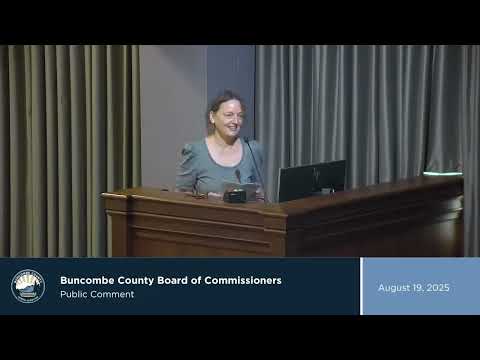
Speakers during the public-comment period at the Buncombe County Board of Commissioners' Aug. 19 meeting urged the board to press UNC Asheville to alter proposed development plans for the school's adjacent urban forest and to ensure more local oversight.
The public comment included representatives of Save the UNCA Woods and nearby residents who described the forest as an ecological and community resource and criticized the university's process and chosen private developer. "UNCA has, up until last Thursday, taken the opposite tack, attempting to force through poorly thought out plans with minimal discussion and no local buy in," said Woody Davis, a neighborhood resident who testified to the commission. Heather Rayburn, a volunteer with Save the UNCA Woods, told commissioners, "Chancellor Van Nort says she wants $29,000,000 in public funding to level the urban forest to raise money for the school," and argued the community has not received adequate public records or transparent engagement.
Why this matters: speakers said the woods serve as habitat, carbon storage, a student learning lab, and a neighborhood amenity, and warned that development could cause irreversible environmental harm. David Clark of UNC Asheville, speaking as a neighbor, praised civil local advocacy and asked the board to continue engagement. Several commenters pointed to past problems with public-private campus development elsewhere in the UNC system and urged the board to press for stronger contractual protections and local accountability if projects move forward.
Details from the meeting: commenters cited specific ecological concerns including documented butterfly and bird species in the woods and the role of native host plants and leaf litter for insect life. Heather Rayburn described recent university steps as a pause in negotiations and formation of a commission, but said the pause "is welcome, but it's not a win." Several speakers thanked the board for a letter sent earlier in the day asking UNC Asheville leadership to include a county commissioner on the university's commission to advise on the project.
Board response and next steps: Chair Edwards (presiding) and staff acknowledged the public comments and noted the letter to Chancellor Van Nort is posted on the county website. No formal county action on land-use authority or a county-level development review was recorded at the meeting; speakers asked the board to continue oversight and public engagement.
Ending: Speakers invited community participation in upcoming events and direct engagement with the university process. No formal vote on policy changes or county land-use authority occurred during the meeting.