Get Full Government Meeting Transcripts, Videos, & Alerts Forever!
Get email alerts on the Tax Policy topic
No spam. Unsubscribe anytime.
Public hearings draw sustained opposition and questions over use of county sales tax to fund roads, jail and fire services
Summary
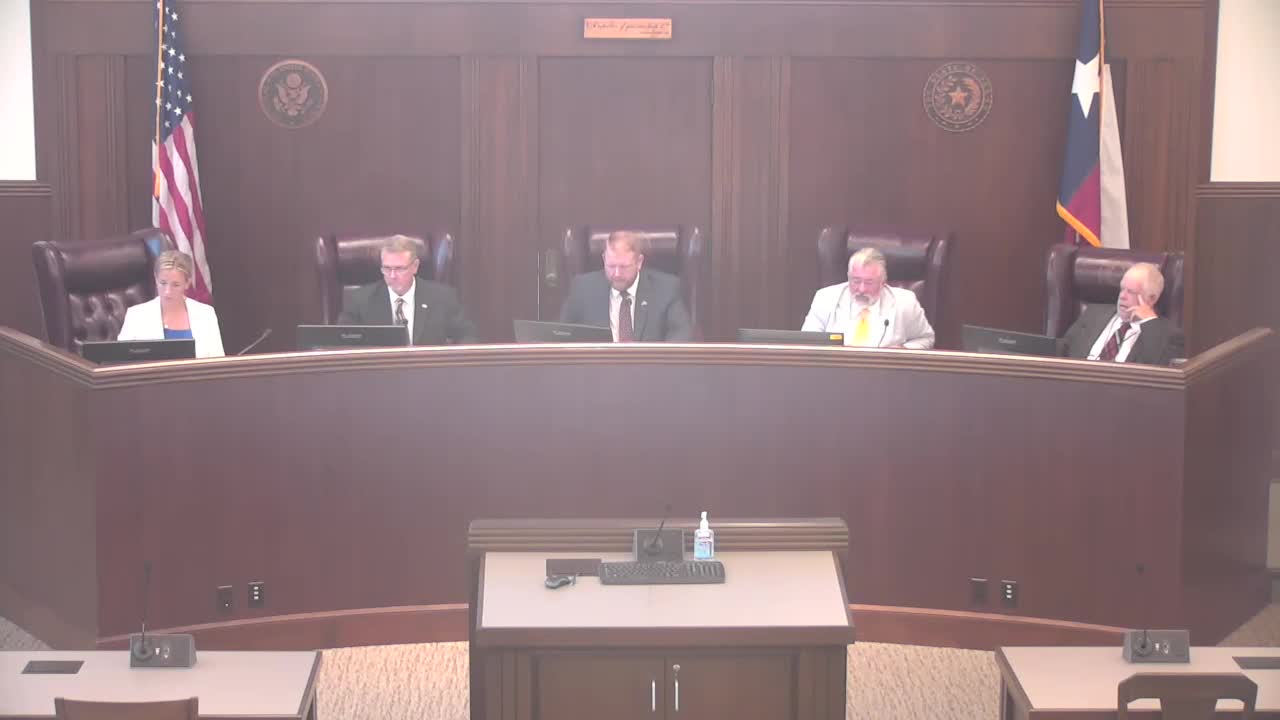
Guadalupe County held public hearings on Aug. 12 about calling an election to establish county assistance districts (sales-tax increase). Multiple residents and several commissioners questioned projected revenue, the geographic reach (ETJs) and whether fund balance or other cuts could avoid a tax increase.
Guadalupe County held a public hearing Aug. 12 to solicit input on whether to put a sales tax increase for one or more County Assistance Districts (CADs) on the ballot. The court did not vote to call an election; commissioners said the record of public comment would inform decisions as the budget process moves toward final adoption on Sept. 2.
Why it matters: CADs would allow counties to ask voters to increase the local sales tax — a consumption tax — to fund a limited set of services: road construction, law enforcement, detention and jail facilities, fire protection, and economic development. The proposal would not raise property taxes but would increase the sales tax paid by anyone who makes taxable purchases in the district.
Public comments and concerns
Residents and community members who spoke opposed putting the question on the ballot at this time. Terry Harper, who identified himself as active in Republican Party politics, told the court that increased taxes are politically unpopular and said elected officials should be reluctant to use a ballot measure to shift political responsibility. A different commenter said: “I would like to see the abatement end … ending that abatement would generate more revenue.”
Questions from the public and commissioners focused on: whether the tax could include city extraterritorial jurisdictions (ETJs); how much revenue a CAD would realistically generate in largely unincorporated precincts; and what specific services would be cut if voters rejected a CAD. The court’s staff said state law allows notice to cities 60 days before calling an election and that cities may opt to participate; the court’s adviser explained that CAD funds can be spent only on five enumerated categories under state law, and that CADs are limited to sales-tax increases rather than property taxes.
Court discussion
County officials described pressures driving the conversation: rapid residential development in unincorporated areas, growing costs for roads and drainage, jail capacity concerns and unfunded state mandates. The County Judge said the county receives significant revenue late in the year (property-tax receipts arrive in December/January; the first sales‑tax receipts in December), creating a practical need for a fund balance. He outlined that Guadalupe County maintains several months of operating reserves and noted that neighboring counties carry far higher debt levels.
Several commissioners voiced concern about fairness if ETJs were excluded; one commissioner said they had only a handful of businesses in his precinct that would collect the additional tax and opposed taxing a small group of local businesses if ETJs were not included. Other commissioners urged continued public engagement and said the hearings are intended to gather ideas and alternatives rather than to set an immediate plan.
Clarifying details
- The proposed CAD would be a sales-tax increase (consumption tax), not a property-tax increase. Court staff said the county’s current sales-tax rate outside cities is 6.75% and that statutory maximums constrain additional levies until the allowed caps are met.
- Statutory reference: court counsel cited the Texas Local Government Code (transcript reference to “Local Government Code 387”) regarding district formation and permitted uses.
What’s next
No vote was taken to call an election. Court members said any decision to call an election would require public notice to cities, further study of revenue estimates (including whether to include ETJs) and additional public workshops. The court’s timeline requires that an election cannot be called this year for the proposed measure; commissioners discussed further outreach over the coming 12 months and additional public workshops prior to any formal action.