Get Full Government Meeting Transcripts, Videos, & Alerts Forever!
Get email alerts on the Community Engagement topic
No spam. Unsubscribe anytime.
Cambridge staff outline community-engagement strategy; residents and councilors press for clearer follow-through
Summary
City communications staff presented survey results, an organizational overview and a pilot "civic outreach squad," while residents and councilors pressed for clearer feedback loops, consistent data and stronger neighborhood outreach.
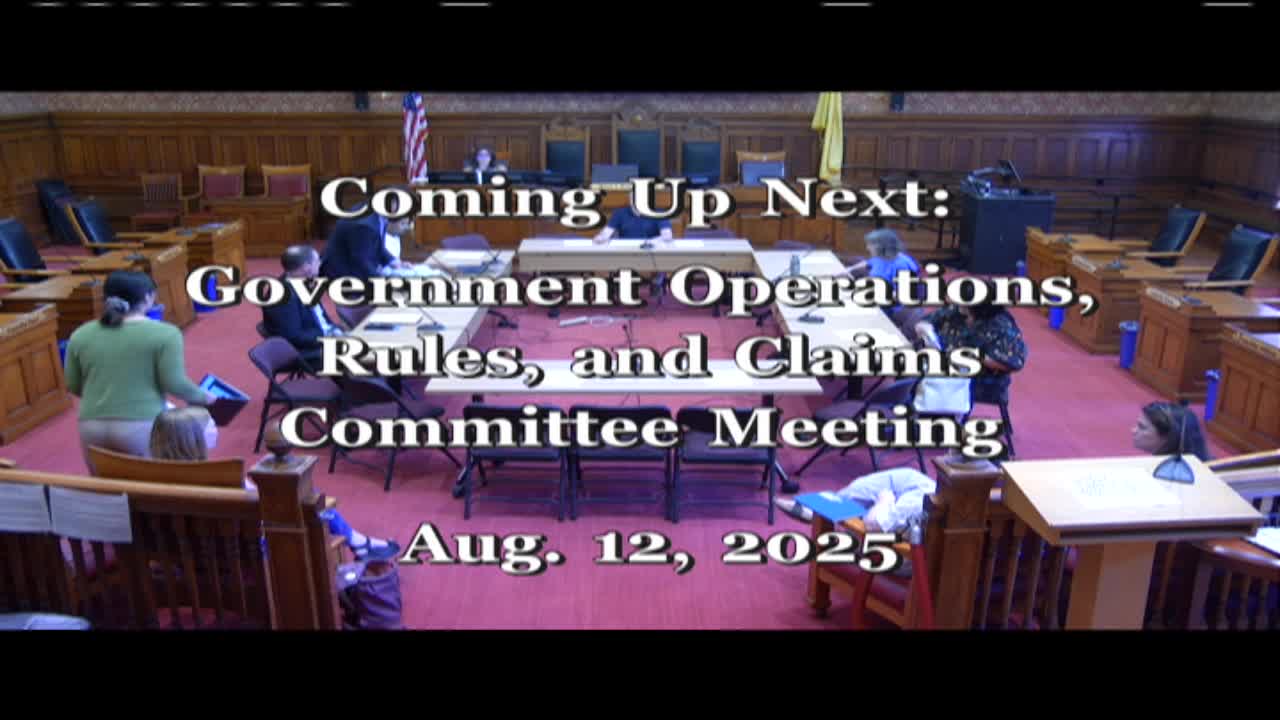
At a meeting of the Cambridge City Government Operations Rules and Claims Committee, city communications staff presented an update on the city’s community engagement function, its recent research and planned pilots while councilors and public commenters pressed staff to show how resident input changes outcomes.
The presentation, led by Jackson Price of the Office of Communications and Community Engagement, summarized a recent April survey and described a matrix model for embedding engagement expertise across departments. Price said the office is piloting a part‑time civic outreach squad to do door‑to‑door canvassing, event tabling and targeted phone outreach and that the office aims to prototype a citywide equitable engagement framework in fiscal 2026.
Committee chair Vice Mayor McGovern and other councilors said the presentation clarified methods but raised questions about follow‑through and consistency. Public commenters described repeated experiences of large planning exercises where they felt their input was not reflected in outcomes, and urged more transparency and stronger neighborhood support.
City staff outlined survey findings that staff said provide a baseline for goals and measurement: about 74% of respondents said Cambridge does a “good” or “excellent” job welcoming resident involvement; roughly 52% said city information was “very clear and useful”; about 29% said they actively seek city information weekly. Staff said participation tends to fall into four categories—inform, consult, collaborate and empower—and that most city efforts today fall into the inform/consult range.
Jackson Price said the civic outreach squad is intended primarily to broaden information access and recruit participants for programs and volunteer roles; it is a pilot scheduled for fiscal 2026 quarter 3. Price also told councilors the office plans to develop SMART goals tied to the randomized resident survey and to build better analytics for evaluating which outreach tools work best.
Public comment and council questions pushed the presentation into specifics. Helen Walker, a resident who identified herself as having attended many sessions of the Mass Ave Planning Study (MAPS), said the MAPS process did not welcome numeric feedback and cited a perceived shift from attendee preferences for lower heights to staff proposals for taller base heights. Walker asked the council to “consider whether this ultra‑processed engagement is leading to healthy results.”
Heather Hoffman, a resident, said the city has sometimes hidden information and that lack of trust has driven people to assume officials are not truthful: “There is a reason that a huge percentage of the people in Cambridge think that virtually everything we hear from the city government is a lie,” she said. Robert Winters, another resident, said he felt public feedback is less meaningful than it was decades ago.
Councilors offered a mix of praise and critique. Councilor Susie said in‑person canvassing and meeting people where they are is essential and urged more use of the “empower” end of the engagement spectrum, while Councilor Sabrina Wheeler objected to the suggestion that the city is “cancelling” particular resident voices and urged inclusive outreach to all communities. Chair McGovern emphasized the need to be explicit in public meetings about whether the city seeks ideas, technical feedback, or a decision from participants.
Staff answered specific operational questions: the office does not yet benchmark the survey results against comparable cities; it has launched monthly and weekly coordination routines with departmental communicators; and it reports that some departments maintain part‑time outreach teams (the presentation cited human services and community development outreach staff among others). Price said the office will work with councilors to clarify metrics and the squad’s interface with council offices.
Councilors and speakers also raised operational issues staff said they would address: inconsistent public web pages and data across departments; the need for clearer “closing the loop” communications to show how input was considered; better audio/video and meeting logistics; more consistent use of targeted alerts such as reverse 911 for neighborhood meetings; and language‑access and neighborhood‑group outreach.
No formal votes were taken. Staff said next steps include piloting the civic outreach squad, prototyping a citywide equitable engagement framework in FY26 and refining metrics. Several councilors recommended town‑hall style neighborhood meetings and more support for neighborhood associations as lower‑cost ways to boost engagement.
The meeting closed after council discussion and public comment with staff committing to follow up on the items raised and to bring additional detail on metrics and the outreach squad as the pilot is developed.