Get Full Government Meeting Transcripts, Videos, & Alerts Forever!
Get email alerts on the Business Privilege Tax topic
No spam. Unsubscribe anytime.
Legislative budget hearing debates rollback of Guam business-privilege tax amid warnings of shortfalls and federal cuts
Summary
Lawmakers and budget officials debated restoring the business-privilege tax rate and warned that the rollback could create a $40 million hole, strain tax-refund payments and endanger federal grants used by agencies including EPA and public broadcasting.
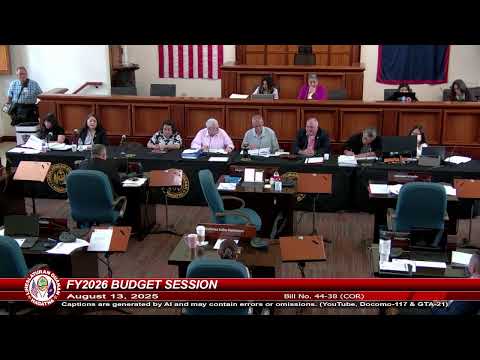
Members of the Legislature's General Government Operations and Appropriations committee clashed over a proposed rollback of the business-privilege tax rate and the broader fiscal tradeoffs in the draft FY2026 budget during an extended hearing. Committee chair Carlson opened the discussion by clarifying that a prior budget bill enacted a 5% BPT rate into statute and said, “So it is not illegal,” when asked whether the rate was lawful.
The debate centered on whether a 0.5 percentage-point rollback — described by several senators as a roughly $40 million reduction in annual general-fund revenue — is prudent while federal grants and reimbursements are uncertain. BBMR Director Lester Guerrero and budget staff warned that unspecified federal funding cuts and new federal tax changes complicate revenue projections for FY2026.
Why it matters: Lawmakers said the rollback would reduce revenues available for operations and debt service, could strain the government's ability to pay court‑mandated tax refunds on time, and might weaken Guam's fiscal cushion as some federal grant programs and coastal and historic‑preservation funding face cuts.
Budget officials and revenue staff gave lawmakers a mix of technical details and warnings. Department of Revenue and Taxation Director Marie Lozama said the BPT’s 5% rate is applied to gross taxable amounts after exemptions are removed and cautioned that changes to deductions and credits at the federal level will increase refund activity. BBMR director Guerrero said the island faces the twin risks of construction‑cost escalation on planned capital projects and possible reductions in federal program funding.
Several senators pressed for context and numbers. Senator Parkinsen said the committee's own charts showed 680 taxpayers generating the bulk of the island's BPT revenue and cited an estimate that the top payers produce roughly $333 million in tax at a 5% rate; he and others argued the distribution of exemptions means the largest taxpayers would get the bulk of any rollback benefit. Senator Perez and others warned some agencies already face reduced budgets in the draft bill and said cutting BPT revenue would make restoring those cuts harder.
Officials described limits on using one‑time federal sources. Stephanie from BBMR noted American Rescue Plan funds must be spent for eligible uses by Dec. 31, 2026, and that those balances cannot be redirected to cover general‑fund shortfalls. Department officials also flagged accounts receivable in Business Privilege Tax (BPT) collections — roughly $139 million reported in one data extraction — as a constraint on projected receipts.
On bond covenants and ratings, finance officials said a partial rollback to 4.5% would not automatically break the pledge on existing BPT bonds, but bond raters weigh a broader mix of fiscal policies such as reserve levels, rainy‑day fund deposits and sustained expense control. BBMR and finance officials urged continued contributions to the rainy‑day fund and cautioned against suspending the fund's statutory protections.
Quotes on consequences and context came from both sides. "If we don't do either one, we're going to have to find an additional $41 million," BBMR Director Guerrero told senators when asked where to recover the shortfall. Senator Parkinsen argued the rollback disproportionately benefits a small number of large taxpayers: "This is a tax cut from the rich, for the rich, by the rich," he said.
The hearing produced no formal votes. Several senators said they plan amendments to restore or protect funding for specific agencies if the BPT reduction proceeds. Committee members said they want more precise audited revenue figures for FY2024 and a fuller assessment of how federal tax changes and grant pauses affect FY2026 collections before finalizing the bill.
The committee continued to other budget items after the BPT exchange. Lawmakers signaled they will keep the rollback on the table but are weighing amendments to offset its projected $40 million effect on the budget, including restoring rainy‑day fund contributions and increasing the appropriation set aside for tax refunds.