Get Full Government Meeting Transcripts, Videos, & Alerts Forever!
Get email alerts on the Healthcare Budget topic
No spam. Unsubscribe anytime.
UMC Health System presents FY2026 budget, urges attention to bed capacity and staffing; no tax increase requested
Summary
UMC Health System told the Lubbock County Commissioners Court on Aug. 11 that rising labor costs, high occupancy and upcoming reductions in supplemental funding are putting pressure on the hospital's finances even as it recommends a proposed ad valorem tax rate equal to the no-new-revenue rate; the system said it is not requesting a tax increase at this meeting.
UMC Health System representatives presented the health system's proposed fiscal year 2026 operating budget, three-year capital equipment and capital expansion plans and recommended a proposed ad valorem tax rate equal to the no-new-revenue rate, the hospital's representative told the Lubbock County Commissioners Court on Aug. 11.
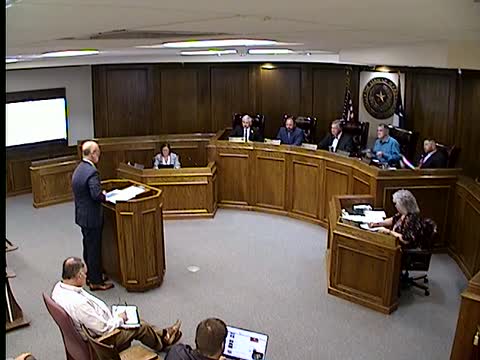
The presentation, delivered by Dane Funderburk on behalf of the hospital's board of managers, summarized revenue and expense projections for 2026 and warned the court that operational costs are outpacing revenue. "Now, I'm not asking for a tax increase today," Funderburk said, while outlining three principal needs the system faces: additional beds, more medical staff and improved operating margin.
Funderburk told the court the hospital expects net patient revenue to rise by about $61 million in 2026 while operating expenses are projected to increase by roughly $69 million, driven largely by labor costs for physicians, pharmacists, therapists and technicians. He said the operating margin is expected to fall to about 1.3 percent in 2026 and pointed to a spike in capital outlay in 2025 tied to the Master Cancer Center construction.
Why it matters: UMC is the region's primary safety-net hospital and a major employer; the institution said tax revenue supports a small share of its budget and that local tax support is among the lowest of comparable Texas hospital districts.
Key figures and program notes included in the presentation: - Projected increase in net patient revenue for 2026: about $61,000,000 (driven by volume and a stronger commercial payer mix). - Projected increase in operating expenses for 2026: about $69,000,000 (primarily labor and recruitment/retention costs). - Projected operating margin for 2026: about 1.3%. - Estimated cost of uncompensated/unfunded care for 2026: about $106,000,000; tax receipts currently cover roughly 3.7% of budgeted costs for the district. - EMS shortfall (operational loss after collections): about $7,100,000. - Correctional health-care cost estimate for 2026: about $12,200,000. - Network Access Improvement Program (NAEP) funding reduction the hospital cited: about $28,000,000 expected to end in 2027. - Proposed ad valorem tax rate presented as the no-new-revenue rate; board recommended 0.09966 but no vote on that rate occurred at the Aug. 11 meeting. The court is scheduled to consider and vote on the proposed tax rate on Aug. 25, 2025.
Funderburk highlighted operational pressures: the hospital reported being at very high occupancy (95.7% of the year), limited ability to add more patients without additional beds and a continuing need to recruit and retain specialized clinicians. He said the health system has used cash reserves for recent capital projects, including a cancer center scheduled to open in April 2026, and will continue to reinvest in facilities and equipment.
Commissioners asked clarifying questions about the EMS shortfall and the correctional-health figure. Funderburk and his finance staff said the EMS shortfall represents the net unpaid/unfunded portion after billing and collections, and that correctional-health figures reflect actual operating costs. A finance staff member told the court state reimbursements for payers such as Medicare or Medicaid typically reimburse within two to three weeks, though individual payer timelines vary.
Funderburk also described workforce and retention strategies, including in-house technician training, a certified anesthesia assistant program and an American Medical Association "Joy in Medicine" program to address burnout. He said the system has grown its residency program and that many recent graduates remain in West Texas.
The presentation included a cash and reserves review: Funderburk said reserves provided stability after a recent ransomware attack and the local measles response. He emphasized the hospital's role as a "super safety-net" provider that delivers large volumes of uncompensated, high-acuity care and training for clinicians in the region.
What's next: The court was informed that the commissioners will vote on the proposed ad valorem tax rate for the Lubbock County Hospital District at their Aug. 25 meeting. No formal action on the tax rate or the FY2026 budgets was taken on Aug. 11.
The hospital provided commissioners with the full packet of budget, capital and cash-forecast documents and said individual capital requests would continue to be vetted by hospital committees and the hospital board before being executed.