Get Full Government Meeting Transcripts, Videos, & Alerts Forever!
Get email alerts on the Biosecurity topic
No spam. Unsubscribe anytime.
State resolution prompts Maui County briefing on biosecurity; panel urges county plans and clearer state‑county coordination
Summary
Representative Kirsten Kahaloa and a multi‑agency panel briefed the committee on Aug. 7 about HCR 42 (HD1), urging county biosecurity plans tailored to island needs and stronger state‑county coordination to detect, prevent and respond to invasive species threats.
Representative Kirsten Kahaloa and a panel of state, county and island experts briefed the committee Aug. 7 on House Concurrent Resolution 42 (HD1), which encourages each county to establish a biosecurity plan tailored to local priorities.
Why it matters: Panelists said biosecurity — preventing new invasive species and responding quickly when incursions occur — is increasingly urgent for public health, agriculture, water supply and native ecosystems. Several speakers urged county plans so state resources can better align with island priorities.
Representative Kirsten Kahaloa (HD‑6), the resolution’s introducer, told the committee the state is expanding biosecurity work and seeks county priorities to coordinate and target support. She said standing up statewide capacity remains a work in progress and that county input would help the Department of Agriculture and Biosecurity align resources with local needs.
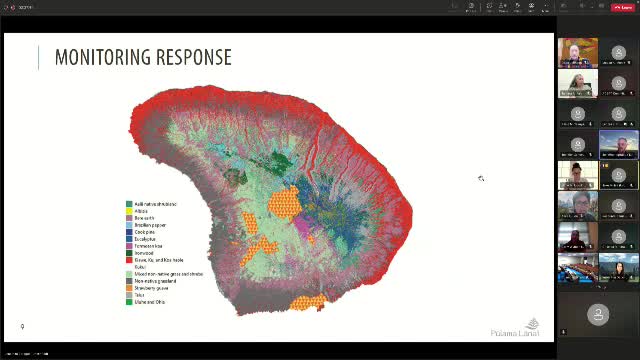
State and island presenters described concrete on‑the‑ground measures. Pulama Lanai described an active quarantine/inspection facility for plant shipments, sentinel traps for coconut rhinoceros beetle and surveillance for coqui frogs; staff described recent interceptions and destructive disposition of contaminated shipments. Laurie Buchanan, MoMISC coordinator from Molokai, emphasized the need to protect cultural practices and requested that counties be empowered to adopt targeted restrictions or interim rules to prevent new pest introductions.
Panelists noted legal limits on county authority. Laurie Buchanan and others noted that current state law gives the Hawaii Department of Agriculture primary authority over movement of plants and animals; counties have limited ability to regulate movement of pests or infested material absent state delegation. Presenters urged a legislative path that would delegate or clarify county authority so local leaders could adopt rapid, enforceable measures tailored to island risks.
State Department of Agriculture and Biosecurity representatives said a county‑level plan would help the department direct grant funding and interagency assistance to the most urgent county priorities. Panelists highlighted practical county actions such as advance planning for green‑waste handling in case of new pests (to avoid spreading infestation via mulch), investing in on‑island quarantine capacity, pre‑positioning treatment equipment and convening local task forces for rapid response.
Representative Kahaloa noted that some actions can be implemented locally and urged counties to identify priority needs (for example, protecting critical trees from beetle damage, or supporting landscape professionals with training and trap supplies). Panelists also suggested community outreach to build awareness and voluntary compliance, and proposed that the state consider funding to reimburse or subsidize inspections and other frontline biosecurity operations.
The committee took the briefing and asked for follow‑up; members and presenters emphasized the need for state‑county coordination, funding to implement practical quarantine and inspection capacity, and clarity about legal authorities and enforcement.