Jones Valley Teaching Farm says ARPA funds helped expand to 16 Birmingham schools; reports nearly 5,000 students served
Loading...
Summary
Jones Valley Teaching Farm told the City Council July 29 that ARPA-supported expansion has placed educational hydroponic systems in 16 Birmingham City Schools and that the nonprofit reached nearly 5,000 students in the past year.
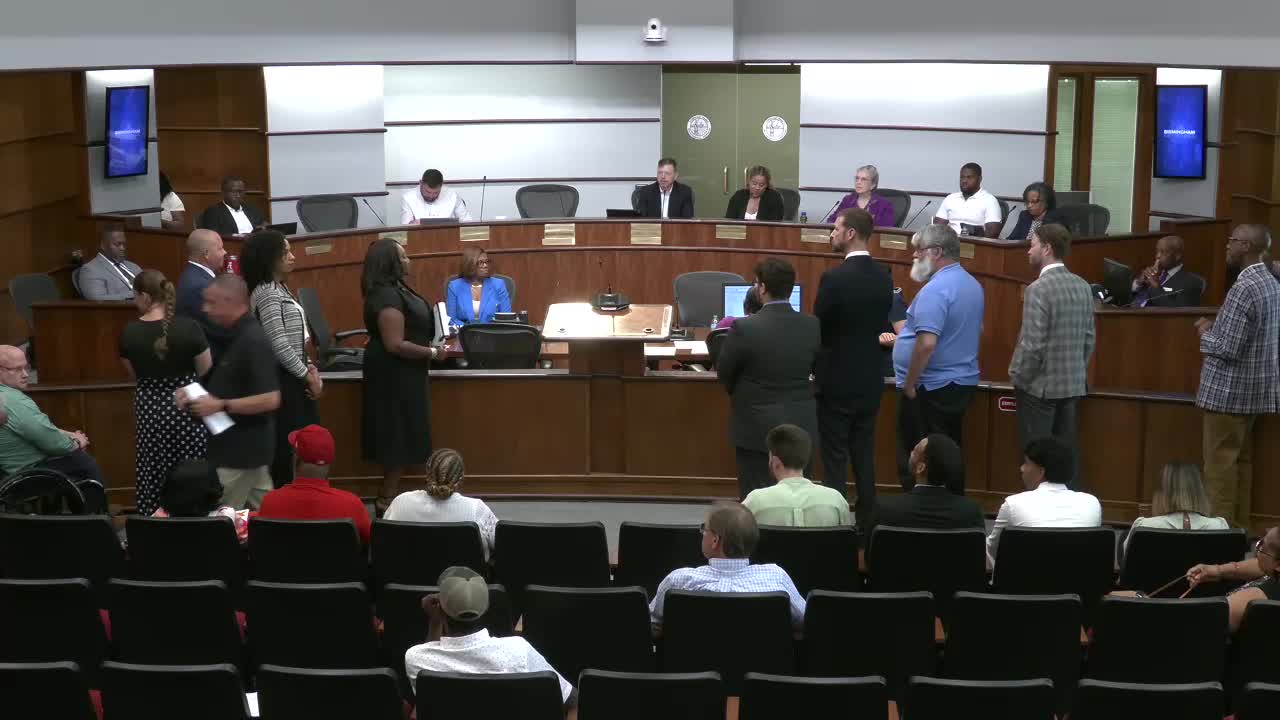
Jones Valley Teaching Farm presented its annual update to the Birmingham City Council July 29, reporting city-supported expansion into classroom and controlled-environment agriculture across 16 Birmingham City Schools and a nearly 5,000-student reach during the past year.
Amanda Storey, executive director of Jones Valley Teaching Farm, said ARPA funding and city support enabled the organization to add eight hydroponic (controlled-environment) systems this fall, doubling the number of partner schools from eight to 16. Storey said the nonprofit aims to reach 20,000 students across the district over time.
“Our goal is 20,000 students, the entire system. So we are slowly but surely, but it feels kind of like a rocket ship these last couple of years,” Storey told the council. She said the program also operates paid high-school internships at $15 per hour; this year the organization hired 11 student interns and received 95 applications for those positions.
Storey provided program statistics: Jones Valley reported serving almost 5,000 students this past year; 176 students were enrolled in after-school clubs; the organization distributed about 25,000 pounds of produce to the community; and it supplied over 35,000 seedlings to community gardens and urban farms across the city.
The presentation described workforce and youth-pathway programming, a Center for Food Education that ran summer programming representing more than 47 schools, and a community-food fellowship funded by USDA support (Storey said some USDA funding was paused or delayed and the organization is pursuing additional funds). Storey listed site-level impacts and community gardens built in multiple council districts and noted that the Jackson-Olin High School feeder pattern is served by new installations.
Council members thanked the organization and asked operational questions about materials and garden construction; Storey said partner Ricky D. of We’re Sowing Seeds in Bessemer builds many of the raised beds and that she would follow up on construction materials when requested.
Storey closed by thanking the council for past support and for ARPA funding that helped scale internships, school partnerships and community garden construction.
No council vote was required for the presentation.