Get Full Government Meeting Transcripts, Videos, & Alerts Forever!
Get email alerts on the Governance Home Rule Charter topic
No spam. Unsubscribe anytime.
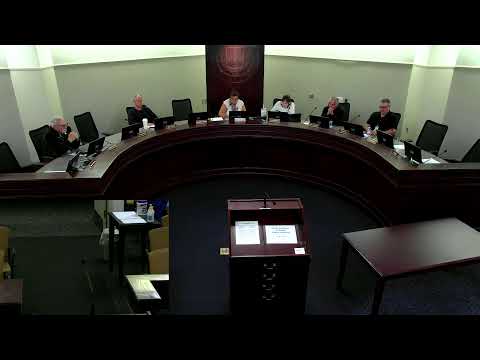
Northampton County Council discusses administrative‑code and home‑rule charter review after election‑related questions
Summary
Council members debated whether to pursue ordinance changes to the administrative code or a broader home‑rule charter study, citing repeated ambiguity between legislative and executive roles over elections and other county functions.
Northampton County Council members spent a substantial portion of the governance meeting discussing possible changes to the county administrative code and a review of the county's home‑rule charter, prompted by questions about the authority to establish satellite election offices and recurring ambiguities between the legislative and executive branches.
The council president (name not specified in the transcript) said the county should “make it clear” where authority lies and suggested starting with clarifying language for elections and the Election Commission in the administrative code. The president framed the issue as one of interpretation: holes or silence in governing documents have produced inconsistent readings of who has which responsibilities.
Multiple council members endorsed a review of the home‑rule charter because it is about 50 years old. One council member argued a review would not necessarily change the county's form of government but would allow citizens and officials to identify structural gaps and propose clarifications via referendum if needed. Another council member urged use of legislative remedies and clearer assertions of council authority when appropriate, including seeking declaratory relief from a court if interpretation disputes persist.
Legal counsel Michael Vargo told the meeting that the interplay among the Pennsylvania Elections Code, the county administrative code and the home‑rule charter creates practical ambiguities—example: acquisitions of voting machines required legislative appropriation while execution and administration of contracts often fell to the executive—so clarifying amendments could reduce future disputes. Several council members said they will prepare suggested areas for amendment, including election oversight, procurement processes and rules around budget line‑item transfers.
Discussion vs. decision: the meeting recorded no formal vote to amend the administrative code or to launch a charter review. Council members asked peers to submit targeted questions and recommended changes before a future meeting. The council president said the next step is to collect written suggestions from members and consider whether to pursue ordinance-based administrative-code amendments or to place a charter study referendum before voters.