Get Full Government Meeting Transcripts, Videos, & Alerts Forever!
Get email alerts on the District Reform topic
No spam. Unsubscribe anytime.
Vision 2030 advisory panel urges districtwide ‘arts and innovation’ focus, recommends reducing building footprint
Summary
A 37-member advisory group recommended a districtwide arts-and-innovation identity, consolidation of school buildings to match declining enrollment, and a voter-supported bond to fund major facility upgrades. Board members asked for time to review the 108-page recommendations and directed administration to begin planning work.
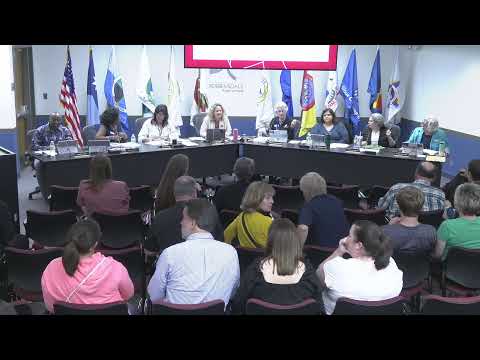
A community advisory group known as the Vision 2030 team presented a 108-page set of recommendations to the Robbinsdale Area Schools board on Sept. 23, urging a districtwide focus on “arts and innovation,” consolidation of excess school buildings to match long-term enrollment declines, and a bond to pay for major facility upgrades.
The recommendations, produced after eight months of meetings and input from roughly 17,000 stakeholders, call for programmatic changes (including keeping Spanish immersion as a standalone magnet while integrating arts-and-innovation programming broadly), creation of a single unified high school with smaller “academies” inside it, and renovation or replacement of aging buildings. The team also recommended that any closures be followed by detailed transition plans developed by staff.
Why it matters: The district is in statutory operating debt and faces long-term enrollment decline and multimillion-dollar deferred maintenance. The vision team framed its recommendations as a way to improve equity, modernize facilities and lower ongoing operating costs while expanding access to specialized programming across all schools rather than limiting it to standalone magnet sites.
The vision team’s report said Robbinsdale’s enrollment has declined about 16% since 2014–15 — roughly 2,000 students — and cited a facility assessment that placed 10‑year deferred maintenance needs at about $216.6 million, including roughly $76.3 million labeled as urgent. The presenters argued that operating more buildings than the district needs drives those costs and weakens educational equity and student experience.
"I've never been a part of a process with more honest and difficult discussions," Superintendent Dr. Theresa Stallo told the board after the presentation, thanking the team and noting the advisory role the group held. Vision team member Willie Howard, one of three presenters, said, “I am a man who runs to the fire, not away from it,” describing his reason for volunteering on the team.
The presentation included a student voice: Kylander Nelson Sheppardia, a junior at Cooper High School and a member of the vision team, said the group repeatedly checked recommendations against what students would actually want and need. "In a room full of adults worrying about taxes, I make sure to advocate for the needs of my fellow peers," Kylander said.
Board reaction and next steps: Board members praised the breadth of the report but asked for more time to study details and for follow-up work with administration. Several directors emphasized the need to translate big-picture recommendations into concrete operational steps (curriculum, staffing, timelines, tax impact, boundary changes and feasibility studies). Director Renee Bowman said the report “checked every box” she ran on in 2022; Director Aviva Hillenbrand and others asked for clarity on how large consolidated schools would preserve small-school supports (pathways, arts and athletics).
Assistant Superintendent Dr. Bob McDowell presented a draft multi‑phase timeline the administration said would allow the board to finalize a statutory operating debt (SOD) plan by Jan. 20, 2026 (the board’s last meeting before the Jan. 31 SOD deadline). The administration’s draft phases run through 2030 and assume the board will decide by late November 2025 whether to pursue initial facility consolidations for the 2026–27 school year, with public hearings and required posting of any closure notices following that schedule.
The board voted to direct administration to begin work on draft timelines for both SOD planning and Reimagine/RDL 2030 implementation; the motion passed by voice vote. Board members and administration said further public engagement, financial modeling, and operational design (programming and staffing) will follow before any final decisions about closures or a bond.
What the report did not do: The vision team specifically said it did not select or schedule individual school closures; it recommended criteria and a path for staff to use in developing precise closure and transition plans. The team also did not produce a final bond proposal; it recommended the district plan for a voter‑approved bond to fund renovations needed to deliver the envisioned learning environments.
Ending: The board directed administration to continue drafting options and to return with follow-up material at future meetings; members asked that the full presentation materials and the written report be posted to the board packet for further study."