Get Full Government Meeting Transcripts, Videos, & Alerts Forever!
Get email alerts on the Mental Health Crisis Services topic
No spam. Unsubscribe anytime.
Hamilton Center reports expansion of crisis services, selected for state CCBHC pilot
Summary
Hamilton Center told the council it is operating a mobile crisis team and was selected for Indiana’s CCBHC pilot; the agency said it serves 11 counties and provides uncompensated care including about $2 million annually in Vigo County.
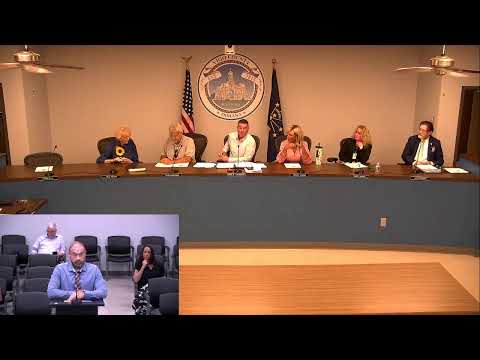
Representatives from Hamilton Center briefed the Vigo County Council on June 3 about expanded crisis services, the center’s role in a statewide certified community behavioral health clinic (CCBHC) pilot and the scale of uncompensated care the agency provides locally.
Mark Collins, chief clinical officer for Hamilton Center, told the council the center was selected as one of eight community health centers in Indiana to participate in a CCBHC demonstration that includes mobile crisis response and crisis‑receiving stabilization services. Collins said Hamilton Center’s mobile crisis team serves 11 counties in central and west‑central Indiana, is available 24/7, and can meet individuals at the center or in the field.
Why it matters: Hamilton Center’s participation in the CCBHC demonstration and its mobile crisis program affect how mental‑health crisis response is delivered in the county. Collins told the council that in fiscal year 2024 the center recorded about $4 million in uncompensated care systemwide and that more than $2 million of that amount was provided in Vigo County. He said the center serves about 4,500 individuals from Vigo County annually and about 12,000 people across its full service area.
Services described: Collins outlined a mobile model that dispatches clinicians and certified peer recovery specialists to locations where people are experiencing crisis — motels, workplaces, schools or homes. Hamilton Center’s mobile team also works with the 988 mental‑health crisis line and coordinates with law enforcement and hospitals to arrange appropriate next steps, including inpatient placement if necessary. For inpatient needs, Collins said Hamilton Center will work with other regional psychiatric hospitals to place patients when its 16‑bed adult inpatient unit is full.
Council questions and context: Council members asked about how to access charity care and how many inpatient beds and group‑home placements the center operates. Collins and staff explained the charity‑care process: patients are not turned away for inability to pay; Hamilton Center applies clinical‑necessity and charity‑care adjustments to accounts. The council discussed coordination between the center, law enforcement, community corrections and the jail. Collins acknowledged staffing challenges in the behavioral-health sector but said the center attempts to meet community needs through partnerships and mobile response.
Ending: Council members thanked Hamilton Center for the update and said the council would like continued engagement and clearer channels for communication between county government and the behavioral‑health provider.