Get Full Government Meeting Transcripts, Videos, & Alerts Forever!
Get email alerts on the Group Homes Repairs Staffing topic
No spam. Unsubscribe anytime.
Vigo County Council approves repairs and staffing funding for local group homes after safety debate
Summary
The council approved multiple appropriations and a salary ordinance to repair and staff two county group homes after a debate about mold, old wiring and timelines for Department of Child Services approvals.
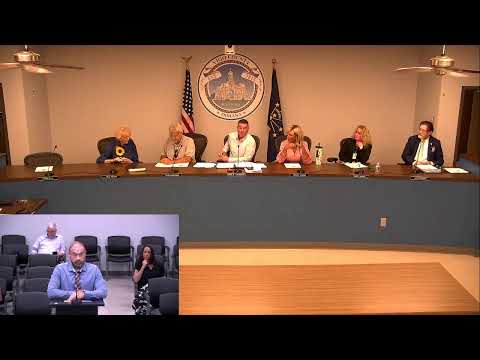
Vigo County Council on June 3 approved several appropriations and an amendment to the salary ordinance to fund repairs and staff at county group homes, after council members and administrators debated how quickly the facilities could be made safe for children.
County officials voted in favor of three spending measures and a salary change that together provide funds for electrical upgrades, mold and crawl-space remediation, new air-conditioning units, furnishings and hiring for the Carpenter and Lehi homes. The council also approved a smaller transfer to buy a storage shed for the Glen home.
Councilman Brad Anderson moved the principal appropriation for repairs and Councilwoman Brenda Wilson seconded. After discussion the council voted unanimously on the facility appropriation items; a separate amendment to the salary ordinance adding five full-time youth specialist positions and three part‑time positions passed 5-1, with Councilman Randy Gentry voting no. The follow-up appropriation to fund the new hires passed 5-1.
Why it matters: Council members pressed for details about safety, inspections and program timing before approving money that would allow the county to expand capacity for juveniles who need group-home placement. Several council members said they wanted assurance the homes would meet code and licensing requirements before children move in; county staff and home administrators said remediation and hiring could proceed in parallel but acknowledged some remediation work (for example, mold remediation) likely requires the home to be vacated while that work is performed.
Officials and testimony: Norm Lottemore, executive director for the Home for Children (presenting the repair requests), told the council the group homes have a decades‑long history in the community and outlined specific repair work: bringing electrical service at the Lehi home to the 2014 electrical code, replacing or repairing roughly 35 floor joists, installing perimeter drains and a French drain to address long‑standing moisture, crawl-space mold remediation, guttering, and replacement of aging air‑conditioning units. Lottemore provided multiple contractor quotes he had collected and said bids ranged widely (examples given in discussion ranged from about $31,000 to $68,000 for electrical work).
Lottemore said the $76,700 appropriation would cover electrical work, crawl-space remediation, new AC units and drainage work at the Lehi home and related items. He described a separate appropriation of $48,550 for startup needs at the Carpenter home (furnishings, kitchen items, bedding, hygiene supplies, duct cleaning and similar items) and a $3,200 transfer to buy a shed for the Glen home.
Safety and timing concerns: Councilman Randy Gentry repeatedly pressed whether children could be moved into Rose Hill (the Carpenter home) immediately; Lottemore initially said he could move children in “immediately” but later clarified that moving children in requires passing inspections, completing background checks and staff training. Lottemore and the group-home licensing director said the hiring and remediation processes could run in parallel but acknowledged that some remediation tasks (notably crawl‑space mold remediation and certain structural repairs) would require the home to be vacated while work is done. Kara Gurevich, treatment/licensing director for the group home, said DCS (Department of Child Services) conducts unannounced quarterly licensing inspections; she confirmed inspections occurred in February and May after the county obtained initial approval.
Electrical concerns: Council members raised a separate safety concern about existing knob‑and‑tube wiring at another group home where seven juveniles currently reside. Lottemore explained the knob‑and‑tube wiring is confined to the third floor, which the home does not occupy, and said the remainder of the house uses Romex wiring and a 200‑amp service; he said the facility has a fire protection system and regularly scheduled fire‑marshal inspections. County leaders and Lottemore agreed that major rewiring is costly because of the age and layout of the houses but that the homes are not currently judged to be unsafe by inspectors.
Staffing: Lottemore requested amendment of salary ordinance 2025‑18 to add five full‑time youth specialist positions and three part‑time youth care specialist positions to staff shifts (overlapping day shifts and overnight coverage). He said the appropriation to pay those positions through the end of the year was based on salary, benefits, PERF and FICA estimates. Councilman Gentry said he opposed hiring before the facilities were confirmed fit for occupancy; Gentry voted against the salary-ordinance amendment and against the related appropriation.
Votes at council: The council recorded these outcomes: - Transfer of $3,200 for a shed (Resolution: reallocation 2025‑05, Group Homes): Passed 6‑0. - Additional appropriation (repairs) $76,700 (2025‑40 Group Homes, Glen/Carpenter repairs): Passed 6‑0. - Additional appropriation $48,550 (2025‑41 Carpenter home startup): Passed 6‑0. - Amendment to salary ordinance (2025‑18) adding 5 full‑time and 3 part‑time youth care positions: Passed 5‑1 (Gentry opposed). - Additional appropriation to fund new staff (2025‑42): Passed 5‑1 (Gentry opposed).
Clarifying details: The $76,700 request packages included multiple contractor quotes for electrical work (example quoted ranges: $31,000; $35,000; $52,000; $68,000). Lottemore estimated crawl‑space remediation would be completed within roughly 30–45 days after work begins. The county reported $88,502.46 currently in a nonreverting fund tied to group-home captured revenue; monthly billing to DCS continues to generate additional revenue that officials said would be used to help offset operating costs.
What’s next: County commissioners will consider contractor selection and timeline for the work; Lottemore said he expected the physical repairs and associated hiring and training could progress simultaneously and projected initial readiness to accept referrals in a phased way, potentially within several weeks to months depending on approvals and background checks. Councilman Gentry said he prefers the budget committee to consider long‑term staffing in January to align hiring with confirmed facility readiness.
Ending: Council members instructed staff and the presenter to provide quotes, inspection reports and projected timelines to the county and council so the commission and licensing bodies can complete their approvals and the county can monitor expenditures.