Get Full Government Meeting Transcripts, Videos, & Alerts Forever!
Get email alerts on the Urban Forestry topic
No spam. Unsubscribe anytime.
Carbondale Tree Board orients new members, hears state urban-forestry advice and flags code, enforcement gaps
Summary
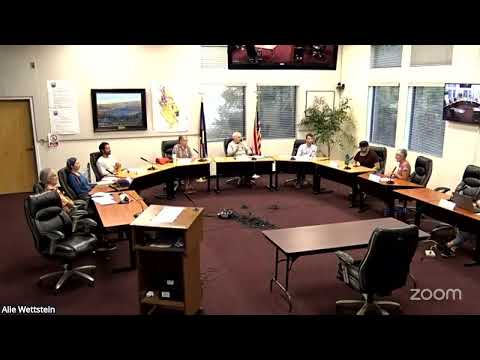
Welcome to the tree board meeting for the town of Carbondale. The board approved its July minutes (with one amendment noting snow storage at 888 Main Street), installed a new voting member and used a longer-than-usual session to review the town tree ordinance, tree-protection practices for construction and outreach options after a presentation from a Colorado State Forest Service specialist.
Welcome to the tree board meeting for the town of Carbondale. The board approved its July minutes (with one amendment noting a snow‑storage concern at 888 Main Street), installed a new voting member and used a longer-than-usual session to review the town tree ordinance, tree-protection practices for construction and outreach options after a presentation from a Colorado State Forest Service specialist.
The discussion matters because the tree ordinance and related municipal code text the board reviewed are out of date in places, the board lacks a reliable enforcement pathway for protecting public trees during construction, and members want to turn the board’s recurring concerns into concrete projects (standards updates, annual tree lists, outreach and clearer plan‑review workflows).
The meeting opened with roll call and a motion to approve the July minutes with one requested addition: a member asked that the minutes include a concern about snow storage at 888 Main Street. The motion passed after a second from Josh Crawford. Later, Meredith Bullock verbally renounced her voting seat and the board voted to make Vanessa Harmony a voting member. The meeting ended by approving adjournment.
Cammy Long, urban and community forestry specialist with the Colorado State Forest Service in Grand Junction, joined the board as a guest resource. Long described tools Carbondale can use for outreach: regular booths at farmers markets, laminated/accordion fact sheets and QR codes, an "ask an arborist" sign, banners and consistent staffing. She said Grand Junction’s weekly farmers‑market booth draws 70 to 120 interactions per night and recommended a limited set of core handouts — how to select trees, how to plant, watering guidance and a vetted list of licensed tree contractors — plus QR codes for people who prefer digital copies.
"I work for the Colorado State Forest Service out of Grand Junction. I'm the urban and community forestry specialist," Cammy Long said. "I'm a certified arborist. I'm a tree risk assessment qualified, meaning I can assess large trees for risk through the International Society of Arboriculture. I am just a real tree nerd, so I'm, but I'm a resource for you." Long also described practical guidance on mulch: "Mulch is fine. Not not direct contact with the trunk and no more than 4 inches deep." She recommended citizen-pruner training, fact sheets for common local questions and suggested Carbondale consider a consistent public presence (farmers market, First Fridays or Rotary presentations) rather than one-off events.
Board members and staff used the orientation to identify several recurring, actionable gaps between the ordinance language and current practice:
- Ordinance vs. code/operations: The board noted language in the town tree ordinance dates to 2002 and does not reflect current departmental organization (planning vs. building departments) or the presence of a town arborist. Members agreed the municipal code, unified development code (UDC) and the tree ordinance contain overlapping language and should be reconciled so requirements appear in one authoritative place.
- Landscape/plan-review process confusion: The ordinance states landscaping for new developments tied to land‑use applications should be reviewed by the tree board, but members said the submission pathways (building permit vs. land‑use/landscape plans) are unclear. The board asked for a clear workflow so tree‑board review occurs at the right project stage and is not treated as a mere courtesy.
- Tree protection and enforcement gaps during construction: Members raised multiple instances of construction or contractor activity damaging public trees and said the town lacks consistent code enforcement or a reliable follow‑up. The ordinance requires tree protection standards and tree protection zones; board members recommended updating or publishing planting/ protection standards as a "living" document that can be used immediately while a parallel ordinance/code rewrite proceeds.
- Annual review of recommended tree list: The ordinance requires that street trees come from a list approved by the tree board. Members proposed making an annual review of the recommended street tree list a formal board project, timed to the start of new terms.
Town staff and board members discussed implementation options. Several members recommended addressing the "standards for planting and protection" first (board‑maintained, updateable guidance that can be signed and enforced in permit conditions) because those standards can be updated faster than ordinance language. The group discussed using subcommittees to move work forward between monthly meetings.
Other details raised in discussion: the board confirmed its statutory structure in the ordinance (seven members and one alternate, generally volunteer and advisory to the Board of Trustees), questioned how enforcement is performed (multiple speakers said enforcement relies on reporting rather than active inspection), and noted examples of local tree damage in parks and rights of way where vehicle loading, hanging items or repeated parking under large trees have caused declines.
During the public‑comment/guest segment Cammy Long said she had been present when Emerald Ash Borer (EAB) was detected in the valley and that state staff responded with the town arborist and entomology staff; she urged local outreach and fact sheets to address questions related to pest detection and homeowner responses.
The board ended the meeting by agreeing on near‑term next steps: establish a project list and timelines (standards for planting and protection, annual street‑tree list update, outreach materials), consider subcommittees for ordinance and standards work, and work with planning/public‑works staff to clarify plan‑review flow and enforcement roles. The board approved adjournment by voice vote.
Votes at a glance
- Approved: July meeting minutes, amended to include a member concern about snow storage at 888 Main Street (motion and second; second provided by Josh Crawford). Outcome: approved (voice vote). - Approved: Vanessa Harmony made a voting member after Meredith Bullock verbally renounced her seat. Outcome: approved (voice vote, "Aye"). - Approved: Motion to adjourn (mover/second not recorded in transcript). Outcome: approved (voice vote).
Ending: The board scheduled follow‑up work on standards, outreach and a revised workflow for review of landscape plans. Several members suggested organizing ordinance and municipal‑code review over multiple meetings and creating subcommittees to draft standards and outreach materials between full meetings.