Get Full Government Meeting Transcripts, Videos, & Alerts Forever!
Get email alerts on the Beach Accessibility topic
No spam. Unsubscribe anytime.
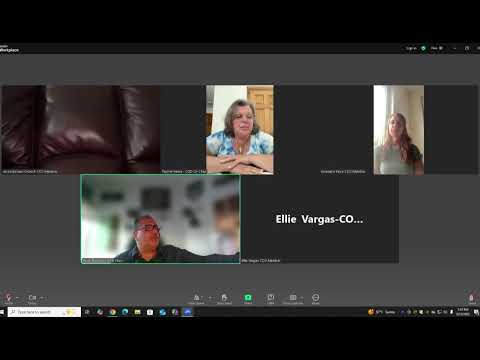
Swampscott disability chair urges regional beach access, describes water‑wheelchair program at Revere meeting
Summary
At the Aug. 12 meeting of the Revere Commission on Disabilities, Lauren Shrestha, chair of the Swampscott Commission on Disability, described her town’s water‑wheelchair program, storage and permitting challenges, fenced‑playground and bench initiatives, and offered regional collaboration to expand access to beaches and recreation.
Lauren Shrestha, chair of the Swampscott Commission on Disability, told the Revere Commission on Disabilities on Aug. 12 that her town’s water‑wheelchair program, fundraising for benches and fenced playgrounds, and outreach to nearby towns could be models for Revere.
Shrestha said Swampscott has two donor sources for its all‑abilities water wheelchairs — a family prototype used for a child and a separately donated adult chair — and that the chairs are available for use by neighboring communities. "The water wheelchairs can be used by any community," Shrestha said, adding that users generally check the equipment out through the police station so the town knows who has it.
Why it matters: Revere and neighboring North Shore towns have many beaches with rocky shorelines and limited accessible paths. Speakers at the meeting underscored that making beaches and municipal recreation facilities usable by people with disabilities requires coordination on storage, permitting and transportation of specialty equipment.
Key facts and local initiatives - Donors and storage: Shrestha said one water‑wheelchair came from a local family (a child‑size prototype) and another from an organization; Swampscott stores adult chairs near Fisherman’s Beach in lockers by the yacht club and makes them available to residents and nearby towns when transport is arranged. She said the child‑size chair is smaller and easier to store.
- Use and transport: Swampscott staff and volunteers have transported chairs to other beaches for events. Shrestha described practical limits: adult chairs are long and heavy; temporary beach sheds and storage face conservation rules, and any storage on DCR (Department of Conservation and Recreation) land must meet permitting and storm‑resilience requirements.
- Permits and legal triggers: Shrestha told the commission that when a municipality does work on a town‑owned beach, accessibility obligations are triggered under the regulatory citation she cited in the meeting (transcript: "5 5 21 CMR"). She advised that projects touching beach topography often require conversations with state agencies and, in some cases, the U.S. Army Corps of Engineers.
- Accessibility projects: Swampscott is fundraising for three benches near beaches and has pushed for fenced playgrounds and inclusive recreation programs. Shrestha said the town worked to introduce inclusion sports to its recreation department and that a recent Flutie Foundation grant was expected to provide equipment for an elementary school playground.
- All Abilities Day and partners: Revere’s All Abilities Day on Aug. 9 drew organizers and partners including Waypoint Adventures, the Universal Access Group and the Massachusetts Office on Disability, and — according to commission remarks — about 80–85 participants used the water wheelchairs and other accessible offerings. Commission members noted good turnout and said Revere TV and local papers covered the event.
- Emergency response, storage and logistics: Speakers discussed hurdles to housing and transporting chairs (conservation restrictions on temporary structures, difficulty crossing roads with heavy chairs, and limited locker space). Shrestha and Revere commissioners raised storage durability, liability, and the need to coordinate with police, parks and public works for long‑term solutions.
Regional collaboration and next steps Shrestha and Revere commissioners urged cross‑town coordination. She described sharing templates and advocacy materials from her “Fully Fenced” project — a community advocacy platform she founded — and offered to connect Revere with contacts, including equipment makers who construct lighter child‑size chairs from PVC tubing.
Commissioners said they will follow up with Revere public safety and parks staff to discuss storage options, transport protocols and how conservation permitting might affect permanent storage near beaches. Pauline Perna, cochair of the Revere commission, said she will circulate contact information and explore linking school and CPAC contacts with regional disability and universal access programs.
State legislation update Commission members also reported that a statewide wheelchair‑repair bill has advanced in the Massachusetts Legislature: the House refiled and renumbered the measure as H.4358 (previously H.1278) and it had reportedly moved favorably out of the House Consumer Protection and Professional Licensure Committee to the House Ways and Means Committee.
Votes at a glance - Motion to approve minutes from the June 10, 2025 meeting — moved/second not specified on the record; outcome: approved. - Motion to adjourn — mover: Jason Barone; second: Ellie Vargas; outcome: approved.
Contacts and follow up Shrestha offered contact information and encouraged email follow‑up; commission members said they will pursue meetings with Revere public safety, parks and recreation, the Massachusetts Office on Disability and nearby town commissions to coordinate equipment sharing, storage and outreach. The commission’s next meeting was scheduled for Sept. 9, 2025, at 6 p.m.