Get Full Government Meeting Transcripts, Videos, & Alerts Forever!
Get email alerts on the Data Centers topic
No spam. Unsubscribe anytime.
Residents urge Lancaster City Council to curb AI data centers over noise, air, water and equity concerns
Summary
Dozens of residents told Lancaster City Council that proposed AI data centers at Greenfield Road and Harrisburg Pike risk noise, air and water harms, higher utility bills and unequal impacts on Black and low-income neighborhoods; speakers called for zoning changes, independent studies and community input.
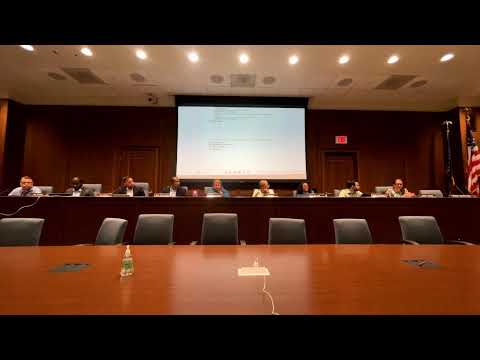
Dozens of Lancaster City residents told the City Council on Aug. 12 that proposed AI data centers at Greenfield Road and Harrisburg Pike could harm air and water quality, raise utility costs and disproportionately burden Black and low-income neighborhoods.
The speakers — who addressed council during the meeting’s public-comment periods — asked for independent environmental reviews, tighter zoning or a new data-center category, enforceable community benefits and transparent public hearings that include residents rather than only corporate representatives.
The concerns centered on three recurring themes: local health and environmental effects, strain on the electric grid and transparency in how the projects were permitted. Resident Jontell Toland said she and others want to know whether “any independent third-party environmental impact studies” exist and “where can the public access it?” She asked the council to commit to town-hall–style public meetings where residents can ask questions without corporate PR teams controlling the format.
Multiple speakers cited diesel backup generators, noise and water use as specific risks. Resident Alexander King cited news reports and community accounts he said showed diesel backup generators can degrade air quality and that air-cooled facilities can still be noisy: “Inside a data center, it can be 95 decibels or higher,” he said, comparing potential continuous outdoor noise to highway traffic at night. Patricia Ackman said the Greenfield Road site “has 70-plus diesel generators” reported in news coverage and asked whether nearby residents will face reduced water pressure or higher electric bills.
Renewable-energy and utility concerns were raised by Nathan Bishop, who identified himself as a renewable-energy transactions attorney. Bishop told council the planned 100-megawatt facility at 216 Greenfield Road would include diesel backup generation and warned that, in the region’s current generation mix, the facility “will lead to a huge increase in greenhouse gas emissions.” He urged the city to coordinate with the Pennsylvania Public Utility Commission and PJM Interconnection — the regional grid operator — to review agreements with the developer and to require co-located solar-plus-storage paid for by the developer.
Several speakers asked council to revisit a zoning decision that classed one site as “wholesale trade/storage” (a warehouse), a classification they say allowed the project to avoid greater public scrutiny. Dan Weigel read a petition and urged council to “request from the planning commission an ordinance that covers the zoning of data centers and rescind the zoning officer’s decision to zone the Harrisburg Pike and Greenfield Road data centers as wholesale trade.” Others called on the council to place a moratorium on further permits until an ordinance or clearer rules are in place.
Speakers also raised equity and enforcement questions: Shauna Yorty and others framed the issue as one of long-term community health and asked how the city will protect vulnerable residents such as those with asthma. Lindsay Fitting said residents elsewhere have seen steep increases in household electricity bills after data centers began operating. Several speakers asked how the city will enforce limits on generator operation and whether companies will self-report noise, emissions and generator run-time.
Council members and the mayor told the audience they hear the concerns and that some matters — notably electricity rates and regional grid reliability — fall outside city control. Mayor Danene Sorace said the administration is pursuing more information from utilities and state regulators and is exploring an environmental-impact assessment to answer broader questions about power, air and water. “I hear you,” she said, and added that the city is trying to get answers from PPL and other state entities.
Several residents praised recent action by the Planning Commission: Sarah Eder Hinojosa noted that the commission scheduled a public hearing for Oct. 1 and said the commission was engaging with the possibility of creating a new zoning category for data centers. Some public speakers asked council to use permit revenue for affordable housing or to secure enforceable community benefits that would require renewable energy, local job training and protections against water- or noise-related harms.
Other commenters urged faster, clearer municipal action. Jennifer Seigel (who uses the public name Coral Wright) said CoreWeave and other developers were already advertising both sites for clients and urged council to “start the ordinance work now.” Frank Arcolio, a longtime resident, asked for transparency about when city officials and the administration first discussed the projects and urged councilors running for mayor to publicly differentiate themselves if they oppose the projects.
Councilors and the mayor promised follow-up: Council staff said the city is commissioning independent reviews of noise studies and other environmental impacts “that are within our power to control,” and Council President said the city will update residents through the FAQ page and regular meetings as more information becomes available. But residents repeated calls for a public, enforceable strategy — zoning rules, tighter noise ordinances and binding community benefits — before more permitting or construction proceeds.
Votes were not taken on data-center policy during the Aug. 12 council meeting. Public comments on the issue extended across the meeting’s two public-comment periods and prompted multiple council members to request further information and analysis.