Get Full Government Meeting Transcripts, Videos, & Alerts Forever!
Get email alerts on the Fire Department Staffing topic
No spam. Unsubscribe anytime.
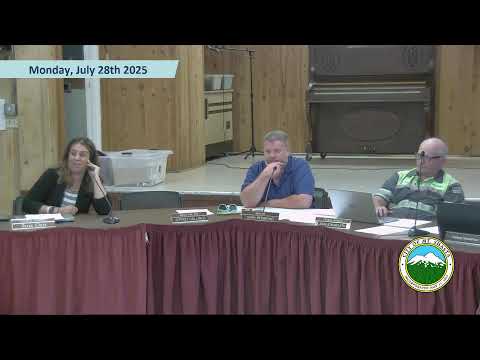
Mount Shasta leaders and fire district discuss staffing shortfalls, contract terms and volunteer burnout
Summary
City officials, fire district representatives, the fire chief and volunteer firefighters met in a special session to discuss chronic staffing shortages, the 2019 contract/MOU that removed callback pay, volunteer burnout and possible budget and outreach steps including town halls and a potential ballot measure.
Mount Shasta city officials, members of the Mount Shasta Fire Protection District and fire department personnel met in a special session to discuss chronic staffing shortages, a disputed 2019 contract that eliminated callback pay and worsening volunteer burnout that officials and firefighters said is jeopardizing after‑hours response.
City staff and district board members opened the meeting saying the purpose was to “have a conversation about our unfilled position and the future of being able to pace for services in the city.” The city’s finance director, Melissa, told attendees that a recent review found the city in deficit spending and that an expected 24% reserve for the year was “nonexistent.” She said the city therefore directed short‑term hiring freezes and other cuts while it works to close a budget gap.
The practical effect, Chief Burns said, is a skeletal paid staff. “There’s 2 captains and 2 firefighters and myself at the moment, and 1 of those firefighter positions is being flown for k. staff,” he told the meeting. Burns and other speakers said some paid employees have applied to other agencies and one captain is leaving; volunteers are providing much of the evening and overnight coverage.
Volunteer firefighters and department lieutenants told council members the removal of callback pay from the most recent memorandum of understanding (MOU) eroded morale and reduced overall compensation for many responders. “All of a sudden they had about a 20 or 25% decrease even when they factored in of the raise, they had less money coming in because you took the callback money away,” volunteer Captain Tom Hastings said, describing heavy after‑hours demand. Hastings said 30 fire calls occurred since the 21st of the month, about half after hours, and said the department sometimes must rely on the chief or volunteers who work other jobs.
Lieutenant Steven Goldsberry said the department struggles to attract and retain paid staff because employees are required to live in the Mount Shasta 96067 ZIP code and cannot afford housing there. “That means every paid staff member rents the home because they can't afford to live in Mount Shasta,” he said. Goldsberry also said volunteers often use Mount Shasta for early-career experience and then leave for larger departments.
Volunteer Katie Hikura, who served as a shop steward during negotiations, said bargaining began in April but dates and communication gaps left firefighters surprised when the signed MOU excluded callback pay. “There is no obligation,” she said, explaining that unpaid off‑duty personnel can turn off pagers and decline calls if not sworn and not on a callback arrangement.
City staff explained that the city and district have a contract — signed in 2019 — that requires district payment to match some city personnel costs but said the overall accounting and other costs were not fully transparent until recent review. Melissa told the meeting that city staff and outside negotiators looked at regional practices and offered options such as reinstating callback pay as a side letter in exchange for adjustments elsewhere in compensation, but also warned funds are limited.
District representatives said the district has reserves and revenue but was not involved in the MOU bargaining and asked for clearer communication. “We like Bob was saying, we have reserves. We have revenue. We just need communication,” a district representative said, urging a numbers‑based discussion on the gap and potential solutions.
Council members and others suggested near‑term and longer‑term steps. A city council member proposed extending the finance and audit committee to meet regularly with the fire protection district to identify funding solutions. City staff announced plans for public outreach, including a town hall on Sept. 14 and a possible second session in October to discuss a potential measure to raise revenue; staff said a survey firm is compiling research on timing and feasibility.
No formal vote or binding decision was taken at the special session. Council and district members agreed to continue the discussion in committee and to coordinate further meetings between city finance staff and the fire district board.
The meeting combined budget analysis and contracting questions with operational concerns raised directly by firefighters and volunteers. Speakers asked the council and district to clarify whether the current MOU obligations include callback expectations, whether paid staff are required to carry pagers and what short‑term funding might cover overtime or a new paid position while longer‑term options (including a ballot measure) are developed. The council said it will formally place follow‑up items on a future agenda and coordinate meeting times between the finance committee and district representatives.