Get Full Government Meeting Transcripts, Videos, & Alerts Forever!
Get email alerts on the Housing Tiny Homes topic
No spam. Unsubscribe anytime.
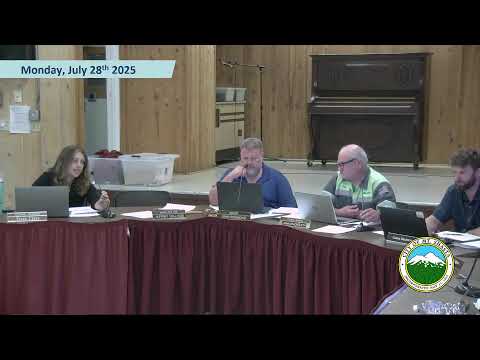
Mount Shasta council approves first reading of tiny-home-on-wheels ordinance after public hearing
Summary
City council gave unanimous first-reading approval to an ordinance to allow permanent tiny homes on wheels in selected zones after a public hearing and discussion about minimum rental periods, CEQA risk and ownership models.
The Mount Shasta City Council on July 28 gave unanimous first-reading approval to an ordinance adding Chapter 18.18 to the Mount Shasta Municipal Code to allow permanent tiny homes on wheels in specified zones.
Council and staff said the ordinance was drafted after council direction in November to seek additional approaches to affordable workforce housing. The ordinance defines tiny homes as structures up to 400 square feet, sets objective design standards and limits tiny-home villages to sites of between three and nine units. The code would allow tiny-home villages in R-2, R-3, C-1 and C-2 zoning districts, with final regulatory authority over site design resting with the Planning Commission.
During the public hearing, residents voiced support for the ordinance as a means to expand housing options. “There is a housing crisis in this area,” said Maria, a Mount Shasta resident, who described arriving six years ago and encountering limited housing options. Another resident, Afa, encouraged community advocacy for affordable housing initiatives and described local outreach activity.
Councilmembers and staff addressed several implementation issues raised by speakers. The draft ordinance says tiny homes are intended for long-term housing and prohibits rental periods of less than 30 days. Some councilmembers said constituents worry that a 30-day minimum could permit rotating short-term rentals; one councilmember asked whether a longer minimum (for example, six months) could be required for village-style sites. Staff replied the 30-day threshold in the ordinance reflects state law constraints and existing definitions for “long-term” occupancy and noted potential legal limits on imposing a longer minimum without additional review.
Councilmembers also discussed ownership and management models. Staff said initial drafts allow either individual ownership or ownership by an entity, but some councilmembers and a planning commissioner had expressed concern that investor-owned clusters could produce market-driven rental increases and reduced resident protections. The council emphasized the ordinance’s intent to encourage ownership pathways that allow occupants to build equity.
Staff advised that the ordinance as a code amendment is not a “project” under the California Environmental Quality Act (CEQA) because it does not change zoning density or authorize ground disturbance; however, councilmembers acknowledged that legal challenges can be filed even where CEQA does not apply. One councilmember warned the council that an identified local litigant has previously used litigation to delay local code actions and may file suit seeking to enjoin implementation.
After the public hearing and discussion the council member moved for first reading of “CCO-25-?,” an ordinance amending the Mount Shasta Municipal Code to add Chapter 18.18 (Tiny Homes on Wheels); another councilmember seconded the motion. The motion passed with all members voting aye.
The council indicated the Planning Commission will retain approval authority over site designs and objective standards. Staff noted additional implementation details — including enforcement, monitoring for short-term rental misuse and an administrative framework — would be addressed in implementing regulations.
The ordinance will return for a subsequent reading as required by city code and state law before final adoption.