Get Full Government Meeting Transcripts, Videos, & Alerts Forever!
Get email alerts on the Active Transportation topic
No spam. Unsubscribe anytime.
Agoura Hills students help design signage, plantings for Lady Face Greenway
Summary
Public Works Director Charmaine Yambal and Agoura High civic students described progress on the Lady Face Greenway, an active-transportation corridor funded by Metro (Measure R and Measure M). Students are developing plaques/QR content and plant research, and the project is about a year from completion.
Agoura Hills Public Works Director Charmaine Yambal and a team of Agoura High students outlined progress on the Lady Face Greenway project, an active-transportation and recreational corridor that will add new walking and biking pathways, a horse trail and onsite bike amenities to the city’s Agoura Village specific plan area. Yambal said the project is funded by Metro through Measure R and Measure M and that construction is expected to finish in about a year.
Yambal said, “The Lady Face Greenway project is really an active transportation project.” She told the students’ podcast that the greenway will be built over an existing concrete channel and will include paths for pedestrians, dogs, equestrians, bike parking and a bike-repair station.
Why it matters: the greenway is designed to increase trail connectivity and provide a final link for people biking or walking to work or for recreation. City and project staff have also emphasized an educational component: a series of low-profile plaques and QR codes that will link to more detailed digital materials about the plants used in the landscaping and the indigenous cultural meanings attached to those plants.
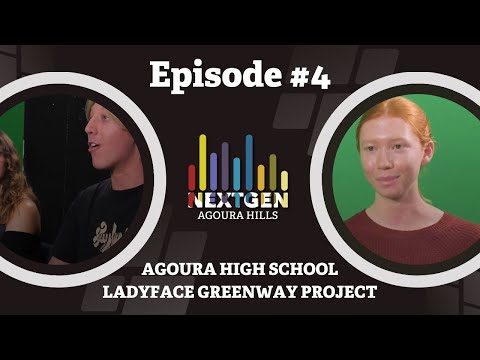
Students from Agoura High’s civic engagement program described their role in producing that educational content. Lucas Swinkin, vice chair of the student team, said, “We are specifically working on a QR code or a plaque that we could put in the park.” The students told the podcast they plan a small number of plaques (they discussed “2 or 3 or 4”) that will offer brief plant facts on site and direct visitors to a website with videos and deeper material.
Research leads Grace Hennessy and Kate Meehan said they are working with a cultural advisor identified as Julia to document hyperlocal plants and cultural practices. Hennessy described one finding about California buckwheat: “these plants can actually help reduce populations of invasive species because they foster habitat for other species of insects,” which the students said helps ecosystem balance. Meehan noted that milkweed is a host plant for monarch butterfly caterpillars and that native species in the planting plan are intended to support pollinators.
Students also said they have sought to reflect indigenous perspectives in the interpretive material. A student said their cultural advisor represents a local tribal community and that the project has connections to Chumash history; the students said the advisory role is intended to help present plant knowledge as cultural practice rather than as mere botanical facts.
Students described practical challenges in contributing to the municipal project: coordinating across different school schedules, developing meeting agendas, and learning how to pitch ideas to city staff. Gretchen Parker Burke, the student chair, said the group has grown more confident presenting proposals to the city and that staff have been receptive.
Charmaine Yambal said she expects the students’ plaques and digital content to be installed with the greenway at or near project completion. She also noted the project’s funding source: Metro, via Measure R and Measure M, which the city identified as supporting the active-transportation components. No formal council or commission vote was recorded during the podcast; the segment focused on project design, student engagement, cultural advising and the construction timeline.
The students and city staff said the finished greenway aims to serve multiple users — walkers, cyclists, horse riders and pollinators — and to include interpretive material that highlights indigenous histories and local ecology. City staff and the student team expect to mark the completed project with an installation or ribbon-cutting when construction finishes, roughly within a year, according to Yambal.