Get Full Government Meeting Transcripts, Videos, & Alerts Forever!
Get email alerts on the Wastewater Pipeline Cdcr topic
No spam. Unsubscribe anytime.
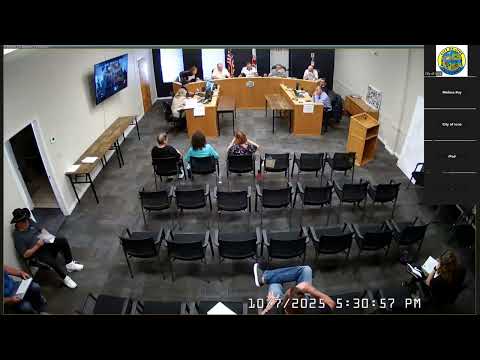
Ione council hears heavy public concern over CDCR pipeline easement; no final action taken
Summary
The Ione City Council discussed a resolution to grant easements to the California Department of Corrections and Rehabilitation (CDCR) for an antenna tower and an existing sewer pipeline but took no final adoption on the item after extended public comment and council questions.
The Ione City Council discussed a resolution to grant easements to the California Department of Corrections and Rehabilitation (CDCR) for an antenna tower and an existing sewer pipeline but took no final adoption on the item after extended public comment and council questions.
The item, listed as Resolution 2025-34, would allow CDCR to record easements for pipeline infrastructure already constructed along Dave Brubeck Road. Tom Garcia of Willdan, presenting for the developer, said the easements were omitted from earlier recorded maps and that the action would “provide PG&E and the other utilities … the proper authorization” for services in Seabiscuit Alley and related areas.
Opposition from multiple residents and community members dominated public comment. Several speakers alleged groundwater contamination linked to Mule Creek and prison operations and urged the council not to approve any easements that could advance moving or disposing of treated wastewater off CDCR property. Richard Gonzales, a Castle Oaks resident, said his medical team told him toxins found in his body traced to “the ion water” and urged the council to prioritize public health. David Anderson, speaking during public comment, also said records and third-party testing indicated contamination and called for release of any documents relied upon during council decision-making.
Council members pressed staff for details about operational limits and liability protections. City staff and the city attorney said the pipeline is not operational; any future use would require a new agreement addressing operation, maintenance, repairs and indemnification. The city manager told the council the easement documents date to 2019–2021 and characterized the request as a ministerial step to allow CDCR to record previously prepared documents. City attorney Josh Verensky and staff said any operational approvals would return to the council for specific terms.
No formal adoption occurred at the meeting. Council members discussed whether to request additional meetings with CDCR, to poll council positions, and to seek further legal and technical documentation before taking a final vote. One council member moved to poll colleagues for their likely votes; another moved only to discuss the item. With no motion to adopt the resolution, the item was left pending further council direction and follow-up with CDCR.
Why it matters: Multiple residents linked long-standing local health concerns and previously reported Regional Water Quality Control Board findings to the pipeline and CDCR wastewater practices. Council members said they would not permit operational use without additional agreements, but residents asked for greater transparency and for staff to produce testing records and legal documentation before any easement-related recording or operational approvals.
The council asked staff to keep lines of communication open with CDCR, and several council members said they wanted to see any third-party testing and the historical records cited by residents before a future decision.
Ending: The item remained undecided; staff said CDCR had pressed to have the easement matter recorded and that the easement documents were administrative in origin from earlier years. The council directed staff to continue coordination and to return with further information, including any third-party testing or new operational agreements, before any operational approvals.