Get Full Government Meeting Transcripts, Videos, & Alerts Forever!
Get email alerts on the Environmental Health Justice topic
No spam. Unsubscribe anytime.
Community groups warn expanded drilling risks public health in Kern County; call for stronger safeguards and transparency
Summary
Community and environmental justice witnesses said expanding permitted oil production without stronger monitoring and enforceable safeguards would worsen health harms in Kern County and other extraction communities.
Community representatives and environmental justice advocates testified at the joint hearing that any program to increase in‑state production must safeguard health, protect neighborhoods, and require fuller disclosure of environmental liabilities.
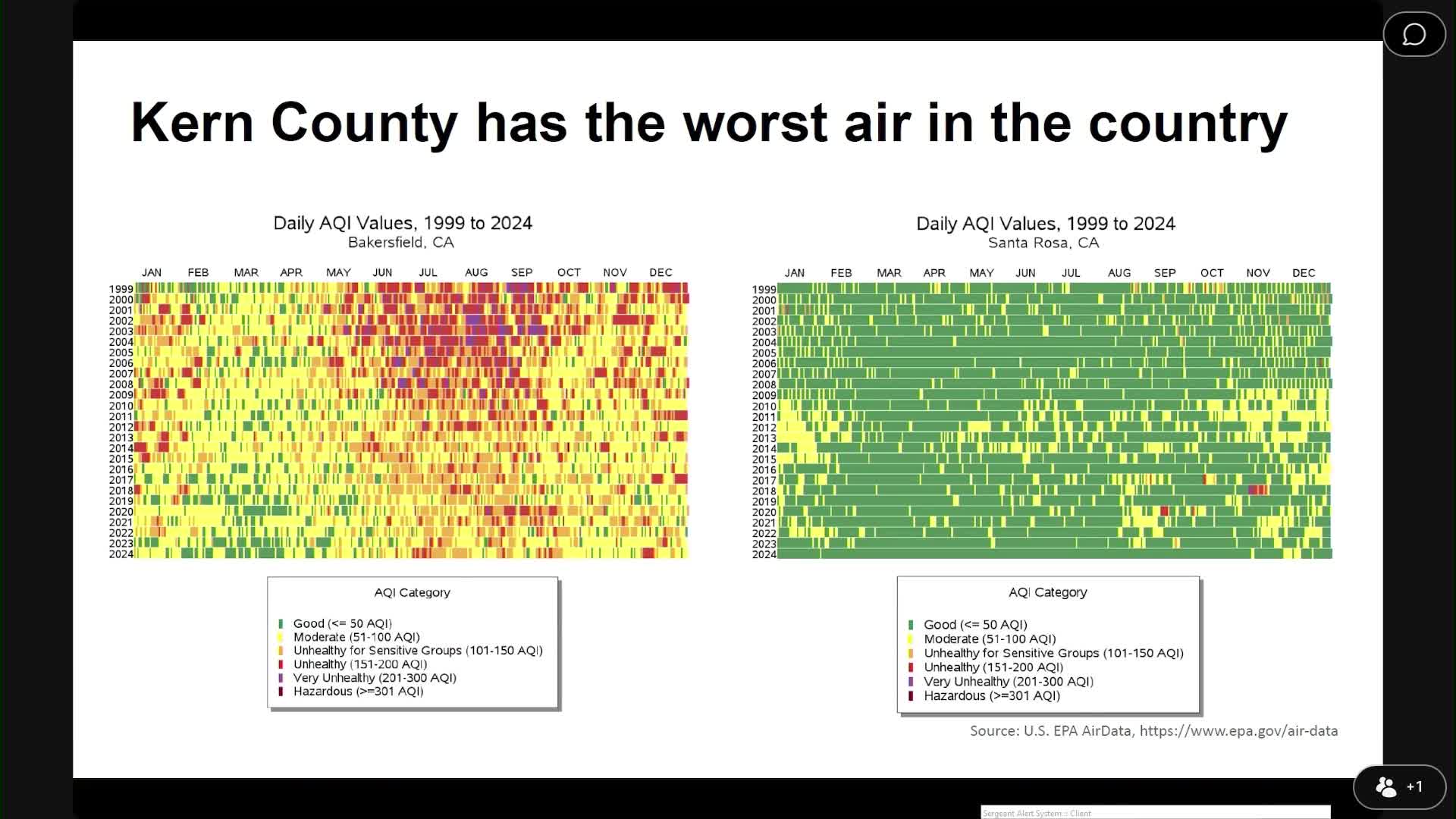
A Kern County resident who testified for the Central California Environmental Justice Network described living with persistent air quality and community exposure issues in the region that produces the majority of California’s oil. The witness said roundtable inspections found roughly one‑third of facilities were actively leaking and that exemptions in the state's oil and gas regulatory framework (COGRA) allow many heavy‑oil wells to skip leak‑detection and repair obligations. “These devastating impacts are real and they are preventable,” the witness told the committees, urging guardrails before any statutory validation or expansion of permits.
Health and monitoring concerns: the witness cited longstanding disparity data — including elevated PM2.5 exposure and higher disease burdens in the southern San Joaquin Valley — and said the state should require stricter monitoring, close the heavy‑oil exemption, and prevent any CEQA rollback that would reduce public notice, tribal consultation or project‑level mitigation. The coalition also asked that any permits tied to stabilization objectives include enforceable limits on new well counts, financial assurance for remediation and transparent disclosure of likely cleanup costs.
Complementary perspectives: the Union of Concerned Scientists urged a market‑flexibility approach that pairs temporary allowance for some US‑spec gasoline in shortage situations with targeted consumer upgrades (for example, funding to help drivers of the oldest, highest‑emitting vehicles switch to cleaner vehicles). The United Steelworkers and industry representatives emphasized worker protections, the economic importance of keeping refineries operating, and the need for investor confidence; industry groups also warned that regulatory uncertainty can hasten closures.
Ending note: community witnesses asked lawmakers to prioritize protections in any stabilization plan and to ensure that short‑term moves to stabilize supply do not remove environmental safeguards, reduce tribal and public consultation, or shift cleanup liabilities to local taxpayers.