Get Full Government Meeting Transcripts, Videos, & Alerts Forever!
Get email alerts on the Hostile Architecture Denver Avenue topic
No spam. Unsubscribe anytime.
Commissioners ask mayor's office for answers after downtown Denver Avenue boulder installation
Summary
A commissioner raised community concerns that large boulders placed at the Denver Avenue transit station constitute hostile architecture that limits access for people who are unhoused; the commission requested an update from the mayor's office and asked staff to invite an administration representative to the next meeting.
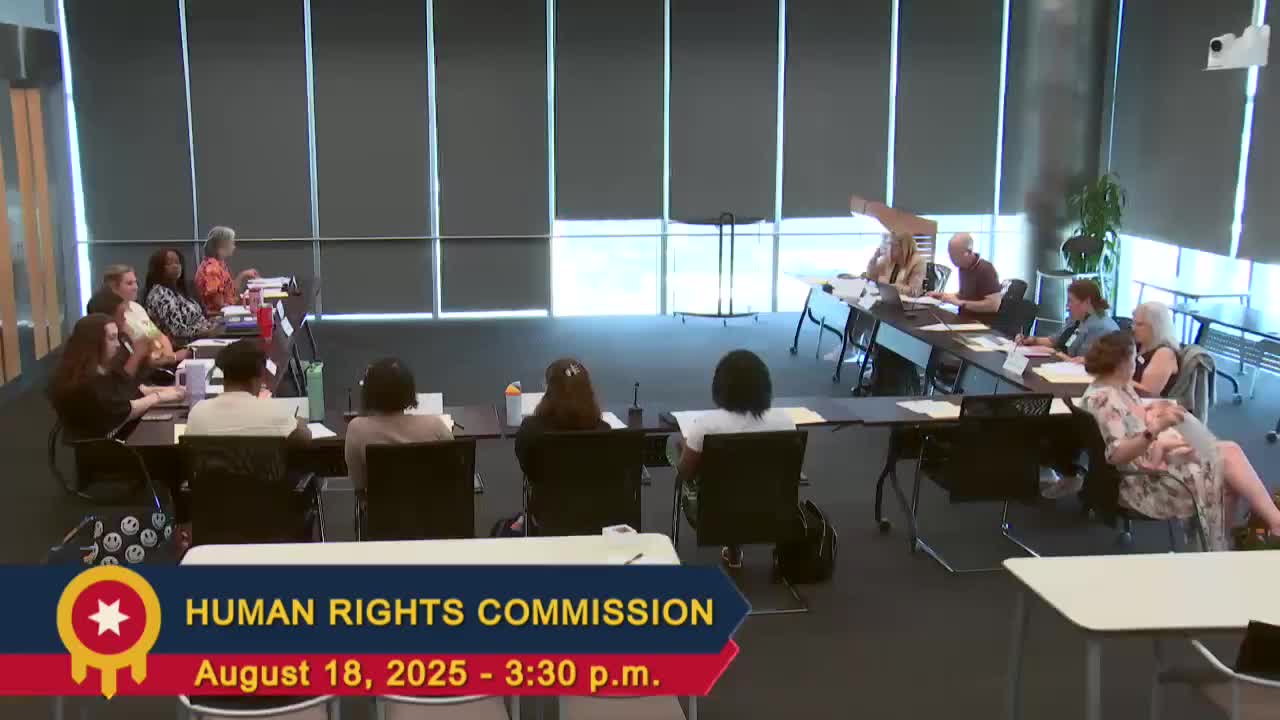
Commissioner Barrows used the Human Rights Commission meeting on Aug. 18 to raise concerns about a recent installation of large boulders at the Denver Avenue transit station downtown, saying the rocks limit places where people can sit in the shade and called the placement an example of “hostile architecture.”
Barrows described the station as long used by people with nowhere else to be and said the boulders reduce access to shade and seating that had been available under the trees. Commissioners and staff discussed the mix of concerns raised in public meetings — safety complaints at the station, city efforts to respond to perceived loitering and a private-sector partner called Be Heard that runs shuttles to an off-site service location in the Admiral/Sheridan area.
Commissioners asked for more information before taking formal action. The commission's staff said the mayor held a community meeting on Aug. 1 and that the mayor and staff had described several goals for the work at the station, including safety and efforts to connect people to services. Commissioners requested a briefing from the mayor’s office (staff identified Emily Hall as a likely contact) and asked staff to invite a mayoral representative to a future HRC meeting. Commissioners also asked staff to request crime- and 911-call data for the area from Tulsa Police to better understand the safety rationale cited in public meetings.
Several commissioners said they support hearing administration perspectives and community-partner explanations (including how alternatives were considered) before recommending any formal HRC response. Commissioners suggested two next steps: (1) invite a staff representative from the mayor’s office to present background and current plans at the next meeting, and (2) gather specific crime and response data for the Denver Avenue station.
Why it matters Commissioners framed the issue as one that intersects homelessness, public-safety concerns and civil-rights considerations. They also noted that built-environment changes that affect where people can be in public spaces can have outsized effects on people with few alternatives.
What’s next Staff agreed to invite a mayoral representative (Emily Hall or another mayoral staffer) to return with an update and to request relevant police/call-for-service data for the station area. Commissioners said, if needed, they may convene a focused group of commissions and community partners to discuss alternatives and impacts.
Ending The commission did not take a formal enforcement action at the meeting but requested the administration provide more detail so commissioners can consider whether HRC follow-up is appropriate.