Salem officials outline plan for new Salem High School; voters to decide debt exclusion in 2026
Loading...
Summary
City and Salem Public Schools leaders described a unanimous building-committee decision to pursue new construction for Salem High School, estimated at about $450 million with Massachusetts School Building Authority (MSBA) reimbursement expected to cover roughly 45–55%. Voters will be asked to approve a debt-exclusion vote in spring 2026.
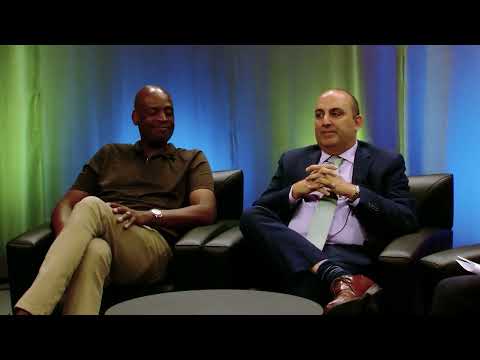
Dominic Pangalo, mayor of Salem and chair of the school committee, and school leaders provided a community update on plans to replace the aging Salem High School and said the building committee unanimously recommended constructing a new facility rather than renovating the existing building.
The project is in the Massachusetts School Building Authority (MSBA) pipeline, and city officials said MSBA reimbursement is expected to cover roughly 45 to 55 percent of the total cost. City leaders projected a ballpark cost of about $450 million and said voters will decide a debt-exclusion question in spring 2026 to fund the city’s share.
The building committee’s co-chair, Rick Jones, said the committee considered four approaches required by MSBA — code upgrade, renovation-only, renovation with addition and new construction — and concluded a new building was the best option. “If you’re doing the renovation only scheme, you’re looking at a 48 month process for construction as opposed to new construction, which is gonna be more like 30 months,” Jones said, citing phasing, swing space and cost as principal concerns.
Superintendent Steve Scribe said the existing high school is outdated, that mechanical and safety systems are near the end of their useful life, and that a new building would better support current pedagogy and career-technical education (CTE). “This has been a long term project…people had urgency around, and had have been trying to to to get a new rehab a building that was, sorely in need of upgrading,” Scribe said, describing the MSBA master facilities process that led to the current stage.
Committee co-chair Nate Bryant said the plan is designed to minimize student displacement during construction. “We’re able to do this without displacing students, without bringing in temporary or portable classrooms,” Bryant said, adding that construction noise is likely but that students should not lose classroom time.
Officials described site constraints and program highlights. The high school campus sits on roughly a 60–62 acre parcel, officials said, with approximately 16–17 acres of buildable land because of ledge, wetlands and power-line easements. Planned features discussed in the preliminary design include larger science labs, expanded and modernized CTE spaces, improved visual and performing arts facilities, on-site athletic fields for baseball and softball, and a community-facing auditorium and food-service space.
Leaders stressed both educational and community benefits. Scribe noted recent academic gains — enrollment has grown by “almost 200 students” since the district entered the MSBA process, and the district reported strong year-over-year gains in math, science and English language arts and improved AP performance. “This project is coming at a time where the Salem High School is on a significant upswing,” Scribe said.
Officials warned of tradeoffs if voters reject the debt exclusion. Jones said a denial would require the district to re-enter the MSBA pipeline and that the city would still face substantial capital needs: “If we bite that, the code only upgrade, was about $350,000,000. So it's about a $100,000,000 difference,” he said, describing higher long-term costs from phased fixes, escalation and interest if the state reimbursement is lost. Leaders also said the current condition of the building was cited in the school’s accreditation review and that failure to proceed could jeopardize accreditation at a future review.
City leaders also described sustainability goals for the new facility. Architects Perkins and Will and an engineering partner have proposed orientation, geothermal heating and electric systems and rooftop and canopy photovoltaics to move toward net-zero or net-positive operation, and officials said the design will avoid natural gas use.
On circulation and parking, officials said the project is expected to keep campus parking at current levels (exact count not specified) while converting the existing single-entry approach on Wilson Street to two-way circulation so buses and family drop-off can be separated. Officials said the design team is coordinating with the Massachusetts Department of Transportation (MassDOT) on Highland Avenue work to avoid conflicts.
Timeline and next steps: if voters approve the debt-exclusion question and the MSBA maintains the schedule, officials said interior occupancy of a new building could be possible in 2030, with site work and field construction finishing afterward. For more information, officials pointed residents to salemma.gov/salemhighschool.