Get Full Government Meeting Transcripts, Videos, & Alerts Forever!
Get email alerts on the Criminal Justice Appellate topic
No spam. Unsubscribe anytime.
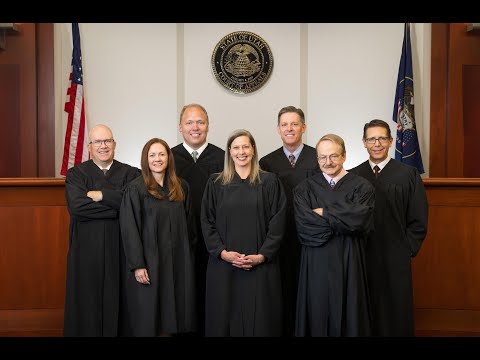
Utah Court of Appeals hears arguments in State v. Yourren over notice, unanimity and jury instructions
Summary
Appellate judges pressed defense and prosecution over whether pretrial notice and a requested special verdict form preserved claims that the jury failed to unanimously identify the specific acts underlying theft and exploitation charges.
The Utah Court of Appeals heard argument in State v. Yourren on whether the trial court and parties gave the defense sufficient notice of the state’s precise theft and exploitation theories and whether the jury was required to be unanimous about the particular transaction or act that supported the single theft count.
The issue matters because the defense says a lack of particularized notice and the absence of a special verdict form left the jury free to convict without agreeing on the same specific act or acts, potentially violating the defendant’s due-process and unanimity rights. Appellate judges repeatedly questioned both sides about preservation of objections and the proper legal standard to assess prejudice.
Appellate counsel for the defendant, Deborah Taliaferra, told the court that the case involved a longtime neighbor relationship in which a rancher, William Henroyd, transferred property and financial control in ways the state later characterized as exploitation and theft. Taliaferra argued that the state’s broad presentation — “throw everything against the wall and let’s see what we can come up with,” as she characterized the trial strategy — deprived the defense of the ability to prepare for a focused trial presentation and impaired cross-examination and proof strategy.
Judge Ryan Tenney pressed Taliaferra on preservation of the notice argument, asking, “Why why doesn't that end things as far as the theft charge?” after the defense had received two bills of particulars. Taliaferra replied that a bill of particulars here produced so much information rather than a narrowing of the state’s theory, and she said it would have been futile to press further given the trial court’s earlier rulings on a related exploitation charge.
The state’s counsel, William Haynes, countered that the defense itself proposed definitions at trial that were helpful to the defense and that the evidence at trial — including financial transactions and testimony about the victim’s condition — made a different outcome unlikely even if particular jury instructions or verdict forms had differed. Haynes argued the unit of prosecution for the exploitation statute is the victim (the alleged vulnerable adult) and that multiple acts can be aggregated under the statute’s $5,000 threshold.
Judges focused on three linked legal disputes: (1) preservation — whether requesting a special-verdict form without explicitly arguing “unanimity” preserved the issue for appeal; (2) the single-larceny (single-larceny/aggregation) doctrine and whether separate acts could have been charged separately; and (3) vagueness and ineffective-assistance arguments tied to jury instructions defining “unjust” or “improper” use of resources under the exploitation-of-a-vulnerable-adult statute. The panel repeatedly explored whether trial counsel’s tactics (submitting a special verdict form, proposing definitions) were strategic or themselves could be plain error.
On preservation and special verdicts, the defense contended that submitting a special-verdict form and then acquiescing to the judge’s ruling did preserve the unanimity argument; the judges raised the distinct view that merely submitting such a form without specifically tying it to unanimity (or asking the court to instruct the jury to be unanimous as to the incident) may not preserve the claim. The state cited Chadwick as a counterpoint; defense counsel argued Chadwick differed on the facts.
The parties also debated whether the theft count ultimately tried to the jury was limited at the close of the prosecution to post-death transactions and whether that mid-trial narrowing increased the need for either a specific unanimity instruction or a special verdict to make clear what acts the jury relied upon. Defense counsel warned the jury was asked to “pick this, this, this, and this” without being required to identify which specific incident supported a count.
On the exploitation-count vagueness argument, defense counsel argued that jury instructions authorizing conviction for conduct that is “unjust” or “improper” are constitutionally vague and that defense counsel’s proposal of additional language may have made matters worse; the prosecutor told the court the jury heard extensive evidence of the defendant’s allegedly one-sided caretaker agreement and continuing transfers that undercut the likelihood that a narrower instruction would have changed the outcome.
The court kept the case under advisement and submitted it. The panel signaled detailed questions about when the defendant must specially preserve unanimity claims, how the single-larceny doctrine applies to long-running financial relationships, and when proposed jury forms or instructions suffice to protect appellate rights.
The court’s oral discussion prioritized evidence and record-based preservation: judges repeatedly emphasized they were deciding based on what objections and motions appear in the trial record rather than on hypothetical additional briefing.