Get Full Government Meeting Transcripts, Videos, & Alerts Forever!
Get email alerts on the Federal Legislation topic
No spam. Unsubscribe anytime.
Dallas federal update: municipal bonds preserved, housing tax credits extended; HUD programs and rescissions flagged as risks
Summary
The Ad Hoc Committee on Legislative Affairs received a federal briefing Aug. 5 outlining reconciliation outcomes, community project funding progress and program risks from proposed rescissions and administrative changes.
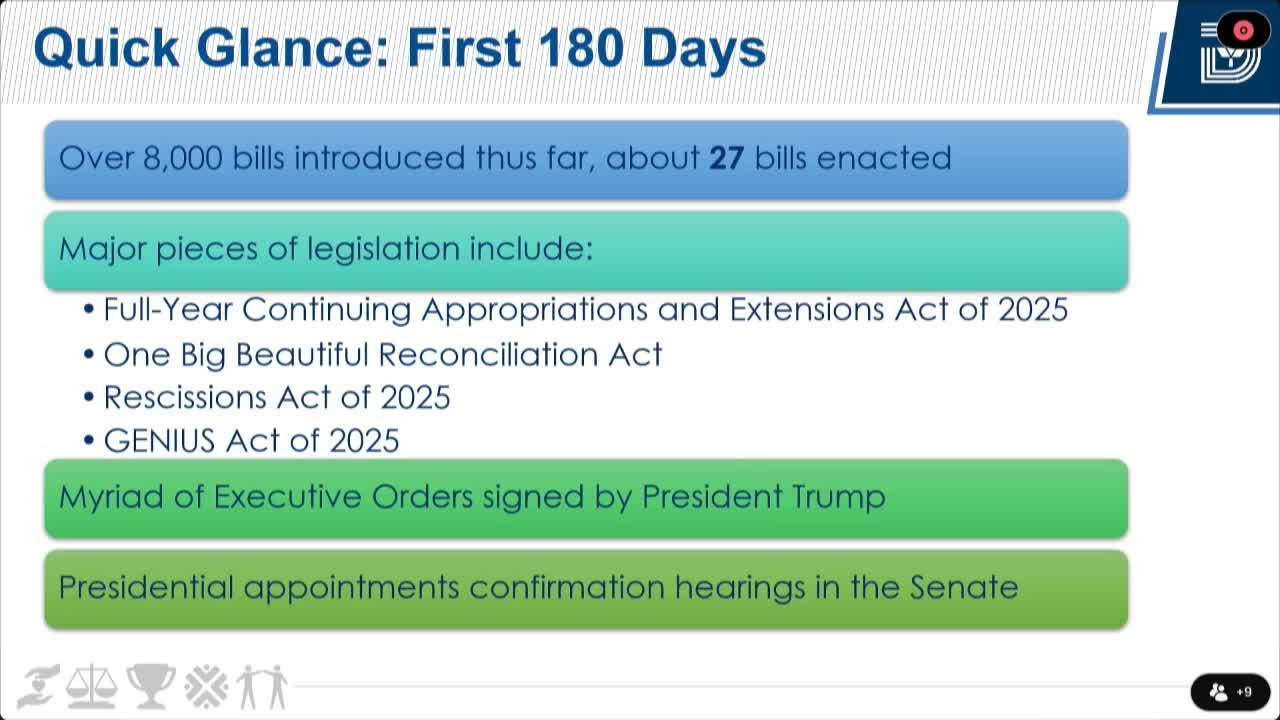
The Ad Hoc Committee on Legislative Affairs received a briefing Aug. 5 on federal legislative activity through the first half of 2025 and on the city’s federal advocacy.
Alex Renteria and federal staff reviewed the recently enacted budget reconciliation package (HR 1), appropriations activity and the community project funding requests submitted on Dallas’s behalf. Staff said the reconciliation bill preserved the tax‑exempt status of municipal bonds, permanently increased the low‑income housing tax credit by about 12 percent and made the New Markets Tax Credit program permanent. Those items were presented as direct wins for Dallas because they affect financing for affordable housing and capital projects.
Why it matters: City officials said municipal bonds and tax credit programs are central financing tools for infrastructure and housing projects; preserving those tools reduces construction costs and supports development programs.
Alex Renteria said the reconciliation package also contained provisions with potentially negative local effects, including rescissions of unobligated funds that were originally authorized under the Inflation Reduction Act and long‑term reforms to Medicaid and SNAP the staff said could shift costs or administrative burdens to states and local service providers.
Staff highlighted federal executive actions that may affect local policy. They called out an executive order titled “ending crime and disorder on America’s streets,” signed July 24, which directs agencies to prioritize grants for jurisdictions that enforce bans on public drug use, camping, loitering and squatting — an item staff said has implications for Dallas’s homelessness and public‑space enforcement strategies.
Federal appropriations and community project funding: staff reported that the Dallas delegation submitted 28 community project requests and that 17 projects were advanced by members’ offices. The city’s current projection from those projects is about $15 million; staff cautioned that actual funding depends on passage of FY26 appropriations. Staff also noted a cautionary precedent: in FY25, Dallas had projects selected but received $0 because Congress did not complete appropriations.
Staff described programs the city is watching during the FY26 appropriations process: HUD programs such as CDBG and HOME (the latter was zeroed out in one House draft), the Urban Area Security Initiative (UASI) which supplies security funding for major events, and potential rescissions to IIJA programs. Staff noted a $625 million homeland security appropriation in reconciliation intended to support FIFA World Cup host cities as a positive development for Dallas’s event readiness.
Officials said they continue to coordinate with the city delegation, with federal lobbyists Capitol Edge and Thorn Run, and with peer cities and regional partners to protect municipal finance tools and to advocate for stable funding of housing and public‑safety programs.
Ending: Staff said they will continue to monitor appropriations and any additional rescission actions and will update the council when federal deadlines or rule‑making opportunities require city responses.