Michigan Main Street official outlines low‑commitment 'network' tier for Grosse Ile commercial corridor
July 26, 2025 | Grosse Ile, Wayne County, Michigan
This article was created by AI summarizing key points discussed. AI makes mistakes, so for full details and context, please refer to the video of the full meeting. Please report any errors so we can fix them. Report an error »
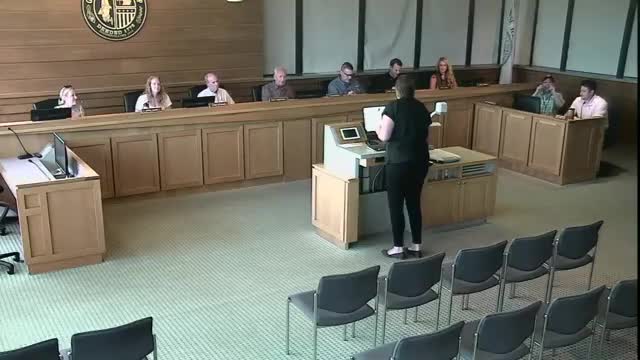
Young said the network tier is a low‑commitment option that provides tailored technical assistance: a downtown scorecard, access to Michigan Main Street staff, twice‑annual downtown forums and a searchable Solutions Center of resources. “To participate in the network level, it’s very simple. You complete a community interest form, submit progress reports twice a year and complete the downtown scorecard,” Young said.
The nut of Young’s presentation was that the Main Street framework organizes revitalization work into four domains — economic vitality, design, organization and promotion — and that the network level gives smaller DDAs access to that framework without full Main Street designation. Young highlighted statewide program outcomes Michigan Main Street tracks, noting private and public reinvestment figures, business starts and volunteer hours statewide and saying last year the program logged roughly 30,000 volunteer hours and that program‑to‑date volunteer time approaches nearly a million hours.
Board members discussed next steps for Grosse Ile. A board member said the scorecard would let the DDA “be realistic with ourselves” about strengths, weaknesses and priorities and suggested the board could complete the scorecard at a future meeting. Young recommended the DDA consider the free online training modules, noting the district scorecard is one of the seven modules and that the training can be completed in a roughly two‑hour workshop or split over meetings.
Young also described the self‑assessment layout of the downtown scorecard: eight assessment categories (business, real estate, events and marketing, preservation and place, capacity and people, and others) grouped under the four Main Street pillars. Communities mark each indicator as “starting,” “evolving” or “excelling,” then identify five specific actions for the next 12–24 months; Michigan Main Street staff follow up based on those priorities.
Young said there is no fee for the training or technical assistance at the network level and that Michigan Main Street staff (she named Laura in program management and Jill Tremonti as promotion specialist) are available by virtual call to help with marketing or other topics.
Board members said they would review the scorecard and discuss completion at the next meeting. One member asked Young whether Southgate was the closest community in the program; Young confirmed Southgate is participating at the network level and referenced nearby communities involved at other tiers. Another board member asked whether participation requires a formal long‑term commitment; Young said the network level is flexible: communities submit progress reports in summer and winter and may remain at the level as long as they find it useful.
Young left board members with a link to Michigan Main Street’s online resources and offered to help the DDA schedule training or to assist in reviewing the completed scorecard.
Don't Miss a Word: See the Full Meeting!
Go beyond summaries. Unlock every video, transcript, and key insight with a Founder Membership.
30-day money-back guarantee
Sponsors
Proudly supported by sponsors who keep Michigan articles free in 2025

