Get Full Government Meeting Transcripts, Videos, & Alerts Forever!
Get email alerts on the Public Housing Redevelopment topic
No spam. Unsubscribe anytime.
Richmond Housing Authority outlines redevelopment plans, 501(c)(3) arm and resident protections; advocates press for tenant-led decision-making
Summary
The Richmond Housing Authority presented redevelopment strategy, use of a Richmond Development Corporation nonprofit arm, a resident bill of rights and a build-first approach to minimize displacement. Public commenters described unsafe conditions and urged resident-led redevelopment and legal protections.
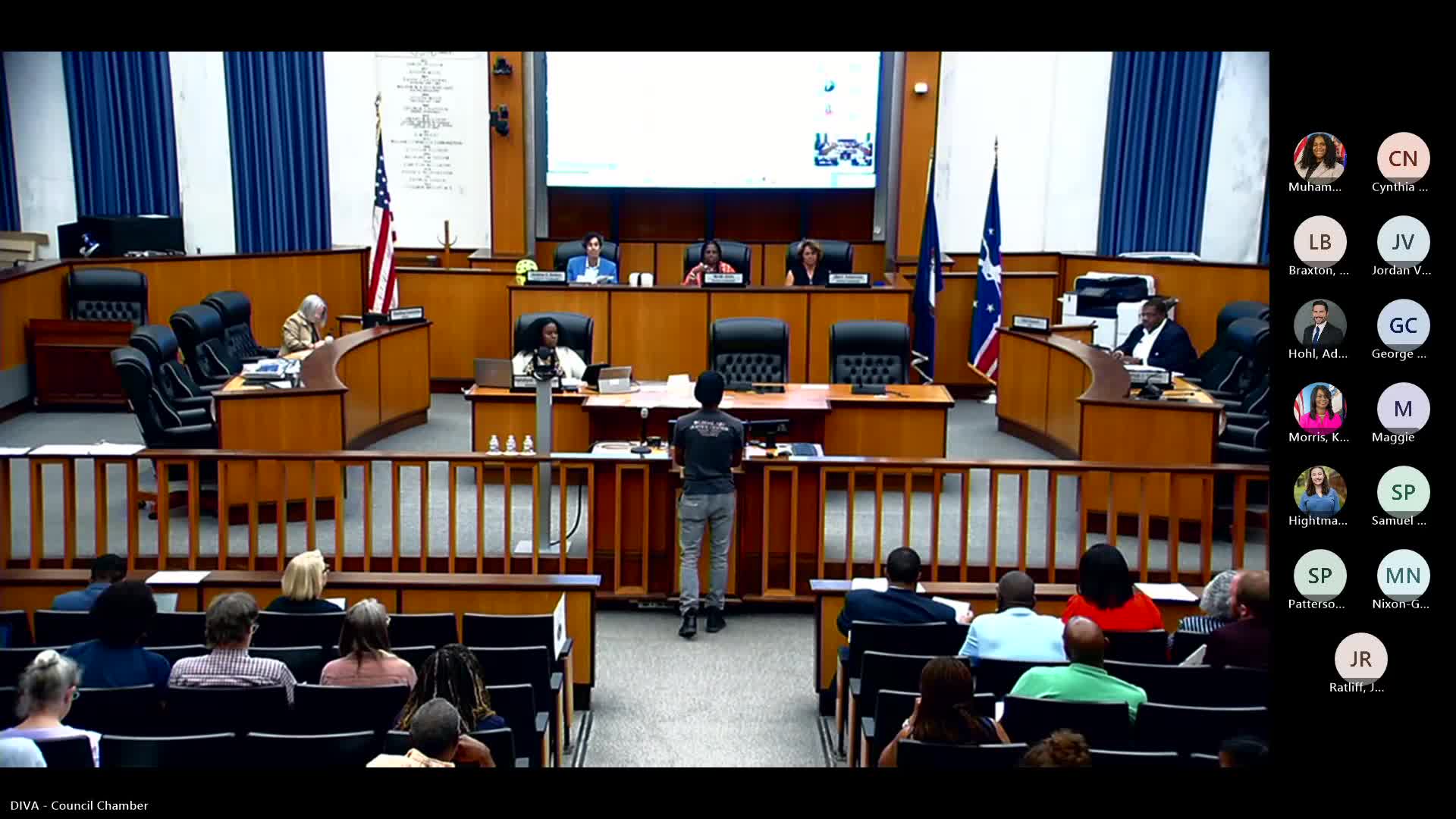
The Richmond Housing Authority (RHA) returned to the Land Use Committee to report on finances, redevelopment plans and resident programs and to answer questions about its nonprofit development arm, the Richmond Development Corporation (RDC).
RHA CEO reported that an outside audit completed in the prior month produced no findings for the first time in many years. RHA said roughly 80% of its funding comes from the U.S. Department of Housing and Urban Development and described efforts to diversify funding by using the RDC, a 501(c)(3) nonprofit wholly owned by RHA, to attract philanthropic and private capital for resident programs and redevelopment.
On redevelopment, RHA outlined a multi-phase strategy for Gilpin Court and other public-housing sites. The agency said Gilpin’s full redevelopment is planned in 10 phases and that the total estimated cost for those phases is $466,000,000. RHA said its preferred approach is a build-first strategy—construct replacement housing on the site so residents can move directly into new units rather than face long-term displacement—and that the agency will present a detailed relocation plan and Section 18 considerations in mid-August. RHA also said it intends to include a resident bill of rights in master development agreements and to host community meetings (RHA listed upcoming resident meetings on Aug. 28 and Sept. 6) before finalizing MDAs.
CEO remarks also flagged a procurement condition added to the Gilpin MDA: a requirement that a selected private developer reinvest a portion of profits back into the community in consultation with residents. RHA said it intends to add a resident voting member to the RDC board and that the RDC is necessary because RHA itself, as a public housing authority, cannot receive certain philanthropic or private funds.
Public comment earlier in the meeting had included sustained testimony about conditions at Gilpin Court and other public-housing sites. Omar El Gaddafi of the Legal Aid Justice Center, residents of Gilpin Court, and organizers from Virginia Organizing and New Virginia Majority described mold, broken building systems and long maintenance delays; several speakers urged resident-led redevelopment and called for tenant protections such as a tenant bill of rights and stronger relocation guarantees.
RHA told the committee that it had revised its administrative plan and annual plan and that it is pursuing homeownership pathways for residents through counseling, partnerships with local lenders and plans to pair residents with city down-payment assistance where eligible. The agency said it has preliminary homeownership activities under way, including land parcels (Blackwell lots) planned for affordable homeownership.
Committee members pressed RHA on details. Councilors asked for data on landlords accepting Housing Choice vouchers and the size of very-low-income inventory; RHA agreed to supply those figures. Council members and advocates said they want the agency’s relocation and redevelopment plans in writing and available to the full council and public before any demolition or large-scale displacement occurs.
Ending: RHA said it will provide the committee the draft relocation plan and related materials mid-August and continue community outreach; council members said they will reconvene with the agency for detailed follow-up and directed staff to distribute the RHA materials to the full council prior to additional votes.