Idaho State University president previews housing projects, $14 million life‑sciences appropriation and campus growth
Loading...
Summary
Idaho State University President Wagner told Bannock County commissioners the university expects enrollment growth, is pursuing public‑private housing, received $14 million from the legislature for a new Life Sciences building and plans major campus construction beginning as early as 2026.
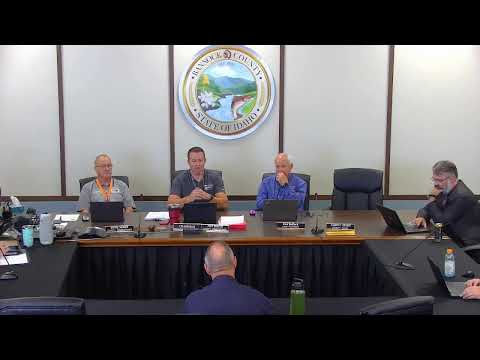
Idaho State University President Wagner told the Bannock County Board of Commissioners on the morning of the meeting that the university is seeing several years of enrollment growth and is preparing for major campus construction and housing projects.
Wagner said the university expects fall enrollment to rise for the fourth consecutive year and that on‑campus housing is at or near full capacity. To address that, ISU has hired a consultant to develop public‑private partnership proposals and intends this fall to seek bids for development on a parking lot on Fourth Street that would add private student housing. Wagner said private development would let the university take older residence halls offline for renovation.
Wagner also said the 2024–2025 Idaho Legislature provided $14,000,000 for a new Life Sciences building to replace the Gale Life Sciences Building. He said the new building is planned on the site of the Trade and Technology Building east of the library; the Trade and Technology Building would be demolished before construction. Wagner said the project is out to bid for architectural and project leadership, that the building is expected to cost approximately $130,000,000, that the university hopes to break ground in mid to late fall 2026 and to occupy the building in 2029.
On other capital work, Wagner said a physician assistant expansion will renovate the basement of the Roy F. Christiansen building, and Leonard Hall—the College of Pharmacy building—will have a ribbon cutting on Sept. 19. He invited commissioners to ISU’s celebration week (the week of Sept. 15) and noted homecoming is scheduled for Oct. 25 against Northern Arizona.
Wagner described five institutional priorities he has emphasized since taking office: enrollment growth and student success, academic and research focus, advancing and enhancing physical infrastructure, employee engagement and empowerment, and related strategic program growth. He highlighted ISU’s health‑science mission—citing new programs such as a nurse‑anesthetist program and a clinical psychology doctorate—and said ISU maintains a close relationship with the Idaho National Laboratory (INL), including joint faculty appointments and workforce placement of graduates.
Wagner said the university benefited from the state LAUNCH program last fall, with more than 700 students receiving LAUNCH funding to pursue certificates or degrees that lead to employment within one to two years. He also said ISU operates one of a small number of university campus research reactors in the country and that recent federal interest in small modular reactors and critical materials work could position ISU and Eastern Idaho for growth.
Commissioners asked about parking and public transit near campus, and Wagner said he has discussed adding Pocatello Regional Transit routes with the mayor and that ISU’s newly completed 25‑year master plan includes parking and access improvements. He also outlined plans to organize and expand online programming and to centralize online offerings under the Albion Institute to grow nontraditional and remote enrollment.
Wagner repeatedly thanked the county for its support and invited further collaboration on events and community partnerships.
Wagner and commissioners discussed specific community items during the question period, including student recruitment, downtown access, and a Bannock County bicentennial committee invitation.
Ending: Wagner closed by reiterating ISU’s desire to be a community partner and said staff are available for follow‑up questions.