Get Full Government Meeting Transcripts, Videos, & Alerts Forever!
Get email alerts on the Trail Infrastructure topic
No spam. Unsubscribe anytime.
Residents press Muskego to seek federal funds to pave 6.6-mile We Energies recreational trail; committee asks mayor to research engineering grant options
Summary
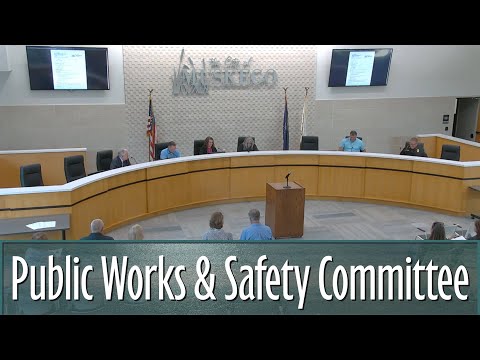
Residents urged the Muskego Public Works and Safety Committee on July 21 to pursue federal grants and engineering design work to upgrade a 6.6-mile recreational trail on We Energies’ utility corridor; the committee asked the mayor to research engineering-grant options and voted to defer construction authorization.
Residents and trail advocates told the Muskego City Public Works and Safety Committee on July 21 they want the city to pursue paving and upgrades to the 6.6-mile recreational trail that runs on We Energies’ utility corridor.
Jim Grenner, a longtime Muskego resident and former We Energies employee, told the committee the corridor is used regionally but is in poor condition and is discouraging users. Grenner said the trail license agreement refers to the route as the Muskego Recreational Trail and requires crushed stone or asphalt paving unless alternate material is approved by We Energies. He urged the city to pursue federal Transportation Alternatives Program (TAP) funds that can reimburse up to 80 percent of construction costs and recommended applying first for an engineering grant so the city would have a design and cost estimate before seeking construction funds.
“People are avoiding this trail because of the current condition,” Grenner said, describing loose gravel, uneven surfaces and user reports of falls and bike-control issues. He presented smartphone-based ride-condition data that showed higher vibration and roughness on sections with recycled asphalt millings than on nearby paved or crushed-stone segments.
City staff said the corridor’s length, We Energies’ design requirements (the company requested HS-20 loading and a 10-foot width in recent discussions), and the need for engineering and surveying make the project expensive. Staff recalled a 2022, back-of-envelope asphalt-only estimate of roughly $950,000 but said that figure did not include engineering, HS-20 structural design, or an updated 10-foot width; a full HS-20, 10-foot-wide paving with engineering and other costs would likely run to multiple millions of dollars. Staff recommended, if the city is interested, applying for TAP funding for engineering first so the design and accurate cost estimate would be reimbursed at the usual grant share before committing construction funds.
Mayor responded that he would research whether the city can apply for engineering-only funding without making a construction commitment and would report back to capital planning or council. The committee then voted unanimously to deny immediate construction authorization and asked the mayor to pursue the research and bring a recommendation back.
Speakers at the meeting also pointed out that some local residents and older users avoid the trail for safety reasons, and one resident singled out driveway humps along another trail in the city he said did not meet Americans with Disabilities Act grade standards. Committee members said the city has competing capital priorities in road repairs and other projects and that, while they supported the idea of seeking reimbursable federal engineering funds first, the project was not likely to proceed to construction in this year’s budget cycle.