Get Full Government Meeting Transcripts, Videos, & Alerts Forever!
Get email alerts on the Campaign Finance topic
No spam. Unsubscribe anytime.
State canvassers approve 100‑word summary for ‘Michiganders for Money Out of Politics’ petition after hours of debate over scope and wording
Summary
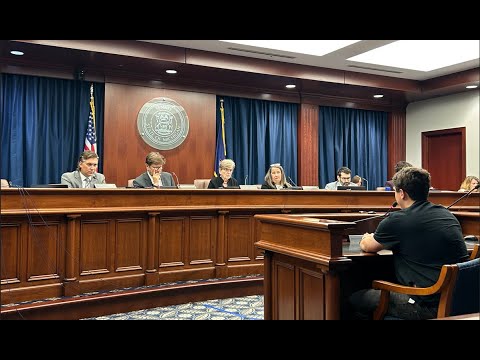
The Michigan State Board of Canvassers voted Friday to approve a 100‑word summary and petition form for an initiated proposal sponsored by Michiganders for Money Out of Politics, clearing the language that will appear on the petition circulated for voter signatures.
The Michigan State Board of Canvassers voted Friday to approve a 100‑word summary and petition form for an initiated proposal sponsored by Michiganders for Money Out of Politics, clearing the language that will appear on the petition circulated for voter signatures.
The board approved the summary after nearly three hours of public comment and attorney argument over how to describe the measure’s effects, including whether the summary should say the proposal “restricts and regulates spending on campaign ads” or more broadly describe new limits on political communications. The board also approved the petition form and a related filing manual for judicial elective offices.
The petition’s director‑drafted summary describes three principal changes the measure would make: (1) expand campaign‑finance regulation to apply to communications that clearly identify candidates or ballot questions even if they do not use express‑advocacy words such as “vote for” or “vote against”; (2) prohibit regulated electric and gas utilities, contractors with more than $250,000 in annual government contracts and people or organizations with substantial connections to them from making direct or indirect campaign contributions to candidates or offices that affect those entities; and (3) expressly require existing disclosure rules to apply to Internet political communications. Director of Elections (read during the meeting) summarized the proposal in those terms.
Supporters and opponents offered sharply different takes on the practical reach of the proposal. Michael Brady, an attorney representing Michiganders for Money Out of Politics, told the board the task before it was narrow: determining whether the director’s summary is “a true and impartial statement of the purpose of the petition.” Brady said the draft summary, with a few word‑count edits his clients offered, met the legal standard and that additional wording changes were purely procedural.
Opposing counsel representing the group Protect My Free Speech said the director’s summary contained factual errors and ambiguous language that would mislead petition signers about how broadly the measure would operate. Eric Doster and Steve Liedel, attorneys who filed written materials for Protect My Free Speech, argued the initiative’s text reaches beyond traditional “campaign ads” to regulate “electioneering communications,” “public communications” and many Internet messages; they said the draft summary should make clear the measure would expand government regulation and create new disclosure obligations that could apply to charities, local utilities such as rural electric cooperatives, and other entities beyond large investor‑owned utilities.
Several members of the public also spoke. Nicholas Pigeon, a Lansing resident and former director of the Michigan Campaign Finance Network, told the board he had reviewed the petition language and considered it legally defensible and likely to address concerns about large, unregulated spending. Representatives from the Michigan Chamber and Voters Not Politicians also gave opposing views: Wendy Block of the Michigan Chamber urged tighter language to avoid misleading voters about free‑speech impacts, while Mariah Bryant of Voters Not Politicians said the director’s summary was “true and impartial” and urged the board to approve it.
During deliberations board members and staff discussed multiple small edits to keep the text within the 100‑word limit while improving clarity. Directors and counsel debated whether to use the phrase “campaign ads” or “political communications” and whether the summary should list particular offices; to avoid confusion the approved language references contributions to “those who run for or hold offices that impact them.” Staff also confirmed the petition would raise the reporting threshold for certain independent expenditures from $100 to $500, a change noted by proponents during the hearing.
After discussion the board voted to adopt the director’s revised 100‑word summary (the director read an amended version that incorporated language clarifying covered utilities and contractors and the phrase “impact them”), approved the petition form conditioned on replacing the summary with the board‑approved wording, and approved the proposed filing manual for judicial elective offices. Motions were moved and supported on the record; votes were recorded as unanimous on those agenda items.
The board did not adopt any new circulator‑challenge rule at this meeting. Staff and members heard public comment on a draft circulator‑challenge procedure and on sample language for resolving disputes over circulator certificates, but the board took no formal vote on that procedure and signaled further work and clarification is needed.
What happens next: with the summary and form approved, petition circulators may begin collecting signatures on the approved form that carries the board’s 100‑word summary. The board’s approvals do not decide the merits of the proposed law; they only clear the administrative language that appears on petition pages and confirm the form meets statutory requirements for circulation and signature collection.