Get Full Government Meeting Transcripts, Videos, & Alerts Forever!
Get email alerts on the Stormwater Utility Fee topic
No spam. Unsubscribe anytime.
Cascade City Council discusses stormwater utility fee to fund repairs
Summary
Councilmembers discussed options for a storm sewer utility fee to raise dedicated revenue for stormwater repairs and maintenance, with staff asked to return with further analysis; no ordinance or vote was taken.
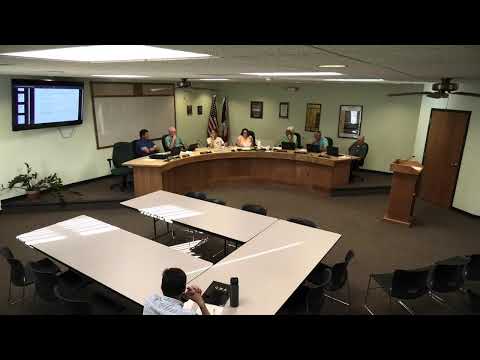
Cascade City Council members on Aug. 25 discussed creating a storm sewer utility fee to generate revenue for stormwater repairs and improvements but took no formal action.
Council members and staff outlined two broad approaches: a simple flat per-account charge and a more complex charge based on impervious surface area (roof and paved areas). Staff noted that larger cities commonly base fees on impervious surface; an example cited was Monticello. A flat fee scenario presented in the discussion was estimated to yield roughly $34,000–$35,000 annually under the assumptions shown to the council.
Why it matters: council members said stormwater infrastructure — catch basins, underground piping and other drainage elements — requires repair and replacement and that revenue must be identified. Council members expressed concern about equity between small residential accounts and large commercial or institutional properties with extensive impervious surfaces.
Discussion highlights: council members asked whether the fee should be per account or based on square footage and whether the approach would fairly charge schools, multi-occupancy buildings and businesses with large parking lots. One council member urged staff to find a more equitable structure for commercial accounts rather than a single flat fee. Another noted the fee could be banked and reassessed later if revenues were insufficient to cover major projects.
Direction and next steps: the council did not adopt an ordinance or set rates. Instead, councilmembers asked staff to further research fee structures — including impervious-surface calculations — consult comparable cities, and return with a proposal for possible ordinance language and an impact estimate. No formal motion or vote on a utility fee was recorded.
The topic was discussed during the agenda item titled “discussion on implementing a storm sewer utility fee.”