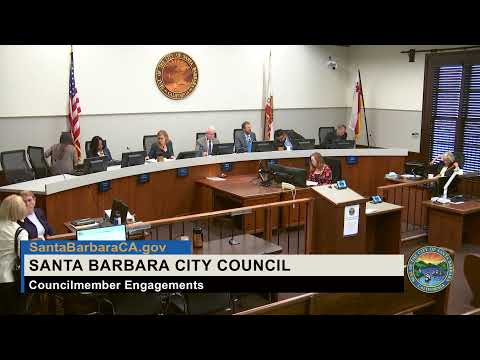
Santa Barbara council hears enforcement update, directs staff to draft short-term rental ordinance
Loading...
Summary
The Santa Barbara City Council on Aug. 5 heard a progress report on the city's short-term rental enforcement program and directed staff to draft an ordinance to regulate STRs citywide.
The Santa Barbara City Council on Aug. 5 heard a progress report on the city's short-term rental (STR) enforcement program and directed staff to draft an ordinance to regulate STRs citywide.
City Attorney Investigator William Elva said the enforcement program, made permanent in July 2024, investigated 230 properties in fiscal year 2025 and won voluntary compliance at 182 of them. Since the program began in 2023, Elva said, investigators have identified roughly 1,298 suspected illegal STR listings; 324 properties have been fully investigated and about 974 remain to be verified. "So far this fiscal year the program was able to collect approximately $1,800,000 in back taxes, penalties, fees and interest," Elva told the council. He said the program's costs for the year were about $230,000 and that total recoveries since inception are approximately $2.6 million.
Why it matters
Council and staff framed the item as part of the city's housing-preservation strategy and downtown/ coastal management obligations. City planning staff and the city attorney's office said unchecked STR growth reduces long-term housing stock, increases neighborhood nuisance complaints and can sidestep the permitting and tax obligations that hotels and other visitor-serving uses follow.
What staff recommended
Laura Bridal, senior planner in the Community Development Department, outlined options and a proposed program framework. Key points in staff presentations and discussion:
- Enforcement record: Elva described the current enforcement approach, including use of an electronic monitoring service (Rentalscape) and complaint hotline. Prosecutors pursue criminal cases when evidence supports criminal prosecution; municipal penalties and tax enforcement apply in other instances.
- Revenue and distribution: Staff reported the program's recovered funds are distributed under the existing code: 74% to the general fund, 11% to the Tourism Business Improvement District and 15% to the city's creek/related fund as listed in the report. Staff said they are auditing closed court cases to confirm ongoing compliance.
- Ordinance options: Staff asked whether the council wanted full-unit STRs to remain treated as a hotel-use conversion (the current approach in zones that allow hotels) or whether the council preferred a new, potentially easier permit path that would treat permitted STRs as a dwelling use with specific operational standards.
- Zoning guidance requested by council last year: staff said council-level consensus in June 2024 favored prohibiting STRs in inland single-family and duplex zones; allowing a coastal-zone permit area for limited STRs (the proposed coastal permit area runs approximately from Castillo to Los Padres Way, plus existing visitor-serving areas); and exploring an owner-occupied "hosted home share" model in most residential zones while discouraging non-hosted whole-unit STRs because of enforcement difficulties.
- ADUs and affordability: Staff repeated a recommended policy not to allow accessory dwelling units (ADUs) or deed-restricted affordable units to operate as short-term rentals.
- Operational standards proposed for any permit path: occupancy limits, on-site contact/owner responsibilities, nuisance and noise rules, a 24/7 nuisance response plan, permit numbers required in listings, platform delisting agreements, and higher administrative fines for noncompliance.
Council reaction and direction
Council members pressed staff on enforcement effectiveness, penalties and options to increase administrative fines. Councilmember Freeman asked whether criminal prosecution was the primary deterrent for repeat offenders; Elva said the city prosecutes where evidence supports a criminal case and that the administrative fine structure has been insufficient in prior pilots. City attorneys and enforcement staff told council that state law raises the maximum administrative fines available to local jurisdictions and that the council could ask staff to return with an amended administrative-fine schedule.
Council members expressed general support for the staff direction reported at the meeting: to prohibit STRs in inland residential zones, to pursue a limited coastal STR permit area and to allow a hosted-owner home-share model rather than unhosted whole-unit STRs. Multiple council members asked staff to draft an ordinance that would:
- Create a clear, publishable permitting path for STRs where they will be allowed; - Require permit numbers in all online listings and give staff authority to request platform delisting for noncompliant listings; - Build in higher administrative penalties or a property-tax rebate structure only after a careful legal review; and - Preserve long-term housing by continuing to prohibit ADUs and deed-restricted affordable units from STR use.
Public comment and enforcement details
Speakers during the public comment period included short-term rental operators, neighborhood residents and representatives of local hospitality and labor organizations. Neighborhood residents described recurring noise, parties and enforcement delays; industry speakers said responsible management can mitigate impacts and warned that further constraints would not necessarily add housing stock. The Downtown Santa Barbara Improvement Association and the League of Women Voters each urged careful drafting of permit rules and robust enforcement.
Staff commitments and next steps
Staff said the next steps are drafting an STR ordinance that incorporates council direction, running additional public outreach with stakeholders (including Visit Santa Barbara, housing advocates and neighborhood groups), and returning the draft ordinance to the Planning Commission and later to council for adoption. Staff also said they will consider an updated administrative-fine schedule, platform data-sharing agreements and additional measures to speed enforcement audits.
Ending note
Council did not adopt a final ordinance on Aug. 5; it directed staff to draft an ordinance for formal review and to continue enforcement work while outreach and legal drafting proceed. The item will return to the Planning Commission and city council later in the ordinance-adoption process.