Get Full Government Meeting Transcripts, Videos, & Alerts Forever!
Get email alerts on the Property Taxes And Budget topic
No spam. Unsubscribe anytime.
Osage County commissioners revert to revenue-neutral budget, set Sept. 30 hearing
Summary
Commissioners and county staff explained a $436,000 adjustment that returned the draft budget to the state's revenue-neutral requirement, directed levy reductions proposed for Road & Bridge and employee benefits, and set a final budget hearing for Sept. 30 at 5 p.m.
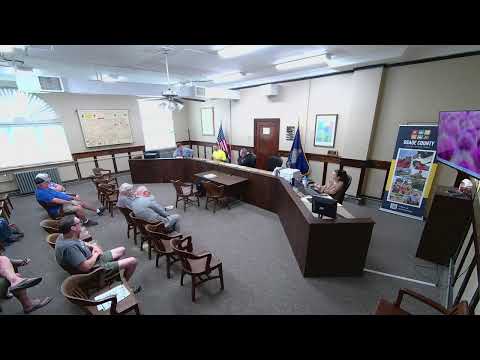
Osage County commissioners on Sept. 15 discussed why the county's draft 2026 budget was changed from an "exceeding revenue neutral" proposal back to a revenue-neutral position and set a final budget hearing for Sept. 30 at 5 p.m.
Scott Lloyd, Osage County auditor, told residents the county missed the statutory 10-day publication window required when proposing a budget that would exceed the revenue-neutral rate. "The adjustment went from exceeding revenue neutral back about $436,000," Lloyd said, adding the county must reduce levies to meet the revenue-neutral requirement.
That change led staff to identify two levies as likely sources for the reduction: Road & Bridge and employee benefits. Lloyd and other commissioners said those levies have room to absorb the adjustment while preserving priorities. "You can still change it again. You can't go up, but you can always go down," Lloyd said, describing the limits set by state procedure.
The discussion explained how the revenue-neutral system works: the county's dollar amount of tax collections is effectively locked from one year to the next and shifts in assessed valuation change the mill rate required to collect that fixed dollar amount. Lloyd said large assessed-value increases across Kansas have forced many counties to choose between reducing mill levies to stay revenue neutral or seeking additional dollars to maintain services.
Several members of the public raised concerns about high property taxes and the effect on residents on fixed incomes. Kathy Smith, who identified herself in the meeting, asked why Osage County has high per-capita property taxes; commissioners and staff replied that a combination of rising appraisals, a limited local tax base, and state mandates that assign services to counties all contribute.
Commissioners and members of the public discussed possible responses, including economic development, tourism and senior housing, and whether to pursue exemptions or incentives that attract businesses. Chairman Coleman framed the core question to residents: "What do you want here? What can we do? What will you accept if we bring you?" He and other commissioners said those policy choices affect the county's ability to lower the tax burden without reducing services.
The commission formally set a final budget hearing for Sept. 30 at 5 p.m.; the motion to set the hearing was made, seconded and approved. Commissioners also approved the meeting agenda with the noted change and later adjourned. County staff warned the certified assessed value that the County Clerk will provide on Oct. 1 could still change the final mill rate needed to hit the revenue-neutral dollar total.
Why it matters: The revenue-neutral process affects whether homeowners see higher bills when their property assessments rise; the commission's decision about where to trim levies will determine which county services are most affected if the county keeps the same overall tax dollars. The hearing on Sept. 30 will be the public's next opportunity to weigh county program budgets before the commission adopts a final levy.
Votes at a glance
- Motion to approve agenda with change: approved (motion made and seconded; vote recorded as "Aye"). - Motion to set final budget hearing for Sept. 30 at 5 p.m.: approved (motion made and seconded; vote recorded as "Aye"). - Motion to adjourn: approved (motion made and seconded; vote recorded as "Aye").
Sources and quotations in this article come from the Sept. 15 Osage County Commission meeting transcript. All direct quotations are attributed to speakers who appear in the meeting record.