Get Full Government Meeting Transcripts, Videos, & Alerts Forever!
Get email alerts on the Municipal Finance topic
No spam. Unsubscribe anytime.
Finance staff present CIP audit and propose reformatting to shift recurring maintenance out of CIP
Summary
City budget staff presented an eight‑month audit of capital projects and proposed policy changes to move recurring maintenance into operating budgets, identify projects that create or enhance capital assets, and establish clearer funding and debt practice for FY27 and beyond.
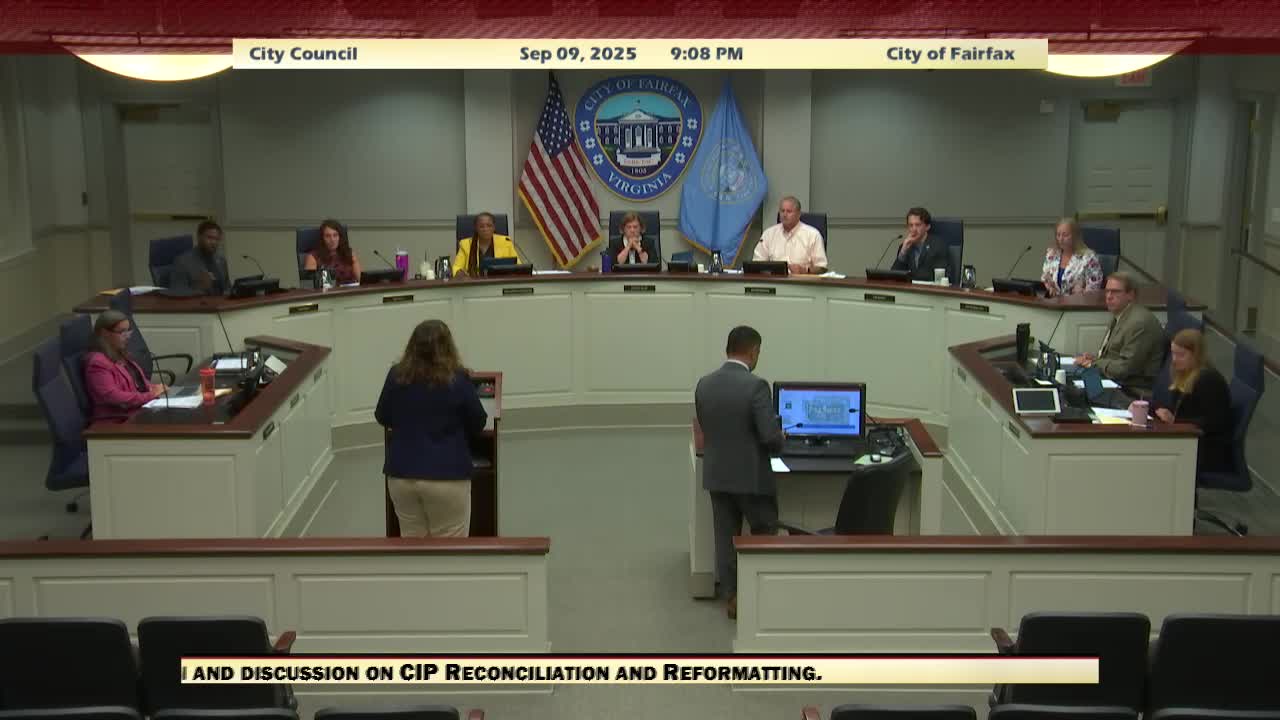
City finance staff presented results of a months‑long audit of capital improvement program projects and proposed a policy framework for the FY 2027 CIP on Sept. 9, telling the council the effort revealed unneeded appropriations and recommended moving recurring maintenance into operating budgets.
Budget Director Gwen Riddle and Chief Financial Officer J.C. Martinez said their team audited roughly 200 projects, conducting comprehensive reviews for about 100 projects. They reported approximately $1.4 million in general‑government appropriated funds that are no longer needed (projects completed or never started), plus about $7.7 million in capital balances related to completed school projects that staff and the superintendent are reconciling.
Riddle said the city’s financial system conversion to Tyler means that the most reliable electronic data begin in July 2024, but the team used legacy and current systems to compile a full audit. Staff recommended a new CIP policy: (1) require CIP projects to meet a capital‑asset test (create or enhance an asset), (2) move recurring repair and maintenance into the operating budget, and (3) continue to present capital projects with available balance, encumbrances and updated cost‑to‑complete figures.
Riddle said staff identified about $8.3 million per year in projects—approximately 35 projects mostly in infrastructure repair and technology—that staff propose moving from the CIP to operating budgets; the number will be refined in the coming weeks as departments complete reviews. She also noted two large projects (Fire Station 3 and the Willow‑Sherwood Community Center) comprise roughly 65% of outstanding available CIP balances.
Martinez discussed financing practice and said the city’s financial advisor recommends a standard 25‑year useful life and a conservative five‑percent assumed interest for debt planning; staff also proposed establishing a CIP reserve or fund balance to cover modest cost overruns without immediate supplemental appropriation.
Council members thanked staff for the audit and asked for regular updates. Several council members said they want more frequent reporting on cost‑to‑complete estimates for major projects and suggested quarterly CIP variance reporting to the council. Staff said they will continue regular reviews and provide more frequent updates for large projects.