Get Full Government Meeting Transcripts, Videos, & Alerts Forever!
Get email alerts on the Police Identification topic
No spam. Unsubscribe anytime.
Committee backs resolution urging state to require officers to display identity
Summary
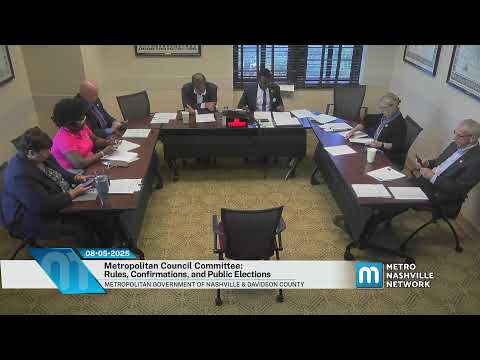
The Rules, Confirmations & Public Elections Committee recommended approval on Aug. 5 of a nonbinding resolution urging the Tennessee General Assembly to pass House Bill 1442, which would generally require law enforcement officers in Tennessee to identify themselves and prohibit masks while performing official duties, subject to specified exceptions.
The Rules, Confirmations & Public Elections Committee recommended approval on Aug. 5 of a nonbinding resolution urging the Tennessee General Assembly to pass House Bill 1442, a state bill that would generally require law enforcement officers operating in Tennessee to identify themselves and prohibit wearing masks while interacting with the public in an official capacity.
Committee members said the resolution was intended to improve accountability after reports of impersonations and concerns about officers whose identities were concealed. Committee staff read language from the bill that would make it an offense for officers to wear a mask, face covering or personal disguise while performing official duties, subject to narrow exceptions for N95-type respiratory protection, protection during natural-disaster response, and SWAT team protective gear. The bill text also would require officers to “clearly display the officer’s name or badge number on the officer’s uniform or other clothing in a manner that is visible to the public.”
The committee discussed officer safety and investigative needs. One committee member, who identified themselves as a police officer’s daughter, said she worried that publicity of an officer’s personal information could endanger families. Another committee member asked, “What if they’re undercover?” and pressed for clarity on how the bill would treat undercover operations. Council Member Benedict asked that question directly.
Supporters at the table cited a rise in impersonation incidents, including people posing as federal agents, and said the bill’s exceptions would preserve operational needs. A committee member who spoke in favor said, “When you are a law enforcement officer, you’re already out there with your badge number and with your name. So if something goes wrong or if somebody needs to follow up, they have that.” That statement was voiced during discussion by a committee member who supported the resolution.
The committee considered a motion to defer the recommendation one meeting so members could consult the lead sponsor at the state level about possible amendments addressing undercover operations. That motion tied on a 3–3 vote and failed. The committee then voted on the substance: 4 in favor, 0 against, 2 not voting, to recommend approval of the resolution.
The resolution is nonbinding and simply expresses the county committee’s support for the state bill; it does not change local policy. Committee members discussed outreach to the bill sponsor and to state legislators as possible next steps if the bill moves forward in the General Assembly.
Why it matters: supporters framed the resolution as a tool for accountability—helping identify officers involved in contested stops or alleged constitutional violations—while critics and some undecided members raised concerns about undercover policing and the safety of officers’ families. The committee’s recommendation will be recorded for the record and can be used to inform state lawmakers and constituents about the local body’s position.