Get Full Government Meeting Transcripts, Videos, & Alerts Forever!
Get email alerts on the Court Budget topic
No spam. Unsubscribe anytime.
Pulaski County Superior Court asks commissioners to fund court navigator full year, seeks staffing shift in probation office amid rising jury costs
Summary
Superior Court and probation staff presented budget requests including full-year funding for the court navigator post, a request to convert a part-time office administrator to full time instead of hiring a new probation officer, and noted rising jury-trial costs and grant-funded programs that offset county expenses.
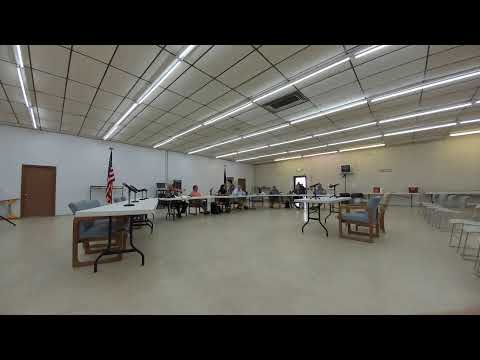
Pulaski County Superior Court and probation staff asked county decision-makers Aug. 13 to fund a full year of a court navigator position and to change probation-office staffing to cover a departing probation officer while limiting new salary costs.
Judge Crystal Coker, speaking for Superior Court, told county leaders the court’s budget pressures are driven largely by jury trials and related expenses and that the court is asking the county to fund the navigator position for a full year. She said the county currently has 2,081 pending cases and that jury-trial volume and appeals have significantly increased costs tied to juror pay, mileage, postage, staff overtime and other trial-related items.
The court described the navigator as a central referral point who connects people to treatment and services, supports pretrial and problem-solving court programs and provides soft handoffs from court to service providers. The navigator’s work, the court said, is associated with lower recidivism and reduced jail costs: the court presented a decline in its recidivism measure of roughly five percentage points from 2022 to 2024. The court said the navigator has seen 827 people so far in 2025 and has assisted pretrial and problem-solving court participants in connecting to treatment and benefits, including veteran benefits in some cases.
Probation office staff reported caseload and staffing details. A probation staff member said probation officer Chris carried a caseload of about 157 and that Andrea Jackson carries 162; the office’s juvenile caseload is smaller by count but more labor intensive. Natalia Gebka, who currently handles pretrial release, was identified as continuing in pretrial duties while other staff absorb adult offenders after Chris’s departure. The probation office requested converting a part-time office administrator position to full time at an estimated annual cost of $53,824.78 as an alternative to hiring a new probation officer, which the office estimated would cost $61,271.27.
Speakers also outlined several grants and programs that offset county costs. The court said it received a public defender commission misdemeanor-reimbursement pilot award that will allow reimbursement at 40% for some misdemeanor public-defense costs; the court estimated that reimbursement at roughly $40,000 and said those funds would support navigator funding. The court also noted grant awards and applications that fund problem-solving work: a $57,700 grant to run drug treatment court, a Justice Partners addiction grant application (about $60,000) pending, and veterans treatment court certification and referrals. The court said problem-solving court participants are not added to the regular probation caseload, and described coordination with regional veteran and behavioral-health providers.
Court leaders said pretrial-release funding was cut at the state level this year; as a result, local staff must absorb pretrial work without that outside funding. The court also provided trial-count data: as of the meeting the court had completed 13 jury trials in 2025, had six pending criminal jury trials and two pending civil jury trials, and planned 23 criminal jury-trial setting days for 2026. The court provided historical per-year juror cost comparisons to show how jury activity has driven recent budget increases.
No formal vote or county decision on the requests was recorded in the transcript. County officials and other attendees asked clarifying questions about how navigator reimbursement and other grant funds would flow, the navigator’s caseload and backups, and which budget lines would cover the suggested staffing changes.
The court and probation staff asked the county to consider the full-year navigator funding and the probation staffing change as adjustments intended to reduce longer-term costs to the jail and improve service connections. The matter was presented to the commissioners during the budget hearing for their consideration; the transcript ends with the meeting recessed without a recorded funding decision.