Get email alerts on the Healthy Homes Energy Pilot topic
No spam. Unsubscribe anytime.
Cook County program reports five completed efficiency projects; contractors remain a bottleneck
Summary
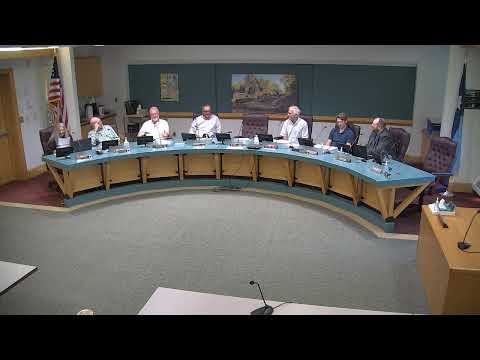
Andrea Orris of Cook County Public Health told the Housing and Redevelopment Authority on Aug. (date not specified) that a joint envelope-and-energy grant pilot has completed five projects and that remaining pilot funds are nearly committed.
Andrea Orris of Cook County Public Health told the Housing and Redevelopment Authority on Aug. (date not specified) that a joint envelope-and-energy grant pilot has completed five projects and that remaining pilot funds are nearly committed.
The pilot combines state Healthy Homes assessment funding from the Minnesota Department of Health with local HRA pilot funds to subsidize energy- and envelope-related repairs. “We have 5 projects that have been fully completed,” Orris said. “We have 4 projects with signed grant agreements. 2 of those have approved bids and the other 2 are still looking for a contractor.”
The pilot funnels assessments and initial mitigation through the county’s Healthy Homes program. An assessor (identified in the meeting as Andrea Tofte) performs an in‑home assessment; homeowners or renters who want further mitigation can be referred to Orris for grant verification, contract assistance and payment processing. HRA staff serve as the signatory and CCLEP reviews contractor bids, and the City of Grand Marais documents completed work with photographs and participant testimonials.
Orris described the funding history: an initial HRA allocation of $15,000 (March 2024), plus a December 2024 allocation of $36,302.21. The Minnesota Department of Health grant supplies the assessment work and up to $750 per household for mitigation under the Healthy Homes Assessment grant; the HRA pilot dollars have been used to top up larger projects such as window replacement, insulation, siding or roof work. Orris said outreach drew applicants from across Cook County, from Schroeder to Grand Portage.
Board members focused discussion on contractor availability and program rules. Orris said finding an available, licensed contractor has been the program’s “most difficult” hurdle; the program initially gave homeowners six months to secure a contractor and one year to complete work, a timeline later extended to 18 months. “We changed it to 18 months overall,” she said, adding that staff now help by providing a regional contractor list and by assisting homeowners who say “I don’t even know where to start.”
Several commissioners and participants suggested ways to expand the pool of eligible workers. Board member comments included proposals to (1) contact formerly licensed contractors to encourage relicensing, (2) use local construction projects to identify contractors who might take small jobs, and (3) coordinate training or workshops through local providers. Tony (CCLEP) and others raised relicensing and training as a path to both quality assurance and greater local participation.
Orris said contractor eligibility is tied to program liability and funder expectations. She identified the Minnesota Housing Finance Agency as the model that informed the licensed‑contractor requirement for the pilot, and the board discussed whether future iterations could safely broaden eligibility without exposing the HRA or homeowners to remedial liability.
The presentation included participant testimonials and before/after images; staff said the projects yield energy bill savings for participating households and fill repairs that homeowners otherwise would not prioritize. Jeff (HRA staff and signatory on grant agreements) characterized the pilot as successful and said the board will continue seeking funds to sustain and expand the work.
Board members suggested next steps: expand outreach to contractors across adjoining counties when needed, share the county’s contractor list with developers working on larger projects, explore partnerships with Minnesota Housing Finance Agency programs and local lenders that provide low‑interest rehabilitation loans, and keep the pilot’s audit trail (Shane Steele from the City of Grand Marais collects images/testimonials and the HRA performs annual audit checks).
Program details reported at the meeting: - Completed projects: 5 - Signed grant agreements: 4 (two with approved bids; two still seeking contractors) - Remaining pilot funds as of the presentation: roughly $2,000 (staff reached out to two additional eligible homeowners the day of the presentation) - Eligible uses observed in completed work: window and door replacement, roof repair, siding, insulation - Funding sources mentioned: Minnesota Department of Health Healthy Homes Assessment grant; HRA pilot funds allocated in March 2024 and December 2024
The HRA and Public Health staff said they will continue the Healthy Homes assessments, look for additional funding, and consider program adjustments — including contractor outreach and training — as the pilot moves beyond its initial phase.
AI generated
The text on this page is AI generated. Summaries, highlights, analysis, and video transcripts are all produced from the original source material.
AI can make mistakes, so if you spot one, and we will fix it for everyone.
Note: the source content is unaltered by us. Any content source we link to, be it a video, an audio recording, or a document, is presented exactly as its publisher released it. That publisher is usually a government body, sometimes an individual official or another organisation.