Get Full Government Meeting Transcripts, Videos, & Alerts Forever!
Get email alerts on the Transportation Construction topic
No spam. Unsubscribe anytime.
Plano Council agrees to pilot hybrid nighttime road work for arterial intersections
Summary
The Plano City Council directed staff to pilot a hybrid nighttime construction schedule on selected arterial intersections and stretches to reduce daytime traffic disruption while tracking costs, contractor availability and community response.
Plano City Council on Aug. 25 directed staff to pilot a hybrid nighttime construction schedule on selected arterial streets and intersections, with restrictions intended to limit impacts on nearby residences.
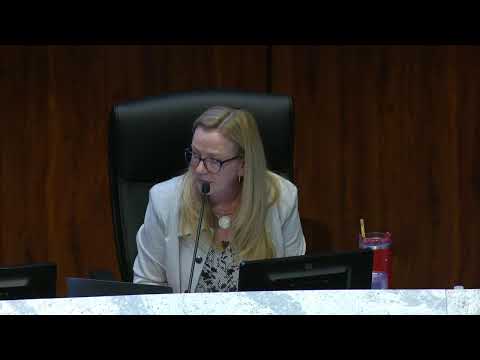
The council heard a presentation from Abby Owens, director of Public Works, who outlined benefits and trade-offs of expanding night work beyond current practices. Owens said the city typically limits noisy activities to daytime and restricts lane closures to less busy hours, but that overlays, utility relocations and some paving tasks are already done at night to take advantage of cooler temperatures and lower traffic.
"In the summertime, it's better temperatures for the contractors," Owens said. "With lower traffic, we can have more of the work."
Owens presented a hybrid option that would combine daytime work with targeted night shifts to accelerate projects such as intersection improvements and utility relocations, and suggested a selection framework: limit night work to arterial roadways and intersections, avoid residential areas, and exclude locations with residential uses within 500 feet unless a director-level exception is granted. She proposed collecting data during the pilot on construction speed, contractor participation, cost line items (day vs. night), contractor feedback and community reaction.
Council members pressed staff on past complaints and implementation details. Council member Levine asked whether Midway at Windhaven, a location that drew complaints from neighbors, was part of the work; Owens confirmed it was an existing overlay project and said resident perceptions sometimes made projects seem longer than actual contractor schedules. Council member Horn urged focusing night work on intersections in warmer months and noted nighttime pours can compress schedules enough to recoup premium labor and equipment costs.
Deputy Mayor Pro Tem asked how the city would notify nearby residents; Owens said the city would use Nextdoor and the communications and outreach team, plus website notices and targeted outreach, similar to current practices. City staff said they could scale back planned night work for a given contractor or intersection if complaint volumes were excessive, because they phase work so not all lanes are removed at once.
The pilot would begin with arterial segments identified in the presentation (including the Spring Creek to Hedgcoats section) and include intersections where blue-highlighted segments lack residences within 500 feet. Staff will report back to council with measured results.
The council did not adopt a change to the city noise ordinance; rather, it authorized staff to test a pilot under the existing ordinance framework and return with data. Mayor John Muns and eight council members signaled support for trying the hybrid approach with caveats about complaints, costs and seasonal limits.